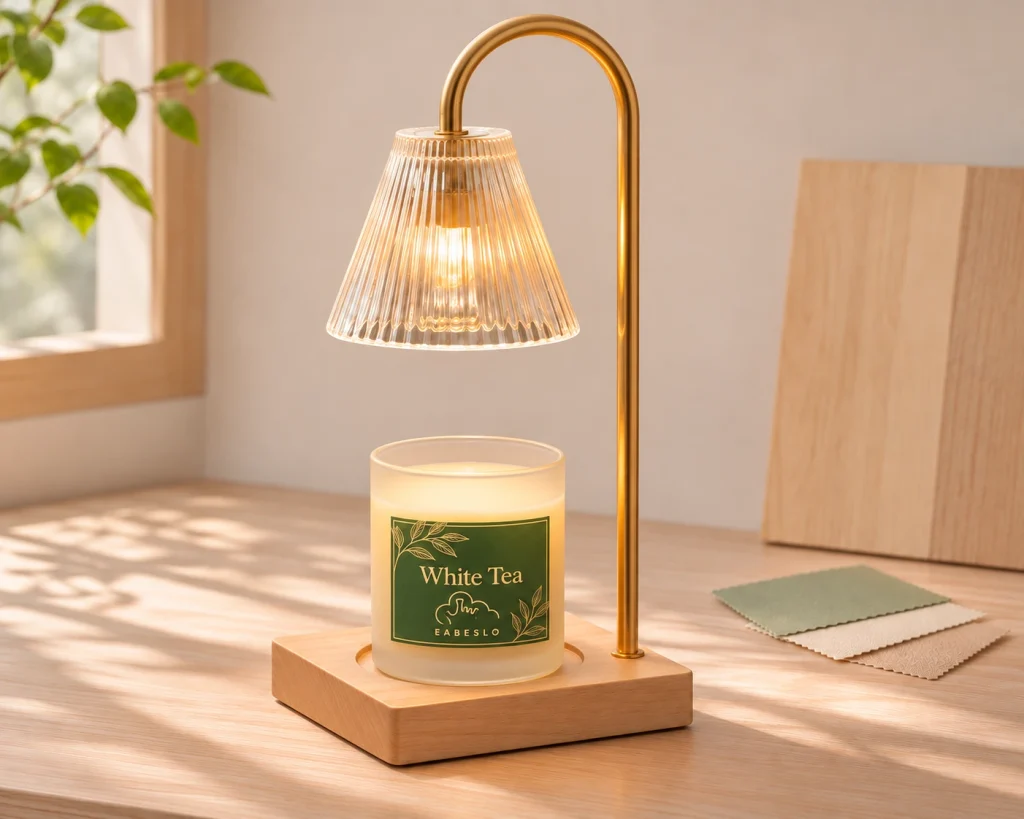
A candle warmer lamp can become part of a fragrance brand’s range through a coordinated shade, base logo and finish, with structural and control options chosen around the intended candles. Starting with an existing lamp design gives buyers a practical way to discuss these choices.
In Green-Life’s projects, customers usually choose the shade first, then develop its colour or pattern. Other common requests include branding the base, choosing a stem finish, changing between fixed and adjustable stems, selecting bulb wattage, and adding a timer or, on suitable models, touch controls. The key is to review how these choices work together before approving the finished version.
Start with the Shade, Then Develop the Colour and Pattern
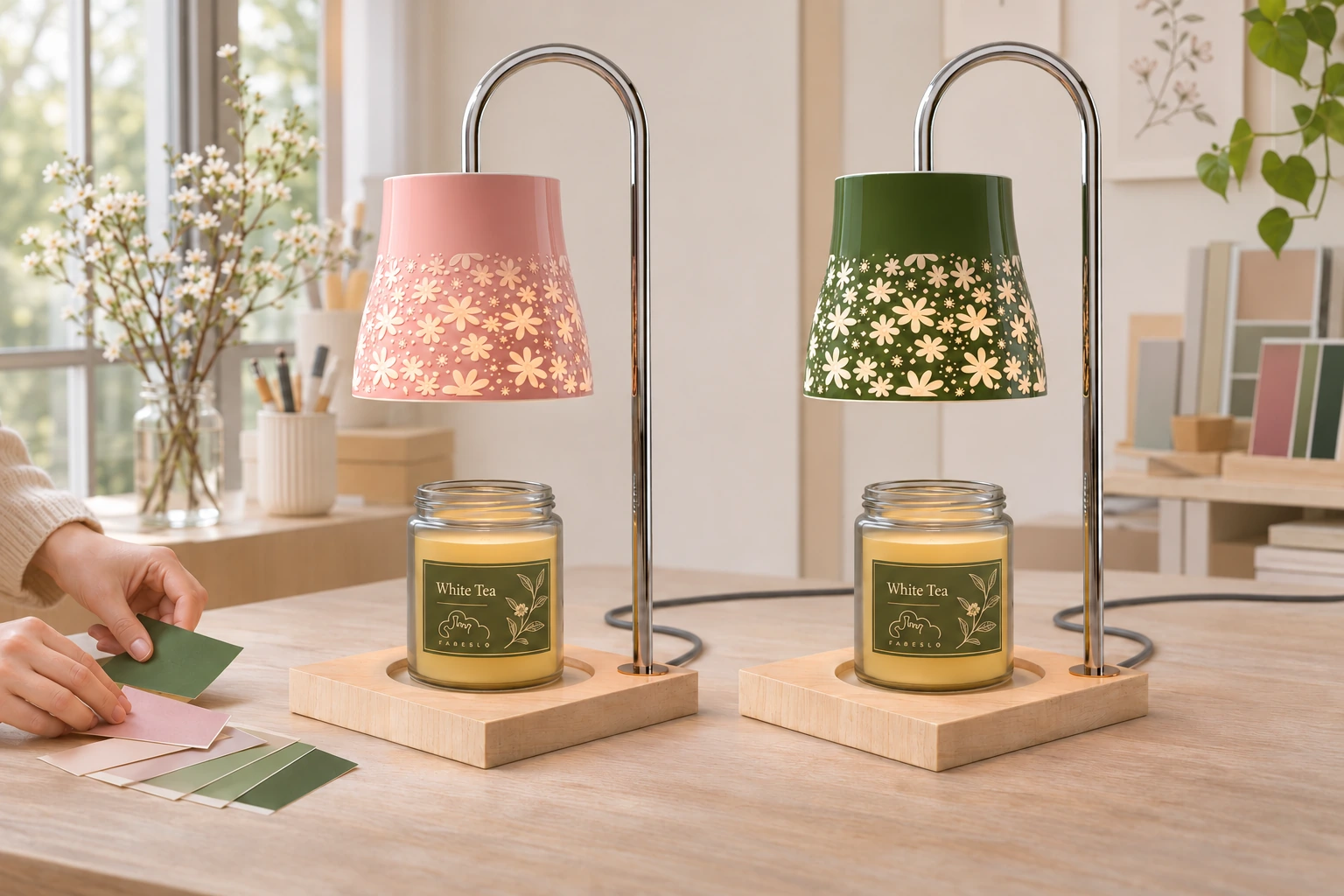
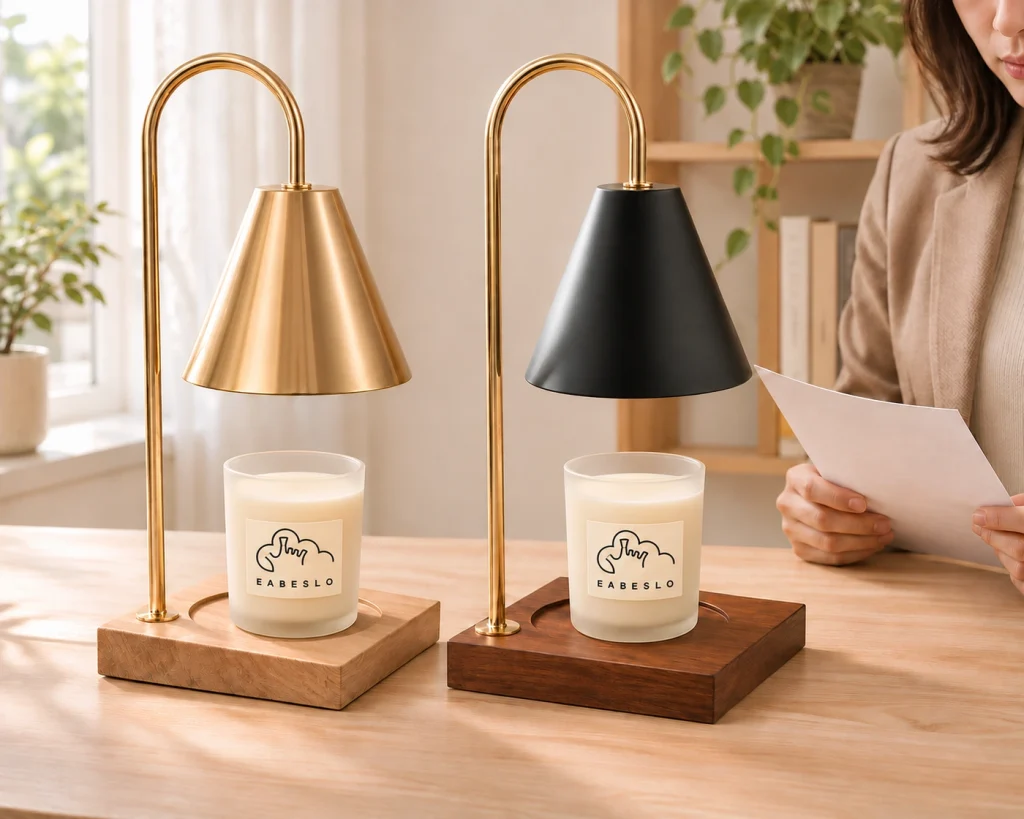
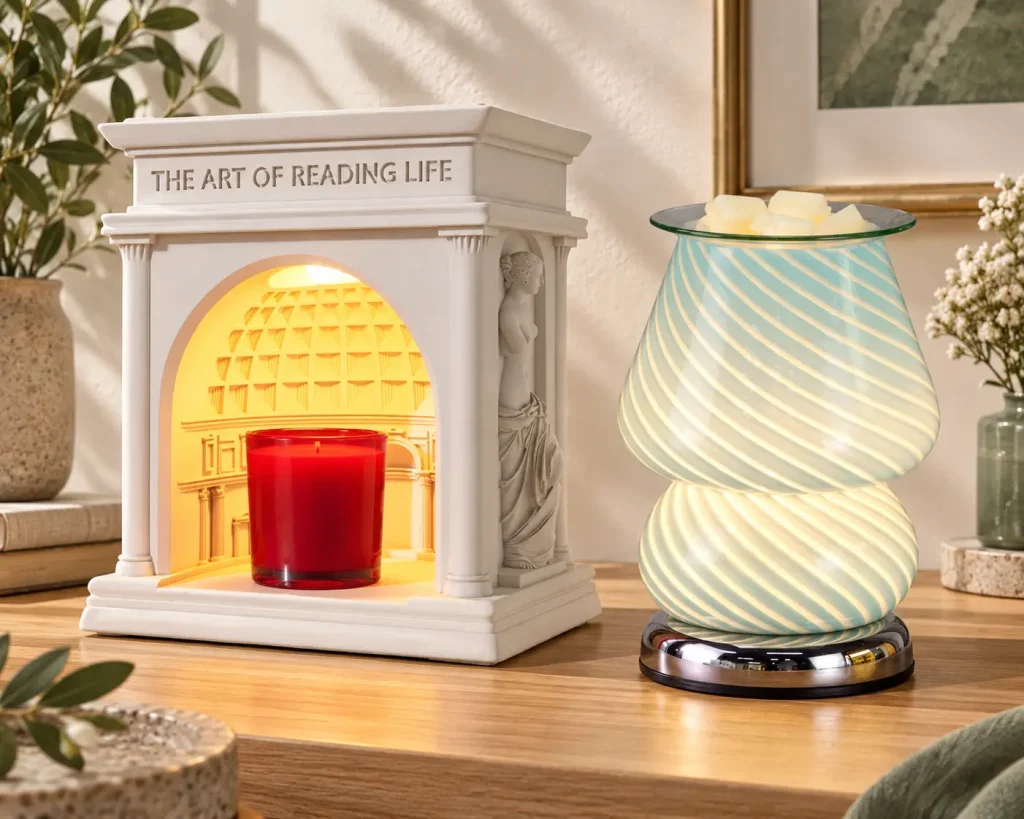
The shade is often the starting point for the lamp’s appearance. Once a customer has chosen a shade type, colour and pattern can help connect it to an existing candle collection, packaging design or wider home fragrance range.
Give the supplier a clear colour reference and artwork, together with an indication of where the pattern should appear. For a repeating design, discuss its scale and placement. These details make a sample more useful than a general request for a particular style.
Review the shade both with the lamp off and during operation. A design that looks right as a decorative object also needs to give the intended visual effect when lit. Confirm the colour and pattern on the actual shade material before treating a digital rendering as the final appearance reference.
If the selected shape already suits the collection, consider developing the surface design before commissioning a new shade shape. Ask the supplier which changes can use existing parts and which would require new tooling or additional sample work. Also clarify how the material, finish and number of colourways affect minimum order quantities and sampling or setup costs. These details help buyers decide where to put the development budget.
Coordinate the Base Logo and Stem Finish
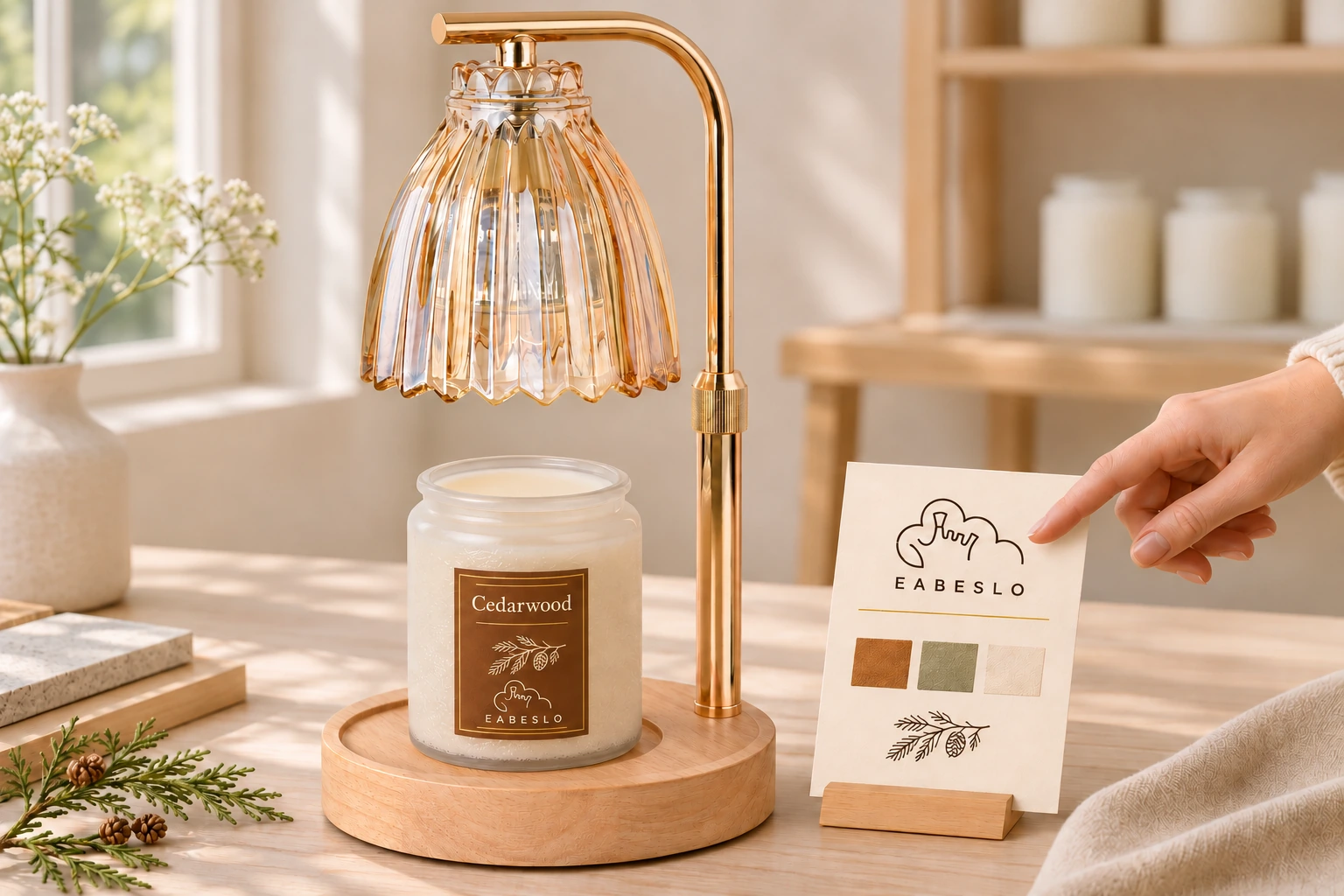
The base is a common location for customer branding. In Green-Life’s projects, the method used to add the logo varies with the base material. Buyers should therefore confirm the marking method together with the base, then review the logo’s size, position, colour and visibility on a physical sample.
Supply usable artwork and specify whether the logo should be discreet or prominent. A placement mock-up can help settle the proportions before sampling, while the sample shows how the mark actually looks on the selected surface.
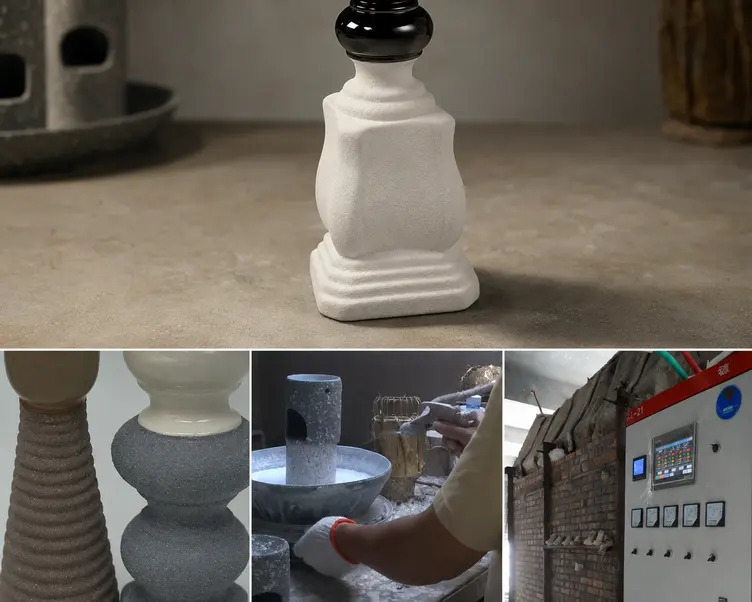
Stem colours tend to involve fewer changes. Customers generally choose black, white or an electroplated finish to coordinate with the shade and base. Review the assembled lamp under consistent lighting: finishes on different materials may look different even when they share a colour description. Retain approved finish samples and agree on acceptable variation, using limit samples where needed to show the boundaries.
For a range with several shade colours, it may be practical to retain one stem finish across the collection. Ask how the proposed assortment affects component quantities and pricing before finalising every colour combination.
Choose a Fixed or Adjustable Stem
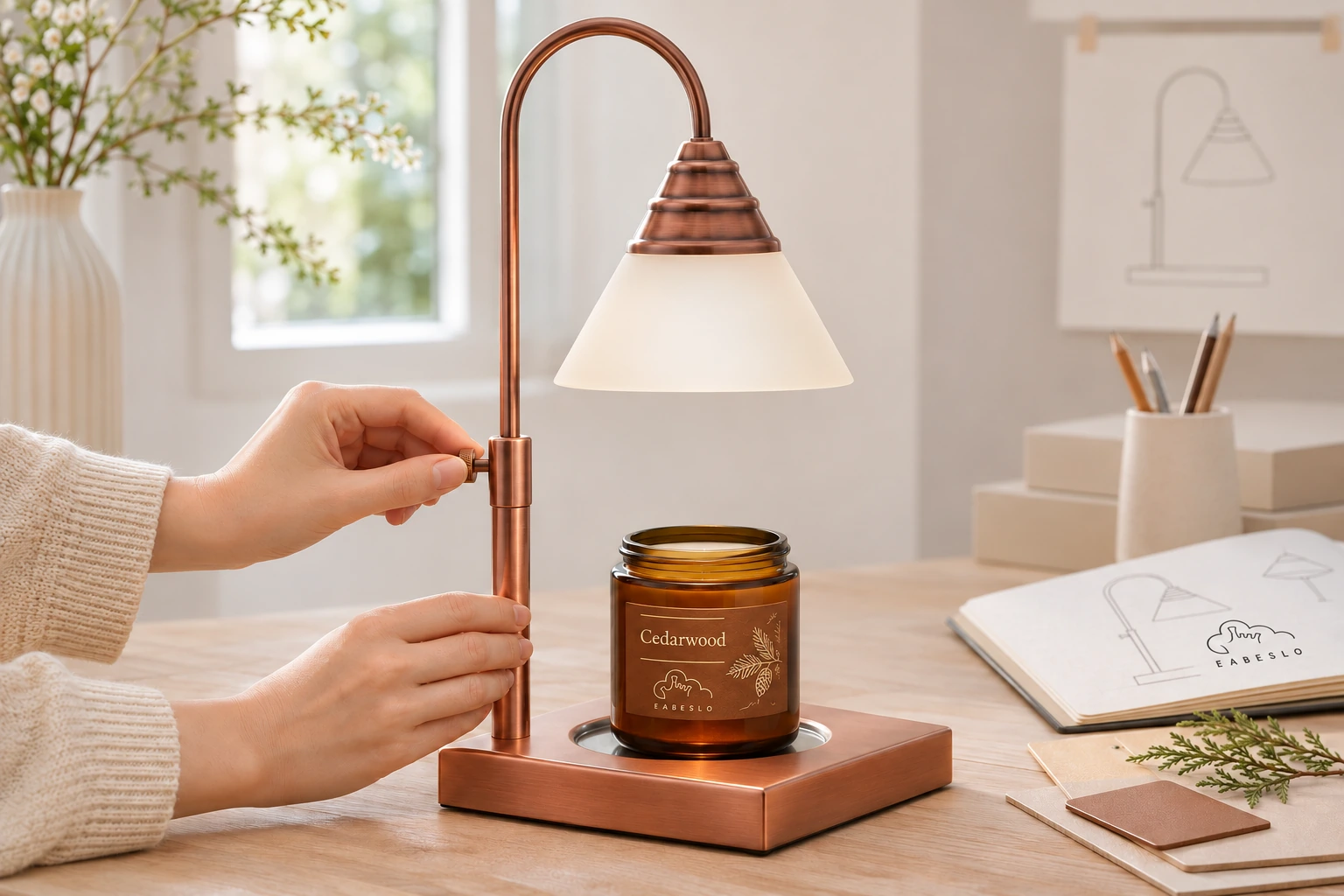
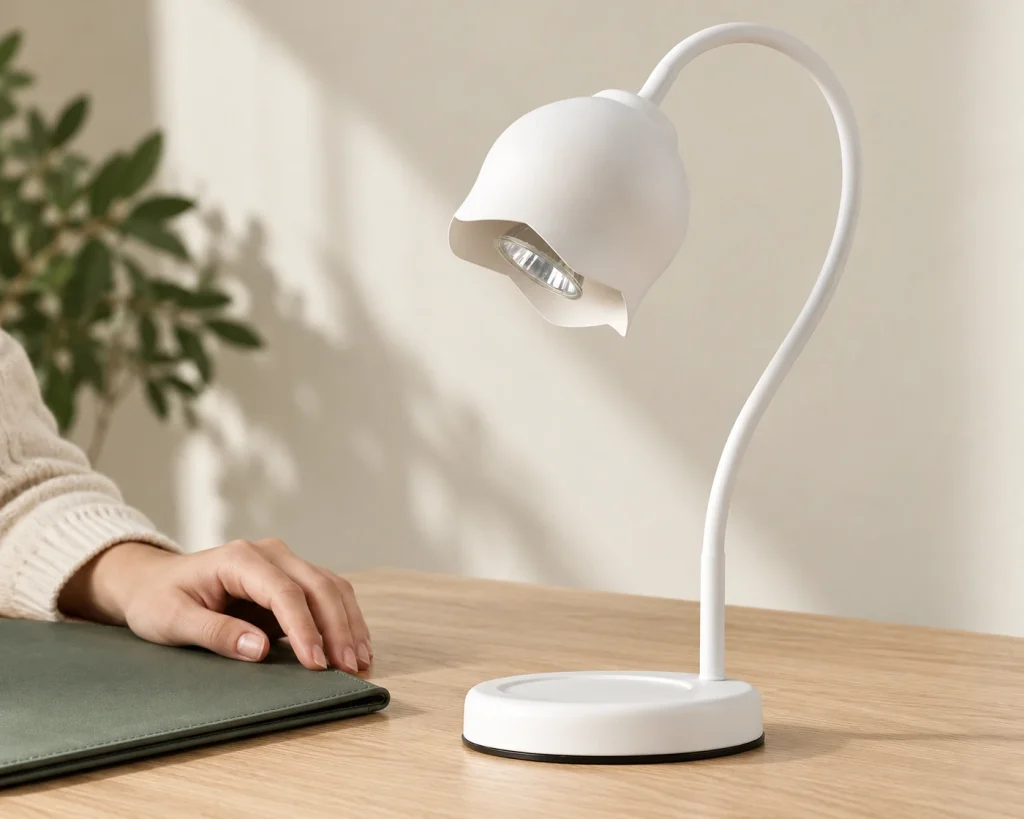
Most customers in Green-Life’s candle warmer lamp projects choose an adjustable stem. Some request a fixed stem instead, while others want to convert a fixed design to an adjustable version.
An adjustable stem gives users a way to change the lamp-head position for different candle heights within the model’s intended range. A fixed stem may suit a product developed around a defined candle size and a consistent appearance. Start with the candles the brand intends to offer, then choose the arrangement that supports that use.
When changing between the two, ask whether the supplier can use an existing compatible stem assembly or needs to develop new parts. Have the attachment, internal wire routing and locking arrangement reviewed. For an adjustable stem, repeated movement should not pinch, chafe or pull the wiring. Assess movement and secure positioning on the sample, and have stability verified in the least stable permitted configurations, including the relevant adjustment positions and candle combinations.
If a structural conversion is important to the launch, establish its feasibility before approving the decorative details. Colour development can proceed alongside that review, but the final sample needs to reflect the agreed structure.
Select Bulb Wattage with the Intended Candle
Bulb power is another frequent adjustment. In Green-Life’s projects, selections are commonly within 25–50 W, based on the customer’s requirements or tests with the intended candle jars.
Treat this as a choice made during product development. Confirm the destination market’s supply voltage, then have the supplier match the bulb type, cap and wattage to the lamp’s electrical and thermal design, including the holder and controls. A wattage change calls for a review of operating temperatures and any necessary verification. A higher-wattage bulb should not be selected simply because the candle appears to warm slowly.
Review the proposed lamp and bulb with representative candles from the range. Keep a record of the bulb specification, lamp setting and head position, then observe the warming process and fragrance performance. These observations help the buyer and supplier decide whether the combination meets the intended use; safety verification belongs alongside that performance review.
Before finalising the bulb, confirm which market requirements, including any applicable light-source energy-efficiency rules, cover the supplied and replacement bulbs. Record the agreed bulb specification and replacement requirements in the product specification and instructions. This gives the brand a clear basis for spare-bulb supply and consumer guidance.
Decide Whether to Add Timer or Touch Controls
A timer is an optional configuration in Green-Life’s projects, and some models can also support touch controls. Specify what the customer should be able to do before choosing the control arrangement.
For a timer, agree on the available durations, how users select them and how the lamp indicates the selected setting. For touch operation, define whether it controls on/off, dimming or another supported function. The word “touch” alone does not describe the complete user experience.
Ask the supplier which options suit the selected lamp, what component or construction changes are involved, and how they affect cost. Have the final control configuration assessed for applicable electrical safety and electromagnetic compatibility (EMC) requirements. Review the actual controls on the fully assembled sample, including touch response under intended use conditions and the timer’s shut-off operation. The instructions should describe the functions fitted to that version.
Choose features that serve the intended product and price position. Each additional control option should have a clear purpose for the customer and an agreed place in the final specification.
Review the Complete Customised Sample
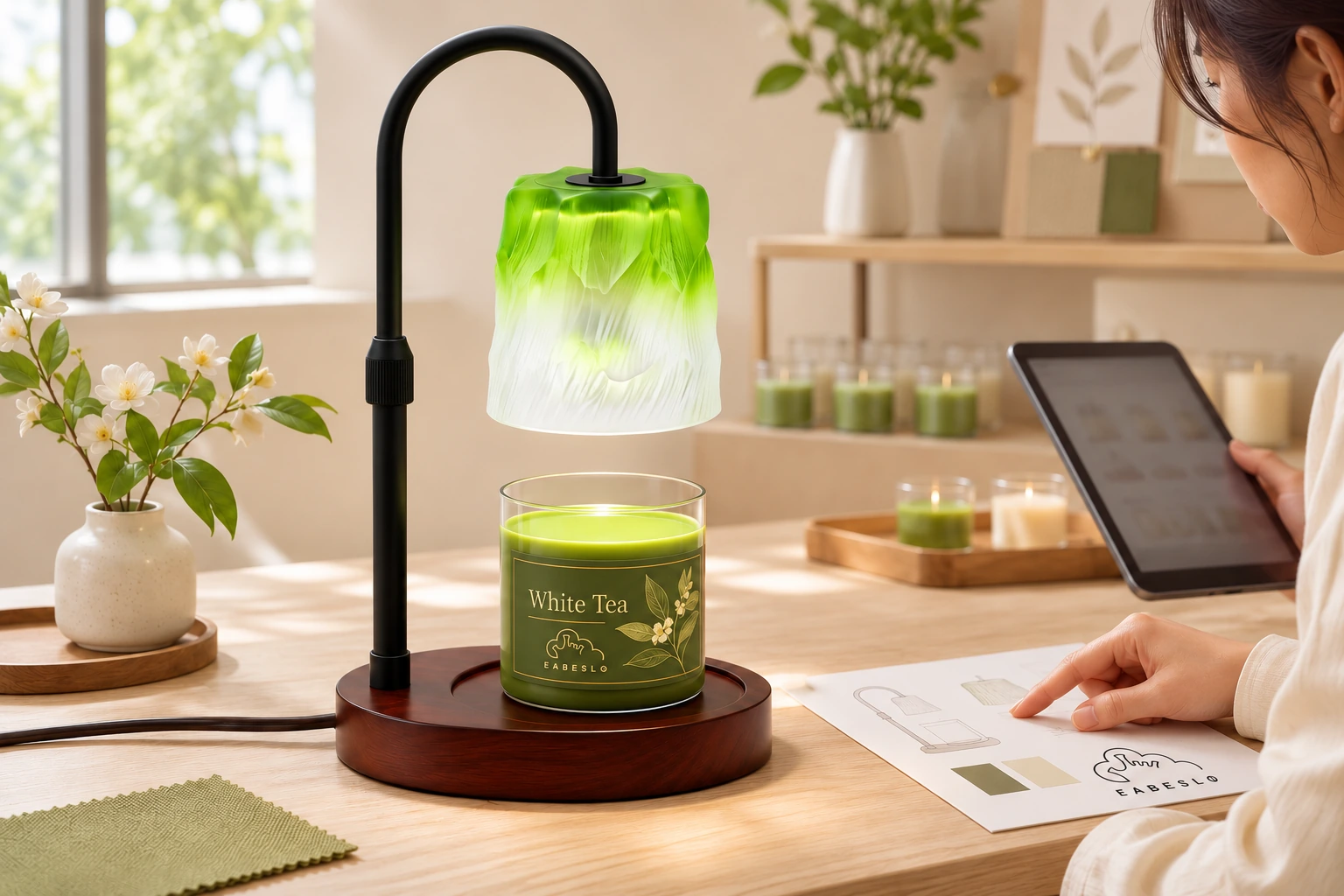
The final review should bring the appearance and working configuration together. Compare the assembled sample with the agreed shade design, base logo, stem finish and structure, bulb specification, and control functions. Use the intended candle to check the complete combination.
The sample approved for production should represent the intended materials, construction and finishes. If an earlier development sample differs, document those differences and agree how the final version will be confirmed. Keep the approved sample alongside written specifications, tolerances and acceptance criteria as references for production and inspection. Identify any requested improvements explicitly so they are resolved before production approval.
Before confirming the order, also settle the effects of the selected options on price, order quantities, development work and timing. Have the supplier and, where relevant, the testing or certification body confirm whether existing reports and approvals cover the final configuration or further evaluation is needed, and include the resulting cost and time in the project plan.[1] Update instructions and packaging to match the final product, and verify that the protective packaging suits its materials, weight and intended distribution channel.[2]
Starting from the shade gives the project a clear visual direction. Coordinating the remaining choices around the actual candle and intended use turns that direction into a product the buyer and supplier can review together.
Sources
[1] UL Solutions — Follow-Up Services https://www.ul.com/resources/follow-up-services ↩
[2] ISTA — When should a packaged-product be retested? https://support.ista.org/portal/en/kb/articles/when-should-a-packaged-product-be-retested ↩