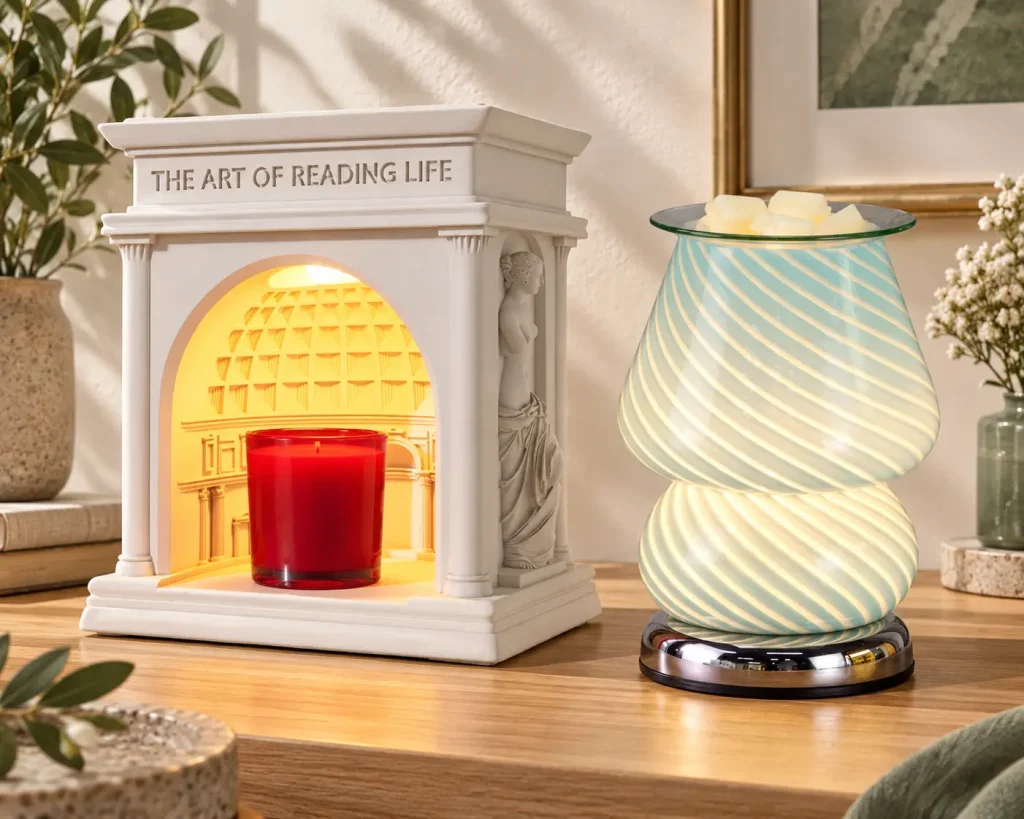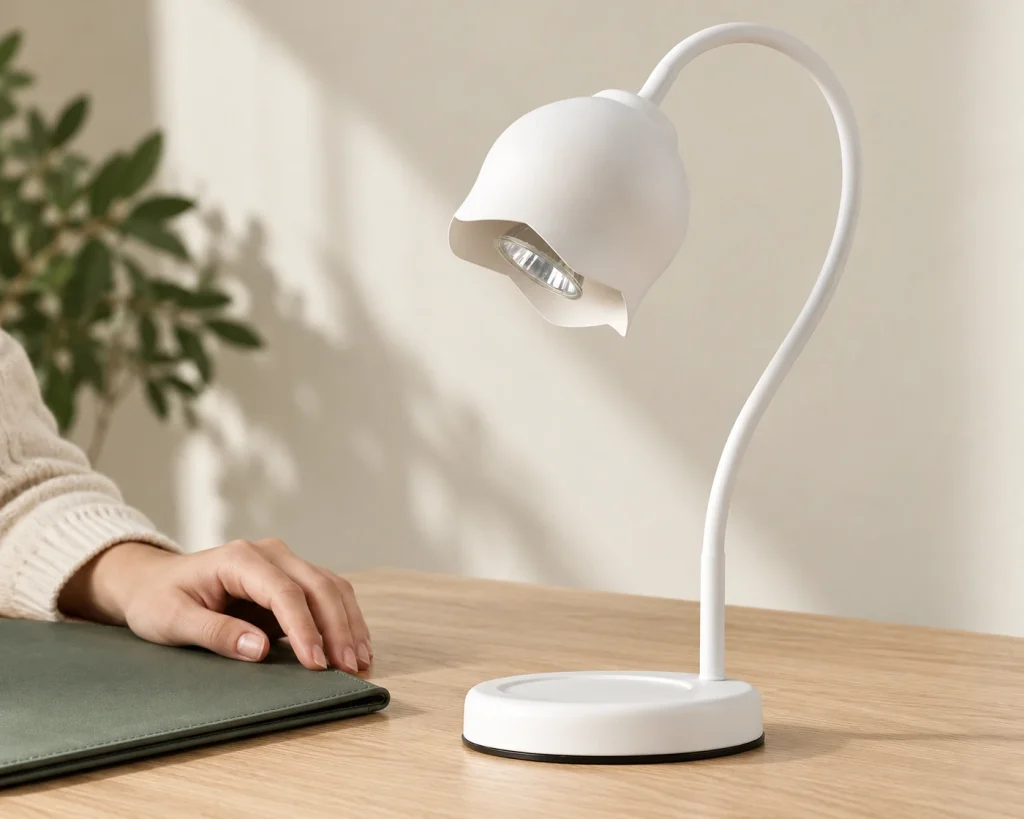
Before ordering candle warmer lamps, confirm three things together: the intended sales market, the complete lamp configuration, and the documents covering that configuration. A useful supplier file should let you connect the ordered model to its electrical specifications, sample, product label and applicable certification records.
This matters for lamps that warm a jar candle with an overhead bulb. Their decorative appearance is only one part of the product. The bulb, socket, controls, wiring and housing work together, so buying a different colour or shape can involve more than an appearance decision.
1. Start with the sales country and the customer's requirements
Candle warmer lamp projects can be developed for different destination markets. For each intended sales country, confirm the electrical configuration and supporting documents early so that market requirements can guide supplier selection and sample preparation.
State the countries where the lamp will be sold and identify the retailers or sales channels. For a range intended for several markets, map out the required product versions and documents for each destination. Ask the importer or customer’s compliance team to confirm the applicable product requirements, accepted certification route and documentation needed for onboarding.
Even neighbouring markets need separate attention. For example, Health Canada advises buyers to look for a Canadian electrical certification mark, such as CSA, cUL or cETL, on plug-in electrical products. A record covering the United States alone should therefore not be treated as evidence of Canadian coverage.[1]
On traditional UL and ETL marks, “c” identifies Canadian coverage and “us” identifies U.S. coverage; combined indicators identify both. Some U.S.-only UL marks omit “us”, so check the complete mark and certification record.[2] In Green-Life’s experience, suppliers commonly apply for both markets together: adding Canadian coverage within the same project is often more economical than arranging it separately later. Discuss both destinations at the quotation stage if they form part of the sales plan.
Customer expectations also differ. In Green-Life’s experience, large brands and major retailers often request certification documents clearly corresponding to each appearance model. Some wholesale customers focus their requests on certified electrical components shared across a range. This difference describes what customers ask to see; it does not determine whether the complete lamp meets its destination-market requirements.
Agree on the required evidence before choosing a supplier or approving a quotation. If additional assessment is needed, establish responsibility for the work, cost and schedule while the configuration is still being selected. When expanding into a new market, review the existing configuration and documents against that destination’s requirements to identify what can be retained and what needs adaptation or further assessment.
2. Define the complete electrical configuration
Ask for a specification tied to the exact model you intend to buy. Photographs and a description such as “dimmable candle warmer with timer” leave too much open.
| Item to confirm | What should be recorded |
|---|---|
| Supply rating | Rated voltage, frequency and lamp input rating |
| Heating bulb | Bulb technology, voltage, wattage, base and permitted replacement specification |
| Lamp holder | Type, electrical and temperature ratings, and compatibility with the specified bulb |
| Controls | Dimmer and timer identification, ratings, operating modes and switching behaviour |
| Cord and plug | Component identification, ratings, wire type and conductor size, destination-market plug and cord anchorage |
| Protective construction | The lamp’s specified earthing or insulation arrangement, supported by its assessment documents |
| Housing and layout | Materials, shade and base construction, bulb position and relevant clearances |
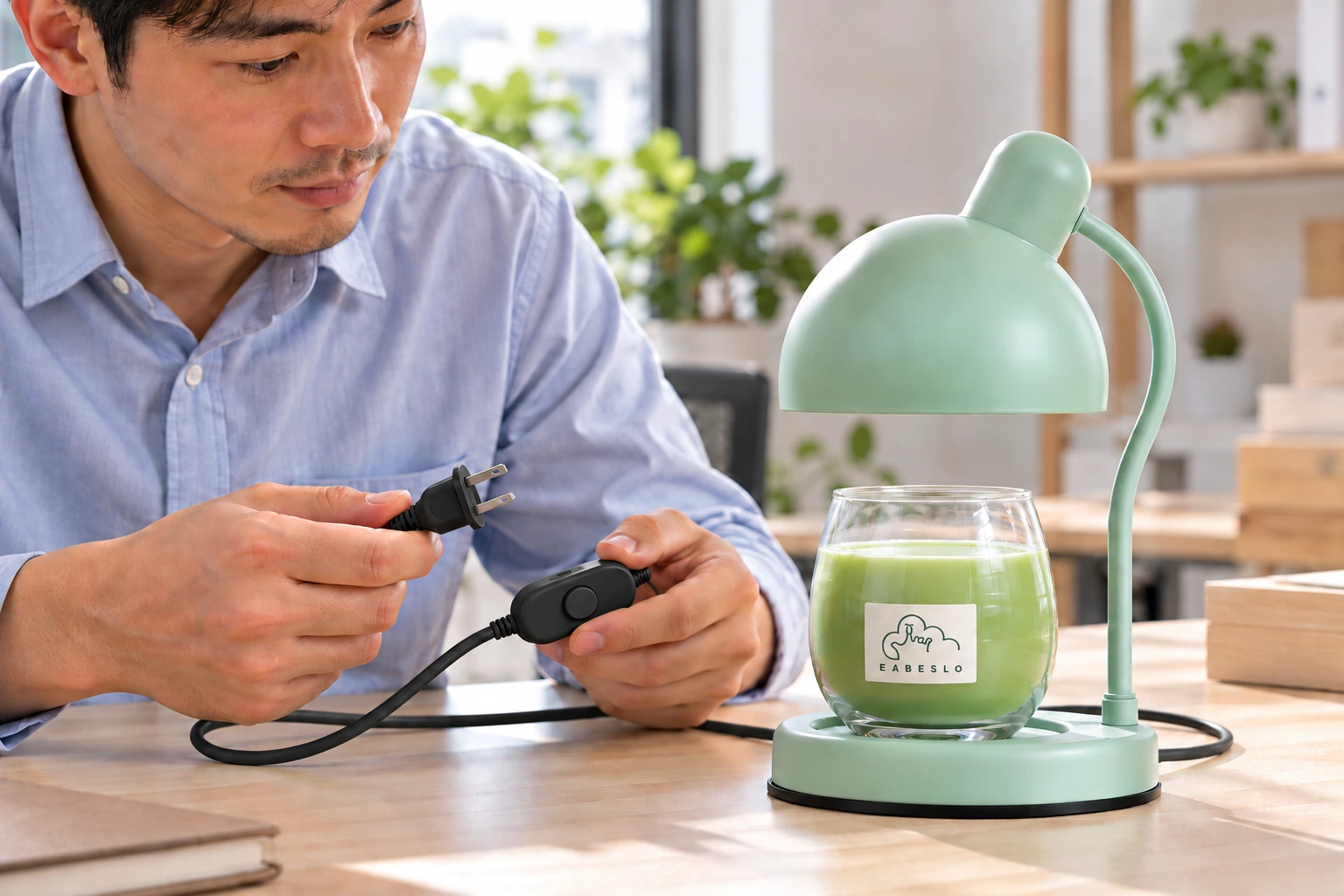
For a bulb-heated warmer, the bulb is part of the heating system. A bulb that fits the socket may still be unsuitable for the intended heat output or control system. Likewise, changing a dimmer, lamp holder or cord can alter the electrical configuration even when the lamp looks identical.
Include the heat resistance of internal wiring, insulating sleeves and controls in the review. These parts need to suit their actual operating conditions inside the assembled lamp. Ask the supplier or testing body to confirm the relevant temperature ratings and thermal assessment for the intended bulb and housing.
Keep these items in the approved specification and identify permitted alternatives. This makes quotations more comparable and gives the supplier a clear basis for sample preparation. It also avoids discovering after sampling that the quoted price assumed a different bulb, controller or cord set.
3. Establish whether the evidence covers a component or the complete lamp

When a supplier refers to UL or ETL certification, ask what the statement covers. It could concern a wire, cord set, switch or the finished lamp. Record the relevant part or product identifier and the scope of the certification.
UL explains that Recognized Components are assessed for use within larger products, subject to defined conditions. Component Recognition is not certification of a complete standalone product.[3] A certified cord set used across several lamp designs therefore provides evidence about that cord set; the finished lamps still need their own applicable conformity evidence.
In Green-Life’s North American sourcing experience, component manufacturers commonly provide UL-certified wires, plugs and, where used, power adapters, while suppliers assembling complete candle warmer lamps more often obtain ETL Listing. In these projects, ETL has often offered a lower cost and shorter turnaround, influencing the choice of certification route. Both UL Solutions and Intertek provide services for components and finished products; compare quotations and schedules for the actual project.
ETL Listing is carried out by Intertek against applicable safety standards. Those standards can include UL standards: an ETL Listed lamp assessed to a UL standard is certified by Intertek, rather than UL Solutions.[4] For purchasing, check the complete lamp’s listed model, ratings and country coverage alongside the component records.
Separate the documents by purpose:
- A test report records the identified sample, test scope, methods and results.
- A product certification record identifies the product and scope covered by the certification scheme.
- A declaration of conformity (DoC) records the responsible party’s conformity declaration under the applicable framework. For the EU, the manufacturer is responsible for issuing it, with an authorised representative able to act within its mandate.[5]
Request the combination needed for the destination and customer. A certificate cover page can be a starting point, but obtain enough supporting detail to check model coverage, ratings and construction. Where documents are confidential, arrange access through the supplier and the customer’s designated reviewer or testing body.
4. Check market requirements beyond electrical safety
Electrical safety certification is one part of the document review. Electronic dimmers, timers and control boards also call for a check of the applicable electromagnetic compatibility (EMC) requirements. Ask the testing body to identify the rules and evidence needed for the complete configuration.
For the United States, ask the laboratory to determine the FCC classification, applicable authorisation procedure and required evidence for the assembled lamp, taking account of its actual circuitry and any applicable exemption.[6] Canadian interference requirements need a separate check. For the EU and UK, confirm the applicable EMC framework and conformity documents for the destination; Great Britain has its own EMC Regulations.[7] Include this evidence alongside the safety documents in the market-specific file.
Material evidence should also follow the market and actual construction. For EU sales, review applicable RoHS substance restrictions and supporting technical documentation, together with relevant REACH restrictions and substance-information obligations.[8][9] For California, assess whether exposure to listed chemicals from materials such as flexible cords, coatings or base materials requires a Proposition 65 warning.[10] Agree on the declarations, material information and any testing needed with the supplier; a generic “chemical compliant” statement leaves the scope unclear.
5. Match the documents to the label and actual sample
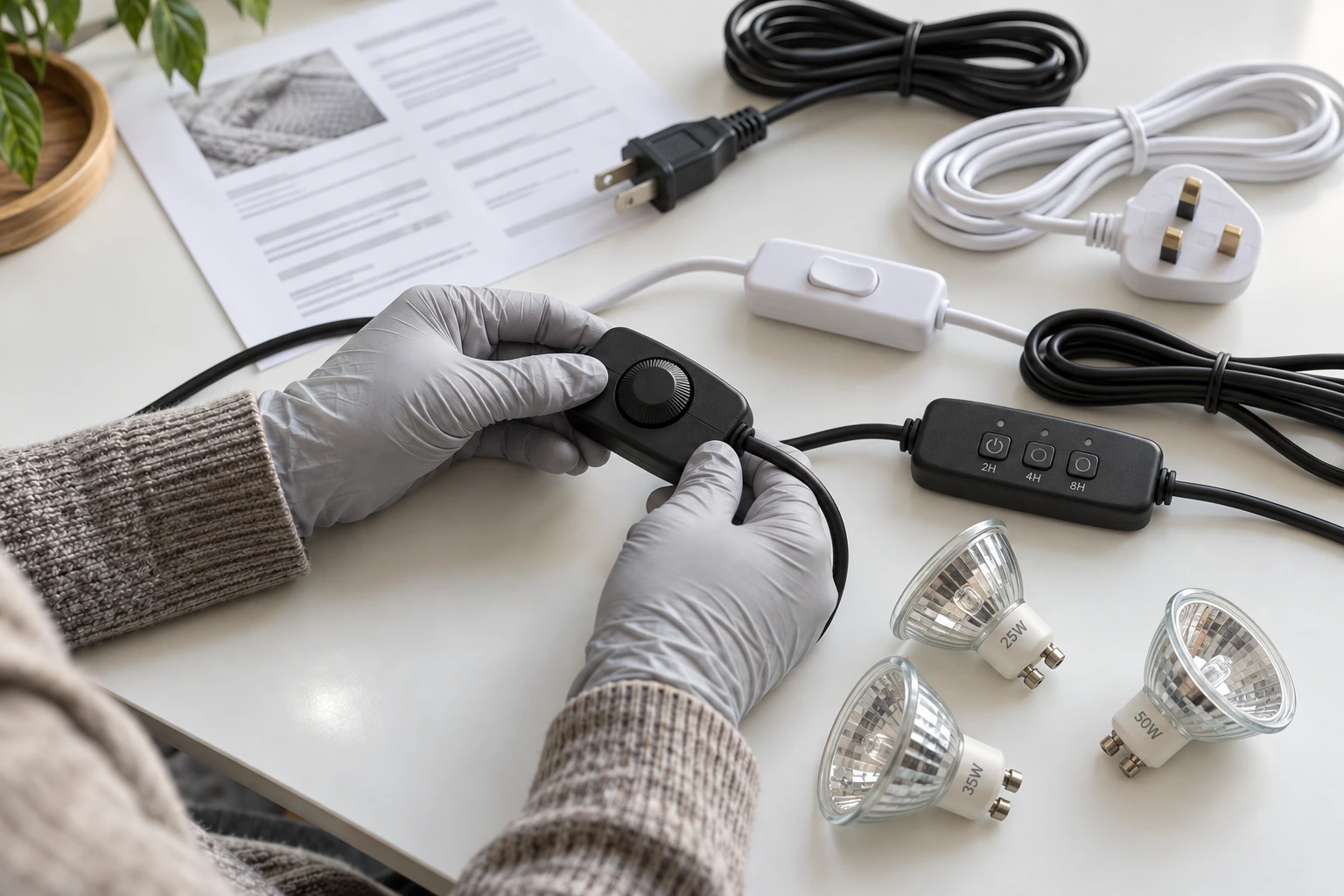
Green-Life checks the models and identifiers in supplier reports against the product rating label, then compares the sample’s components, functions and parameters with the documents. This gives the review a practical sequence: identify the product first, then establish whether its actual configuration matches the evidence.
Use the same sequence when reviewing a supplier file:
- Identify the document. Check the issuer, report or certificate number, referenced standards, issue date and revision, plus any stated expiry date. Confirm that the named applicant or manufacturer, and production site where specified, correspond to the supply arrangement.
- Find the ordered model. Locate it in the covered model list. If the sales model differs from the factory model, obtain a documented cross-reference and confirm that the certification or assessment covers the arrangement.
- Compare labels and safety markings. Check model identification, electrical ratings, certification markings and the warnings required by the applicable assessment, including bulb replacement limits and hot-surface warnings where specified. Check the instructions as well. A component’s file number does not establish finished-lamp certification.
- Compare the sample. Check the bulb, holder, controls, cord, plug and functions against the report and critical component list. Have qualified personnel inspect internal wiring, insulation, cord anchorage and any specified thermal protection, using the report’s construction details and photographs as references.
- Verify current status. Check the issuing body’s records or request confirmation when the scope or status is unclear. Use UL Product iQ for UL certification research,[11] or Intertek’s ETL Listed Mark Directory for ETL-listed products.[12] Check the model and relevant record details against the supplier’s documents.
Document age and present applicability are separate questions. Check stated dates, but also establish whether the record still covers the ordered configuration and meets the customer’s current submission requirements. Avoid applying a single assumed expiry period to every report.
If the sample has a timer that the report does not describe, or a component identifier differs, resolve the discrepancy before relying on the file. A successful sample demonstration shows function; it does not explain a document mismatch.
6. Control appearance variants and production changes

Different exterior designs may share electrical components, but their coverage needs to be established model by model. Whether variants can share a certification file depends on the scheme and evaluated construction. The customer’s requirement for separately identifiable documents should also be agreed early.
An appearance change can have a safety effect. A metal housing can change the protection needed for accessible parts; a different shade can change heat dissipation; moving the lamp head can change clearances. Treat these as questions for assessment rather than assuming every decorative change is covered.
In Green-Life’s projects, appearance or accessory variations across production batches are accepted only when they do not affect the applicability of the supporting report. To make that decision traceable, record the proposed change, the affected models and the basis for accepting it. Where certification coverage is uncertain, obtain clarification from the body responsible for that certification—Intertek for an ETL Listing, for example. UL’s Follow-Up Services guidance likewise addresses construction changes to UL-certified products and checks consistency with the certified product description.[13]
Before production, bring the approved specification, sample reference, label artwork, instructions, critical component list, document revisions and permitted alternatives into one order file. Agree on a written change-control process, such as an Engineering Change Notice (ECN): the supplier identifies the proposed substitution, affected models and impact, and obtains the required written approval before implementation. Buyer approval and any certification-body review serve different purposes. Already approved, documented alternatives can follow the agreed arrangement; changes outside it need their impact resolved first.
Routine production inspection should then check the agreed configuration and markings. It complements the product assessment and helps maintain consistency between the lamp that was reviewed and the lamp that will be shipped.
Sources
[1] Health Canada — Buying electrical products online. https://www.canada.ca/en/health-canada/topics/consumer-product-safety-education/online-shopping/electrical-products.html ↩
[2] UL Solutions — Wire and Cable Application Guide; Intertek — 2026 Guide to North American Product Testing & Certification. https://www.ul.com/thecodeauthority/knowledge/wire-cable-guide ; https://www.intertek.com/siteassets/_media/_pdfs/electrical/pdfs/intertek-guide-to-na-product-testing-and-certification.pdf ↩
[3] UL Solutions — The UL Component Recognition Classification. https://www.ul.com/thecodeauthority/knowledge/ul-component-recognition-classification ↩
[4] Intertek — ETL Listed Mark. https://www.intertek.com/product-certification-marks/etl/ ↩
[5] Your Europe — Signing an EU declaration of conformity. https://europa.eu/youreurope/business/product-rules-compliance/general-product-compliance/signing-declaration-conformity/index_en.htm ↩
[6] eCFR — 47 CFR 15.101 and 15.103. https://www.ecfr.gov/current/title-47/chapter-I/subchapter-A/part-15/subpart-B/section-15.101 ; https://www.ecfr.gov/current/title-47/section-15.103 ↩
[7] European Commission — EMC Directive; GOV.UK — Electromagnetic Compatibility Regulations 2016: Great Britain. https://single-market-economy.ec.europa.eu/sectors/electrical-and-electronic-engineering-industries-eei/electromagnetic-compatibility-emc-directive_en ; https://www.gov.uk/government/publications/electromagnetic-compatibility-regulations-2016/electromagnetic-compatibility-regulations-2016-great-britain ↩
[8] Environmental Protection Agency, Ireland — RoHS. https://www.epa.ie/our-services/monitoring–assessment/waste/chemicals/rohs/ ↩
[9] ECHA — Information on restricted substances; Communication in the supply chain. https://echa.europa.eu/information-restricted-substances ; https://echa.europa.eu/regulations/reach/candidate-list-substances-in-articles/communication-in-the-supply-chain ↩
[10] California Department of Justice — Proposition 65 FAQ. https://oag.ca.gov/prop65/faq ↩
[11] UL Solutions — Product Sourcing and Certifications Database. https://www.ul.com/software/product-sourcing-and-certifications-database ↩
[12] Intertek — ETL Listed Mark Directory. https://www.intertek.com/directories/etl-listed-mark/ ↩
[13] UL Solutions — Follow-Up Services. https://www.ul.com/resources/follow-up-services ↩