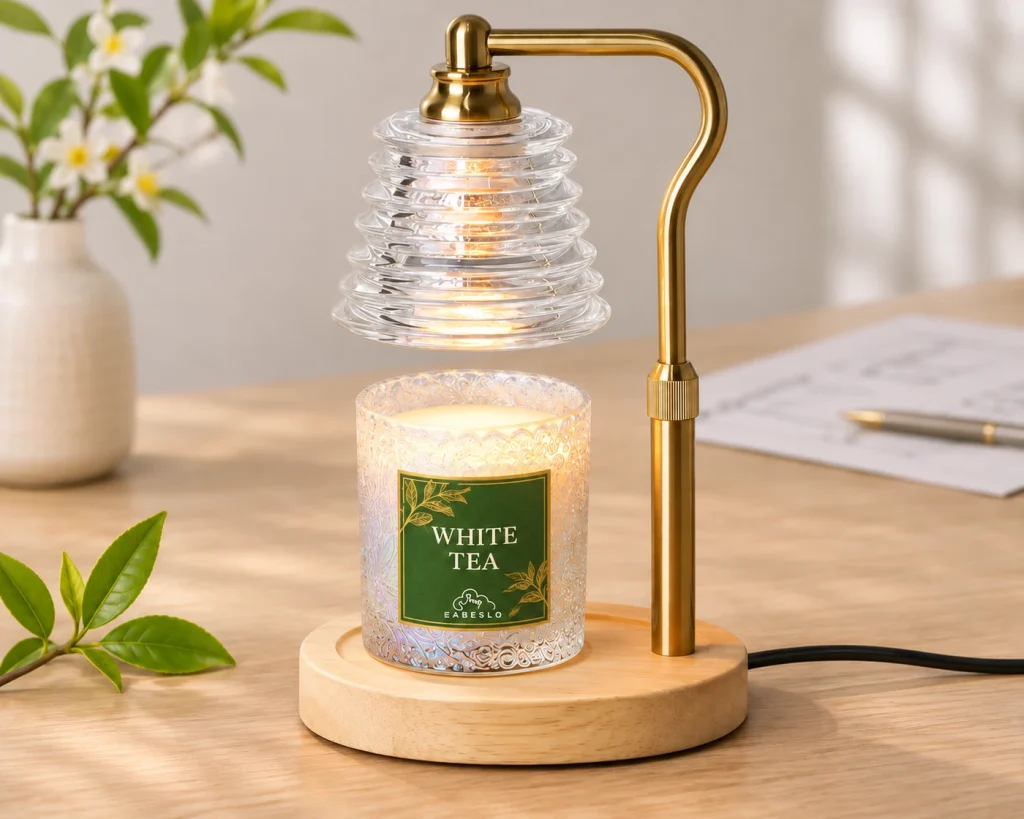
To match a candle warmer lamp with a jar candle, start with the candle range you intend to sell. Compare the jars’ height and diameter with the lamp’s usable space, then evaluate the heating distance with the specified bulb and actual candles. For an adjustable lamp, the height setting helps accommodate different jars and refine melting performance.
At Green-Life, we first ask which candle jars a customer produces or sells, and whether the lamp needs to serve one size or several. This gives us a practical basis for recommending a model and its adjustment range.
Are you matching one candle jar or a whole range?
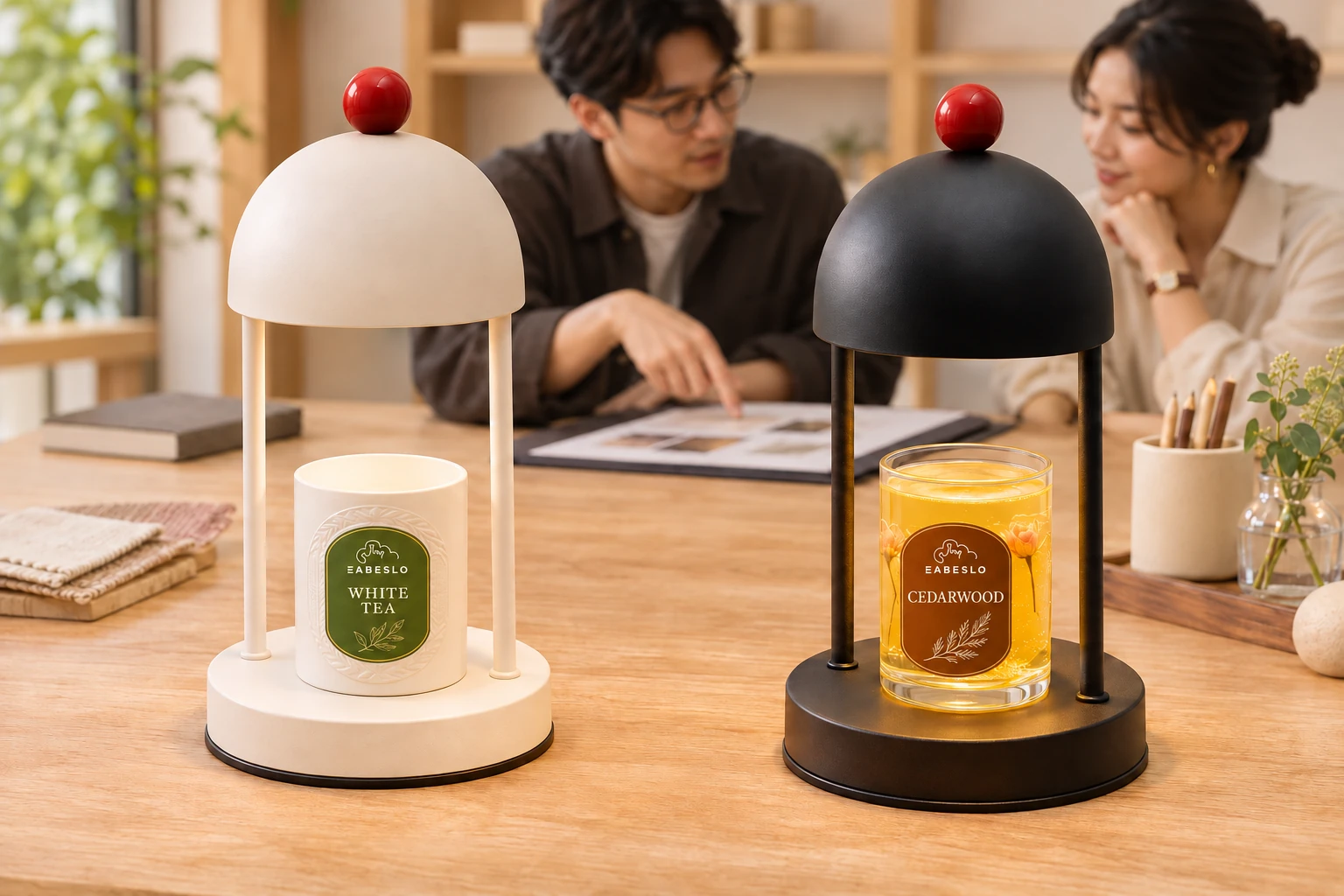
A lamp supplied with one candle in a gift set has a clear starting point: that particular jar and filled candle. A lamp sold alongside an existing candle collection needs to accommodate the intended selection.
For a single jar, provide its material, height without the lid, maximum outside diameter and a photograph or drawing. For a tapered or unusually shaped jar, include the opening diameter. A sample of the filled candle, with its intended wax fill level, helps with the next stage of evaluation. The candle’s weight or stated capacity alone does not describe its shape: two candles with the same wax weight can have different heights and widths.
For several jars, list the dimensions by SKU. Include the shortest, tallest and widest versions, together with any unusual shapes. A wide, shallow jar and a tall, narrow jar may need different lamp positions, even when both fit within the recommended size range.
This also helps a brand decide whether one adjustable lamp can support its intended collection or whether separate pairings would be more practical.
Which lamp dimensions should buyers compare?
Green-Life generally considers commonly available large candle jar sizes when planning the space beneath a candle warmer lamp. Knowing the customer’s actual jars helps us narrow the recommendation to the intended collection.
When a customer cannot yet provide jar dimensions, we communicate the following specifications so they can assess a candidate lamp:
| Lamp specification | What it helps the buyer assess |
|---|---|
| Specified bulb type, base and wattage | The bulb supplied with the model and its replacement specification |
| Diameter of the lampshade’s lower opening | The size of the shade opening above the candle |
| Distance from the shade’s lower rim to the base | The available vertical space, with the measurement position identified |
| Lamp-post height adjustment range | How far the lamp head can be raised or lowered |
| Diameter of the base recess | The space available for seating the jar on models with a recessed base |
| Recommended jar height and diameter range | The supplier’s proposed candle sizes for that model |
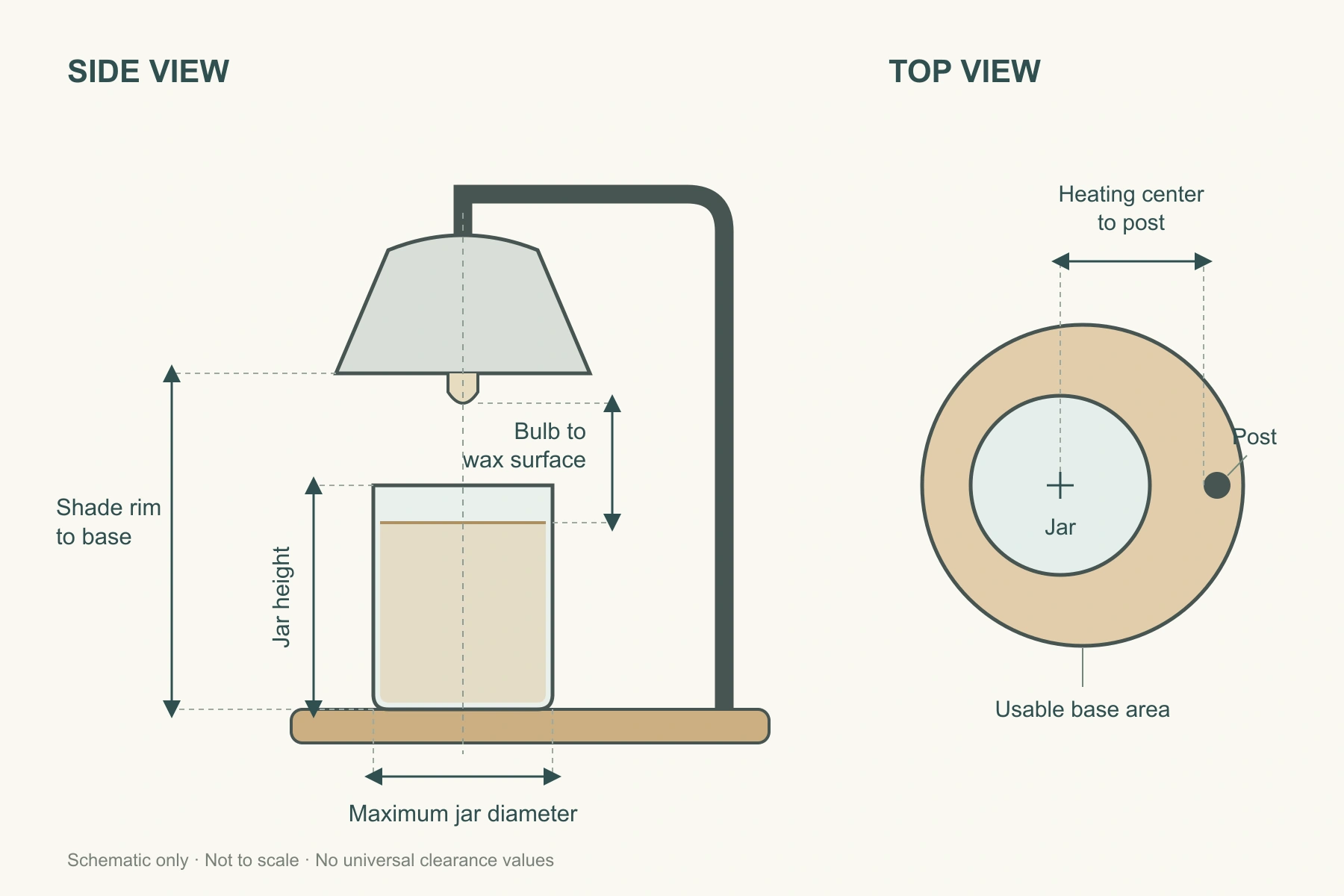
Ask for the height position used for each measurement. With an adjustable lamp, a photograph showing the head raised does not tell you the clearance at its lowest setting.
The shade opening and base recess also describe different parts of the fit. Check the jar’s base against the recess and make sure its widest body clears the lamp post and surrounding structure. For curved or offset designs, ask for the usable horizontal space between the heating center and the post. The jar should sit flat and stable, centered beneath the heating bulb. The shade-opening diameter alone does not establish how widely the lamp will heat the wax.
How does jar height affect the heating distance?
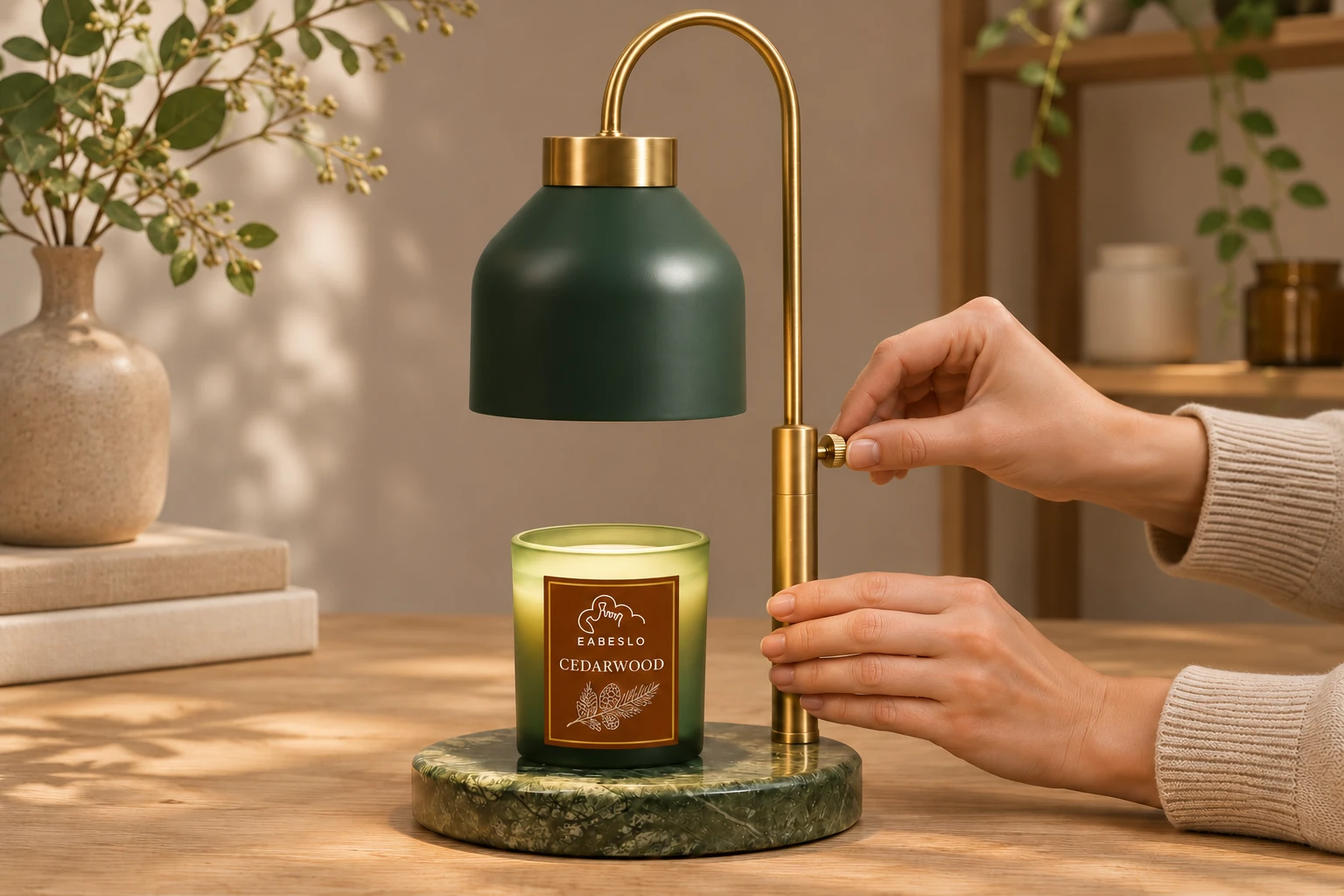
The distance from the lampshade’s lower rim to the base is useful for comparing physical space. The distance between the warming bulb and the wax surface describes a different relationship.
The bulb’s position within the shade, the jar’s height and the depth of the wax below the rim all affect that second distance. Two jars of equal height can therefore present their wax surfaces at different levels.
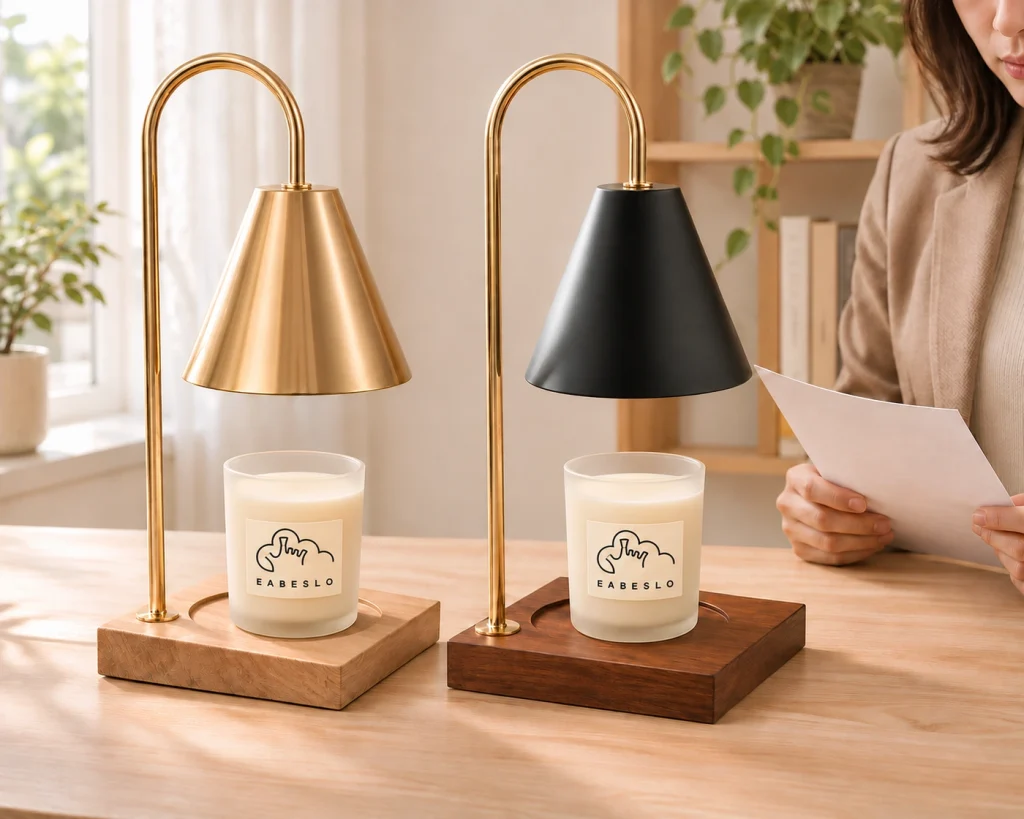
For an adjustable model, raising or lowering the lamp head changes this relationship. In Green-Life’s experience, adjusting the lamp-post height is a practical way to improve unsatisfactory melting performance. Follow the manufacturer’s specified clearances and adjustment range, keeping the bulb and shade clear of the jar. Allow hot parts to cool before handling.
Confirm the setting with the specified bulb and the actual candle. Use the bulb type, base, voltage and wattage required for the model. If the instructions do not state the required clearance, ask the supplier to confirm it. A distance recommended for another lamp may involve a different bulb, shade or candle configuration.
What should you observe when trying different jars?
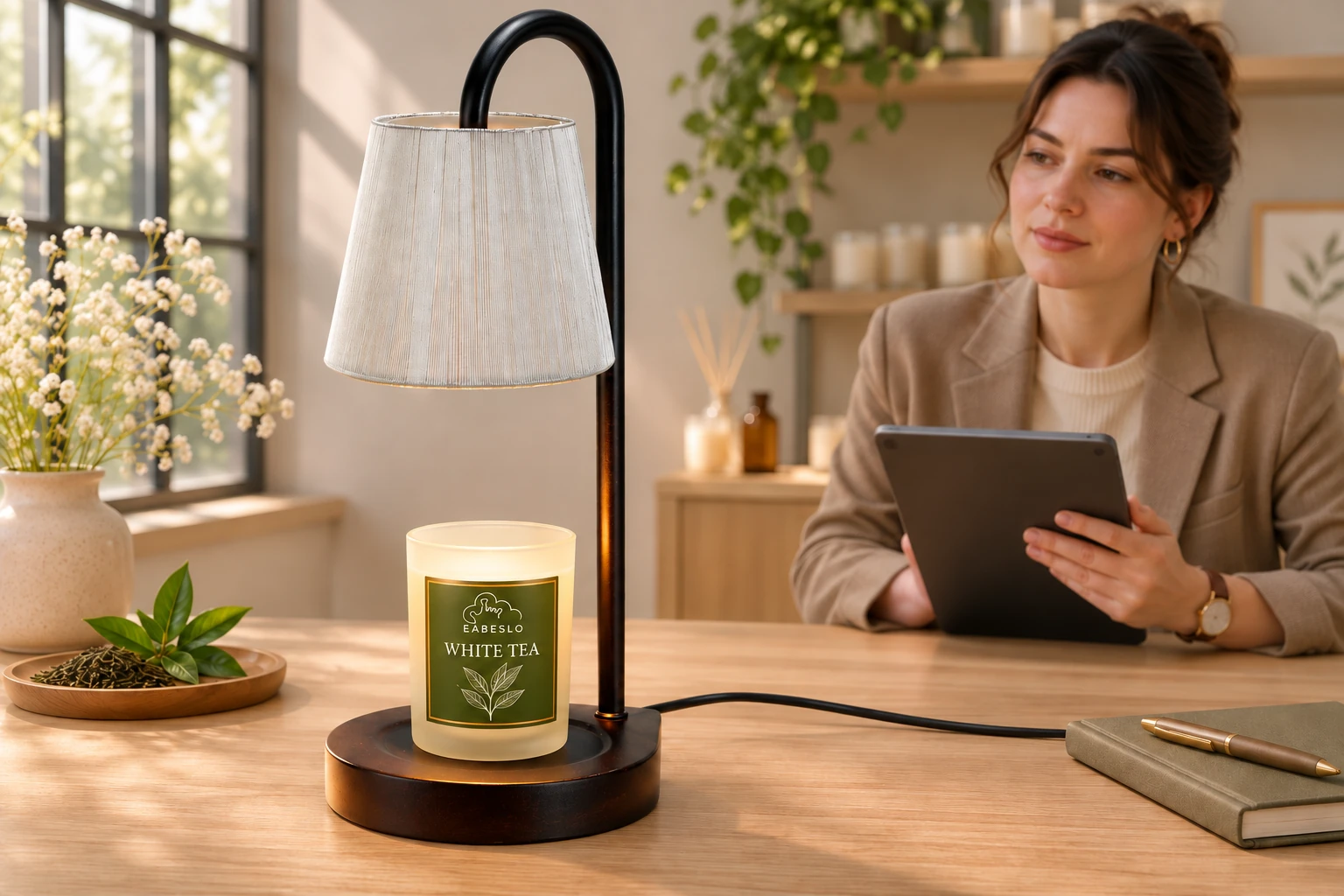
Once the dimensions look suitable, evaluate the filled candles beneath the shortlisted lamp. Use the intended wax formulation; candles in the same jar may respond differently when their formulations change.[1] Begin with the specified bulb and an instructed height setting.
Where the model includes dimming, evaluate its permitted settings alongside the lamp height. Compare one adjustment at a time, keeping the others consistent, so the result is easier to interpret.
For a wide jar, observe how melting develops across the wax surface, including the center and outer areas. For a shorter jar or one with wax sitting well below the rim, check whether the available adjustment brings the head to a useful position. A tall jar also needs sufficient space beneath the shade for the intended setting and normal placement.
Record the time when melting first becomes visible, the melting pattern at agreed intervals, and the fragrance strength and character during warming. Photographs taken from similar angles make different settings easier to compare. Melting and scent should both be assessed: a visibly larger melted area alone does not establish a better fragrance experience.
If the consumer routine includes removing spent wax, consider the resulting lower wax surface during further evaluation. For a fixed-height model, evaluate the intended jars with its specified bulb and any available dimming settings. Several jar sizes may be suitable if they fit the lamp and give acceptable results.
These observations help define suitable pairings. The candle supplier should also confirm that the vessel and its decoration are suitable for the proposed external heating.
What should brands confirm before offering the combination?
For each approved pairing, keep a short record identifying the lamp model, candle SKU, bulb specification, height position and any operating setting used during evaluation. Note the agreed observations and applicable use instructions.
If the lamp is intended for several candle sizes, show which jars were evaluated and whether they use different height or dimming settings. This gives the brand a clearer basis for product descriptions and customer support than a broad claim that the lamp fits every candle.
Share your candle jar dimensions—or the sizes across your collection—with Green-Life. If those details are still being developed, we can provide the lamp dimensions and recommended jar range to help you shortlist a suitable combination for sampling.
Sources
[1] Cargill — NatureWax Frequently Asked Questions https://www.cargill.com/bioindustrial/naturewax/naturewax-faqs ↩