Choosing between ceramic and glass candle vessels starts with the collection’s theme, design and target price. The next question is how reliably the selected vessel can meet its dimensions, appearance and filled-candle requirements in production.
In Green-Life’s experience, ceramic offers a broader range of shapes and decorative effects. Ordinary glass shapes can offer more consistent quality, although developing a new glass shape can require a higher tooling investment. These are practical starting points: the actual forming process, finish, lid and candle formula still need to be assessed together.
1. Define the Design, Fill Quantity and Target Cost
Work back from the finished candle. What should it look like, how much wax should it contain, and what selling price must the complete product support?
For vessel development, distinguish three specifications:
- Brimful capacity: the volume when the vessel is filled to the rim.
- Working fill volume: the volume at the intended filling level, leaving the required space above the wax.
- Net wax weight: the mass of the candle formulation used for that fill.
A capacity in millilitres is not an equivalent wax weight in grams. Confirm the intended formulation and fill level with the filling partner before finalising the vessel. This also helps establish whether the combined vessel, wax, fragrance, lid and packaging fit the target cost.
Compare finished samples rather than outside dimensions alone. Two jars with similar height and diameter may have different usable volumes because their internal profiles, wall thicknesses and bases differ. Agree on the acceptable capacity range as well as the appearance.
Start by checking existing shapes. A suitable existing jar with a different finish may achieve the collection’s theme without the investment and development work of a new shape.
2. Compare Manufacturing Options and Tooling Investment
Ceramic: more design options, with process-dependent limits
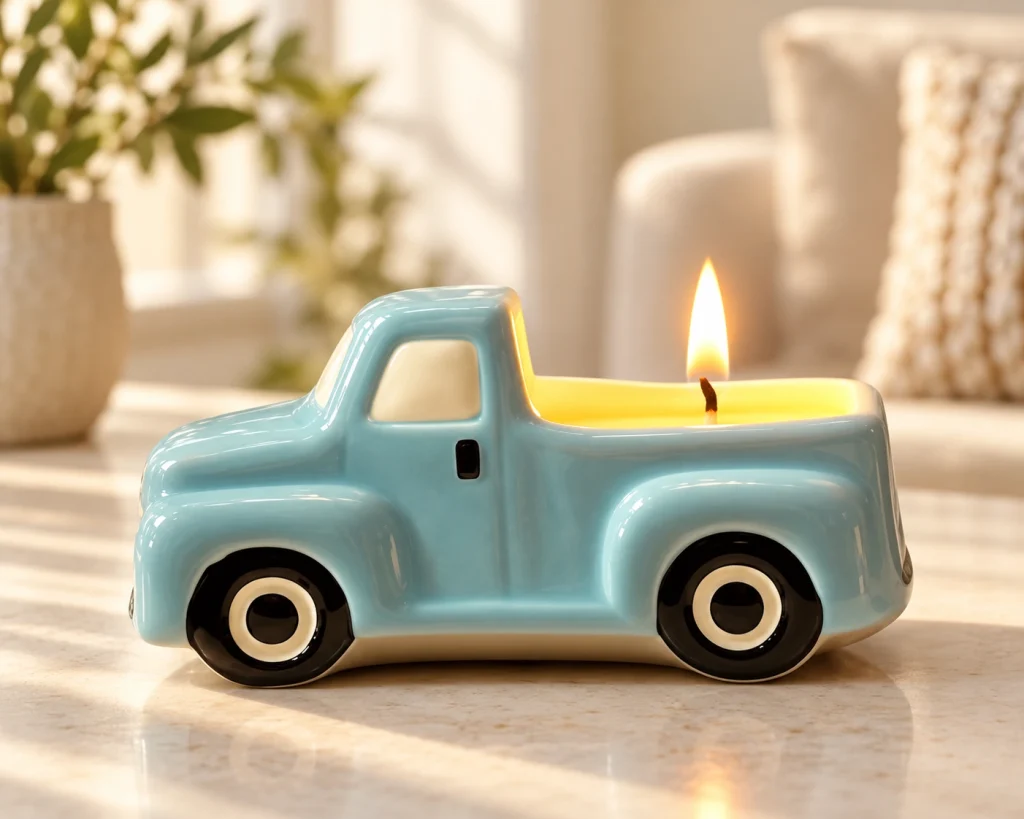
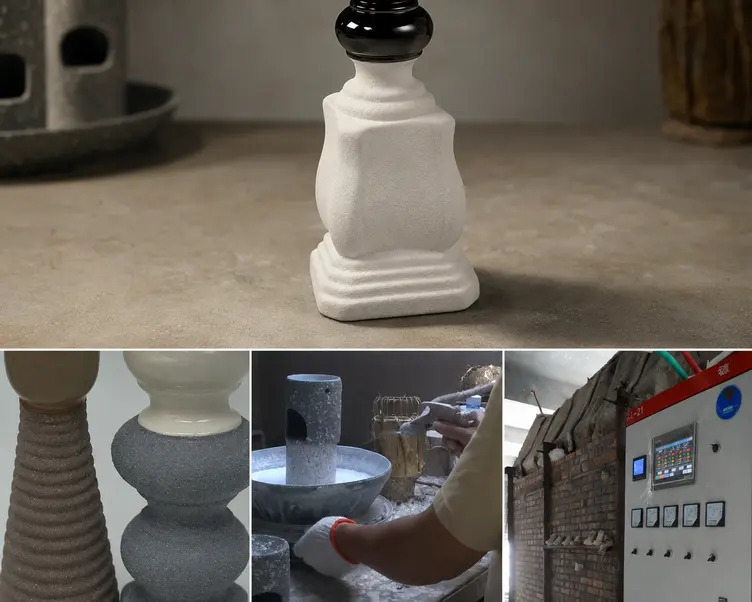
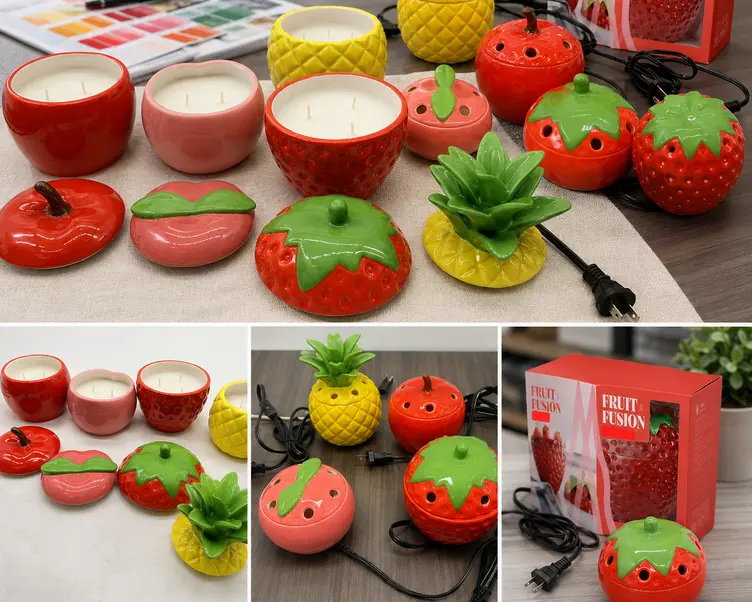
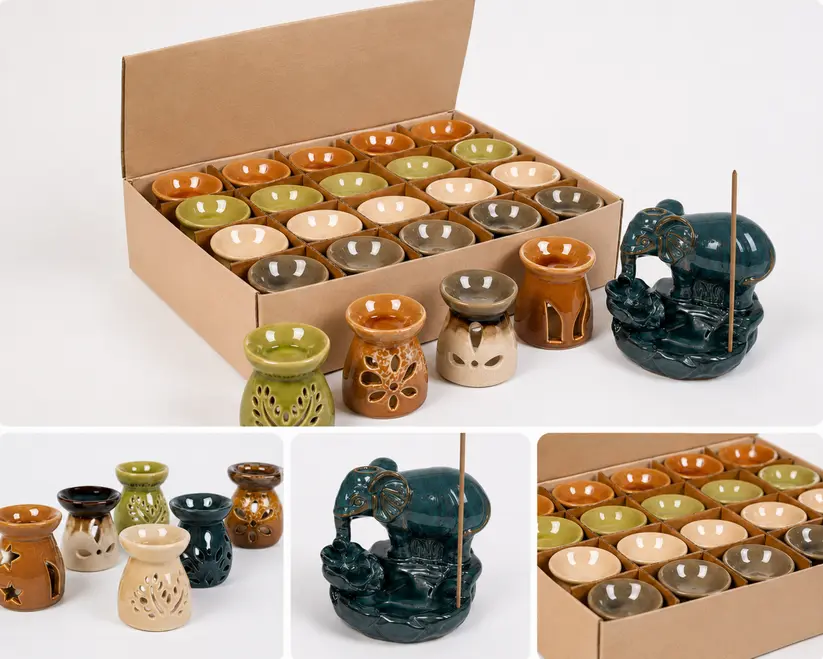
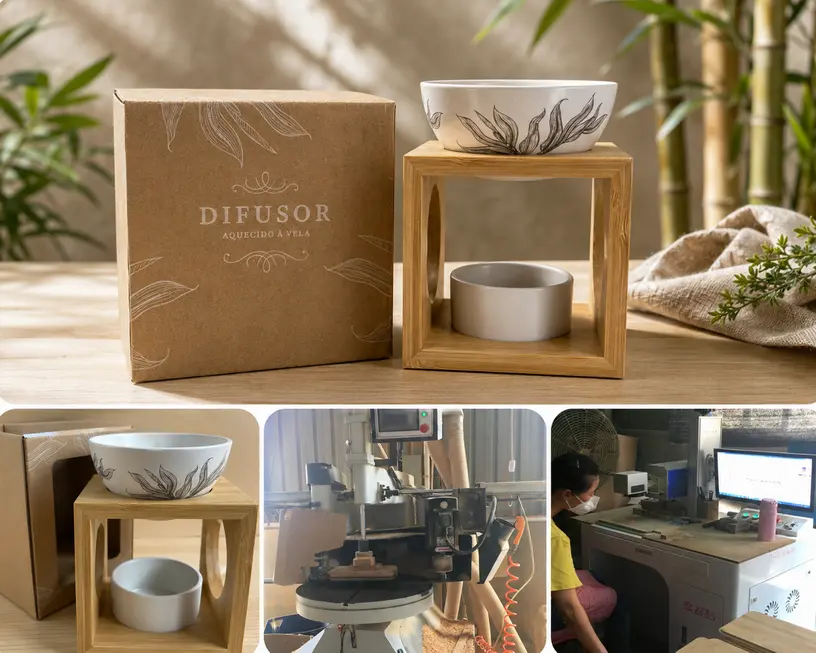
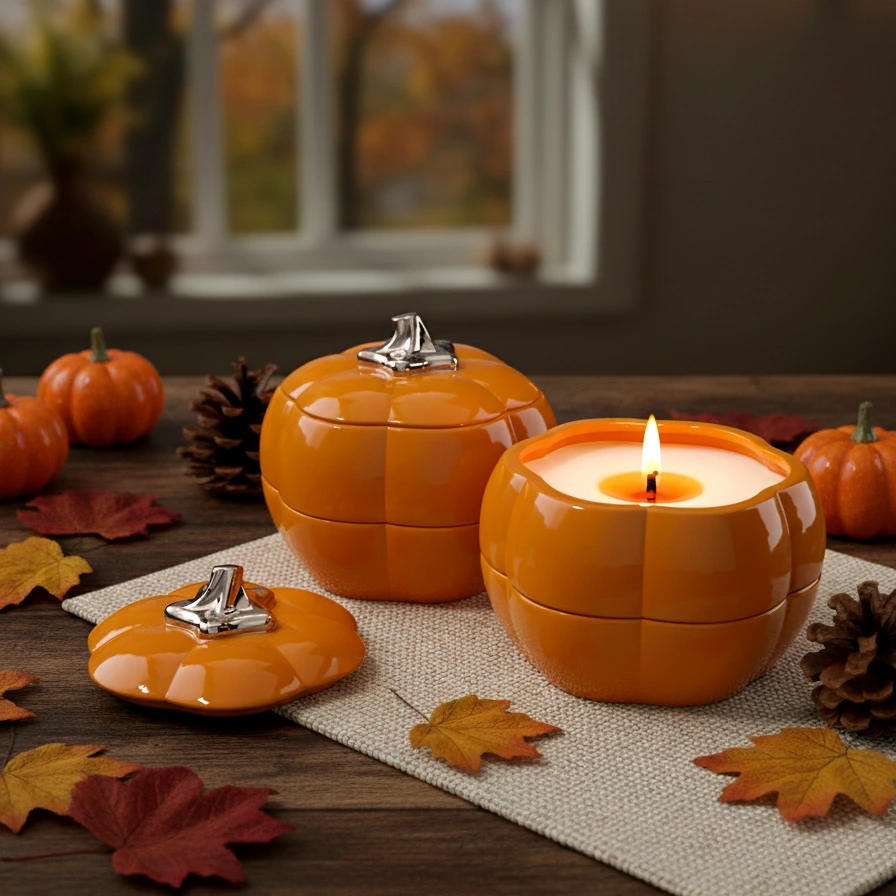
Ceramic can support sculptural shapes, relief decoration, textures and varied glaze effects. In Green-Life projects, these options often help brands develop distinctive designs for themed collections, especially seasonal ranges and gifts for specific occasions.
The manufacturing route still matters. Slip casting with plaster moulds and roller forming use different tooling and impose different shape constraints. A shape that suits one process may be unsuitable for another. Tooling, demoulding, drying and firing therefore need to be considered before approving a new design.
Across different ceramic categories, total shrinkage from the formed body through drying and firing commonly falls around 5%–20%, depending on the body formulation and production process. The producer must establish the shrinkage allowance for the selected body and firing conditions when developing the tooling; this broad range is not a finished-product dimensional tolerance.
Uneven shrinkage can contribute to warping and out-of-round rims. Shape, wall thickness, firing conditions and support also influence the result. Check final dimensions, roundness and usable capacity on fully fired, glazed samples with the intended finishing, rather than on master models, plaster moulds or unfired bodies.
Ceramic tooling may offer a lower entry investment for some projects, but that does not establish a lower finished-product cost. Decorative work, production tooling requirements, inspection and rework can change the comparison.
Glass: consider existing shapes before commissioning new tooling
For ordinary glass candle-jar shapes, Green-Life generally sees more stable quality than in the ceramic alternatives it handles. However, a new glass shape can involve a relatively higher mould cost. Compare that investment against the planned volume and expected life of the collection.
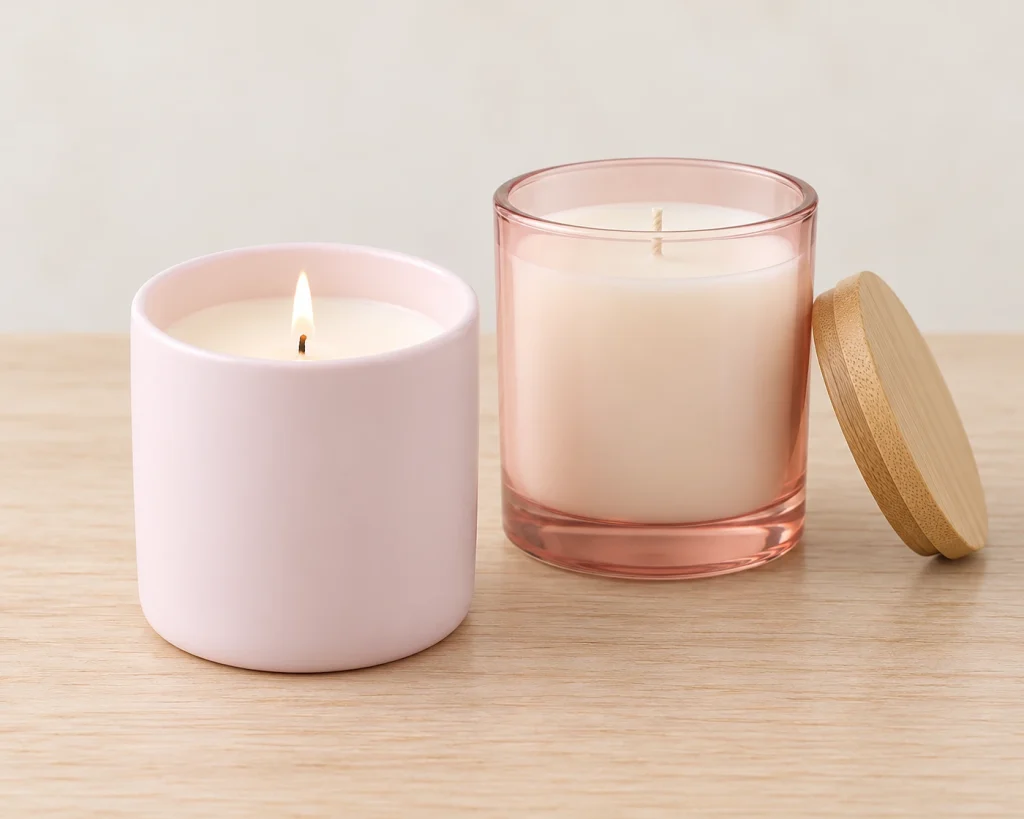
An existing glass shape can still support different looks through colour coating, printing, hot stamping or other suitable decoration. Confirm which processes work with the selected jar and the intended candle use. A decorated version needs its own agreed appearance and performance requirements.
When comparing quotations, separate existing-shape decoration from new-shape development. Otherwise, the apparent difference between “ceramic” and “glass” may actually be a difference in tooling scope.
3. Verify Lid Fit, Dimensions and Surface Effects
Check the jar and lid as a matched combination
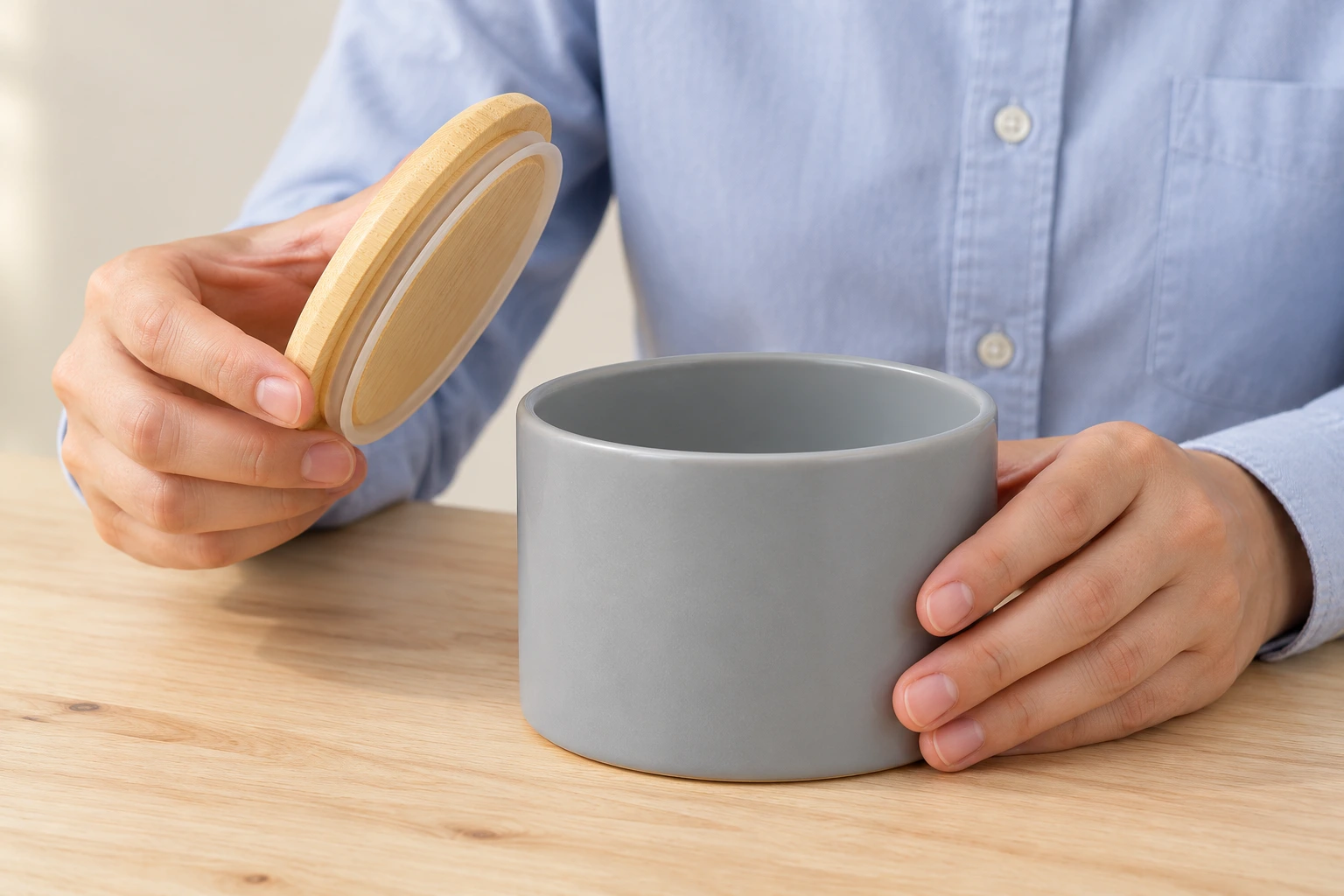
In Green-Life’s experience, ceramic jars—particularly those produced via traditional slip casting rather than precision roller forming or pressure casting—typically exhibit wider dimensional tolerances and jar-to-lid fit variation than machine-made glass containers. Glaze colour variation is another recurring consideration. The actual fit still depends on the selected body, tooling and production controls; neither the forming method nor a higher firing temperature alone guarantees dimensional accuracy.
Evaluate the finished jar with its actual lid. Check the opening, rim, lid seating and any plug or sealing ring together. A wood, bamboo or metal lid cannot compensate for every variation simply because it is made from a different material.
Review several representative samples where practical. One well-fitting pair may not show the range that production needs to accommodate. Specify the required fit and acceptable dimensional variation before production, rather than relying only on “same as sample.”
Agree on appearance and the relevant checks
For ceramic, use the approved physical sample to define the intended glaze and decoration. Where a single sample cannot explain acceptable colour variation, agree on boundary samples showing the acceptable range. Reactive glaze effects need a shared understanding of the intended variation.
Green-Life checks ceramic appearance after firing so that obvious glaze-colour differences can be raised early. This early check supports subsequent inspection; it does not replace final lot assessment.
For glass, define how bubbles, visible surface marks, rim condition and decoration will be assessed according to their location, extent and effect on use. Residual-stress assessment is separate from ordinary visual inspection. Controlled annealing after forming reduces residual manufacturing stress; inadequate annealing can increase the risk of breakage during subsequent heating or handling.
For coated jars, agree on an adhesion check suited to the coating and surface geometry. Separately, assess resistance to the actual fragrance formulation, cleaning agents or other liquids likely to contact the finish. Solvent wiping or water exposure may form part of an agreed evaluation, but they do not automatically replace an adhesion test or prove resistance to every fragrance oil.
4. Separate Vessel Checks from Filling and Burn Validation
The empty vessel and the finished candle answer different quality questions.
Vessel checks should address the agreed dimensions, capacity, stability, rim condition, lid fit and relevant material or structural performance. Where thermal-shock or other testing is required, confirm the method and acceptance criteria for the actual material and intended use. A glass-container specification cannot simply be applied to ceramic.[1] For ceramic, inspect both the body and glaze for cracking. Glaze crazing—a network of fine glaze cracks—can relate to body–glaze fit as well as exposure conditions; it should not be treated as synonymous with thermal-shock failure.[2]
Wax filling and burn validation are usually arranged by a specialist candle-filling manufacturer—Green-Life also works with such suppliers—or by the customer. When requested by the customer, samples may also be sent to a designated third party.
The filled candle needs assessment as a combination of vessel, wax, fragrance, wick and fill quantity. For both ceramic and glass, consider the burn behaviour throughout the candle’s intended use, including flame behaviour, melt-pool development, heat build-up and the vessel’s condition. Avoid assigning temperature checks only to glass or melt-pool checks only to ceramic.
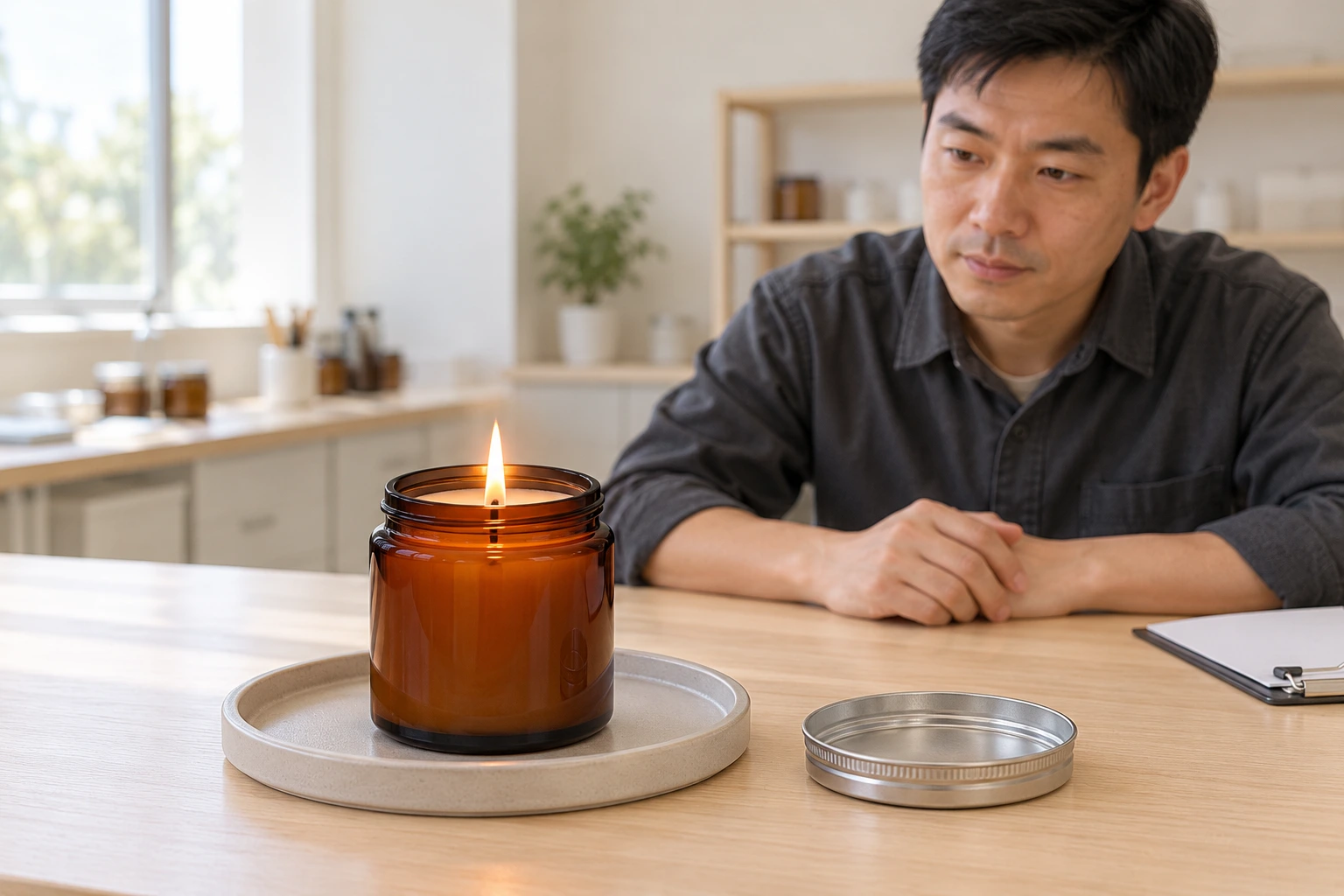
Appearance after filling is another part of development. Visible wax pull-away, often called wet spots, can affect the presentation of a transparent glass candle. Distinguish that appearance issue from leakage, fragrance separation or damage to an internal coating. An opaque ceramic wall may hide a visual effect; it does not establish that the formulation and vessel are compatible.
For ceramic vessels, consider whether accessible pores, glaze discontinuities or cracks could allow the contents to penetrate the body. Assess the finished vessel with the intended formulation and relevant storage conditions for staining, absorption or leakage. Body water-absorption data can inform this assessment, but it does not alone prove compatibility with a wax-and-fragrance formulation.
Agree on who prepares samples, performs the checks, reviews results and confirms readiness for production. A good-looking empty jar or an approved colour sample cannot substitute for finished-candle validation.
5. Turn Development Decisions into Production Requirements
Before production, bring the approved design and validation decisions into one clear set of requirements. It should identify:
- The vessel, material, finish, lid and packaging versions being supplied.
- Critical dimensions, capacity, intended fill level and jar-to-lid fit.
- Approved appearance samples and any agreed boundary samples.
- Inspection criteria, the sampling arrangement and records to retain.
- The filling and validation responsibilities, results and unresolved points.

Keep agreed reference samples accessible to the parties making and checking the product. Where the vessel producer, filling manufacturer and customer each need a sample, agree on matching sets and their identification. The number of samples should follow the project’s needs.
Inspection instructions should carry the decisions that QC can actually apply. Validation records should identify the tested combination and conditions. These documents serve different purposes: a passed development sample does not prove every production unit matches it, and an accepted production lot does not replace the required candle validation.
Packaging validation should also include inspection for rubbing marks, finish wear, rim chips and cracks after the agreed transport tests. The priorities depend on the actual jar, finish, packing configuration and distribution route, rather than the material name alone.
Changes to the vessel shape, finish, lid or formulation should prompt a review of the affected checks before the revised version proceeds. Packaging changes also need a review of whether earlier transport validation remains representative. For buyers comparing ceramic and glass, this makes the decision concrete: select the design and development route that suit the collection, then establish how its agreed quality will be verified and maintained.
Sources
[1] ASTM F2179-26 — Annealed Glass Containers Produced for Use as Candle Containers. https://store.astm.org/f2179-26.html. Accessed 18 October 2026. ↩
[2] Mayco — Low Fire Clear Glaze: Body–Glaze Compatibility. https://www.maycocolors.com/color/fired/low-fire-clear-glaze-dipping/. Accessed 18 October 2026. ↩