Labels and instructions are part of the product a fragrance brand delivers. They communicate safe use and help meet the applicable requirements of the sales market. Before approving them, confirm that they describe the actual diffuser, vessel and liquid, and agree who will prepare and review each part. A supplier’s existing version can provide a useful starting point, but the content still needs to fit your model, product combination and sales market.
Start with the Product and the Available Documents
Begin by defining what the customer will receive: an electric diffuser, an empty non-electric vessel, a bottle of fragrance liquid, or a complete set. This determines which information needs to come together. A device manual explains operation and care; a liquid label identifies the contents and communicates the applicable safety information. A complete set needs instructions that connect the two.
In Green-Life’s projects, Green-Life or the supplier usually provides a basic version of the labels and instructions. Customers with an established product range may supply their own version instead. Green-Life’s involvement depends on the customer’s needs: some projects require full document preparation, while others need review and a printed sample.
Before adapting either version, identify the information owner. The equipment supplier should be asked to confirm model details and operating conditions; the liquid supplier should provide information for the liquid being sold. The brand brings the intended market, language requirements and product presentation into the review. Agree who will arrange any specialist assessment the project requires.
This is especially useful when several suppliers contribute to one set. The business printing the box may be working from artwork supplied by someone else, so responsibility for checking its technical content should be agreed separately from the printing task.
Electric Diffusers: Match the Instructions to the Model
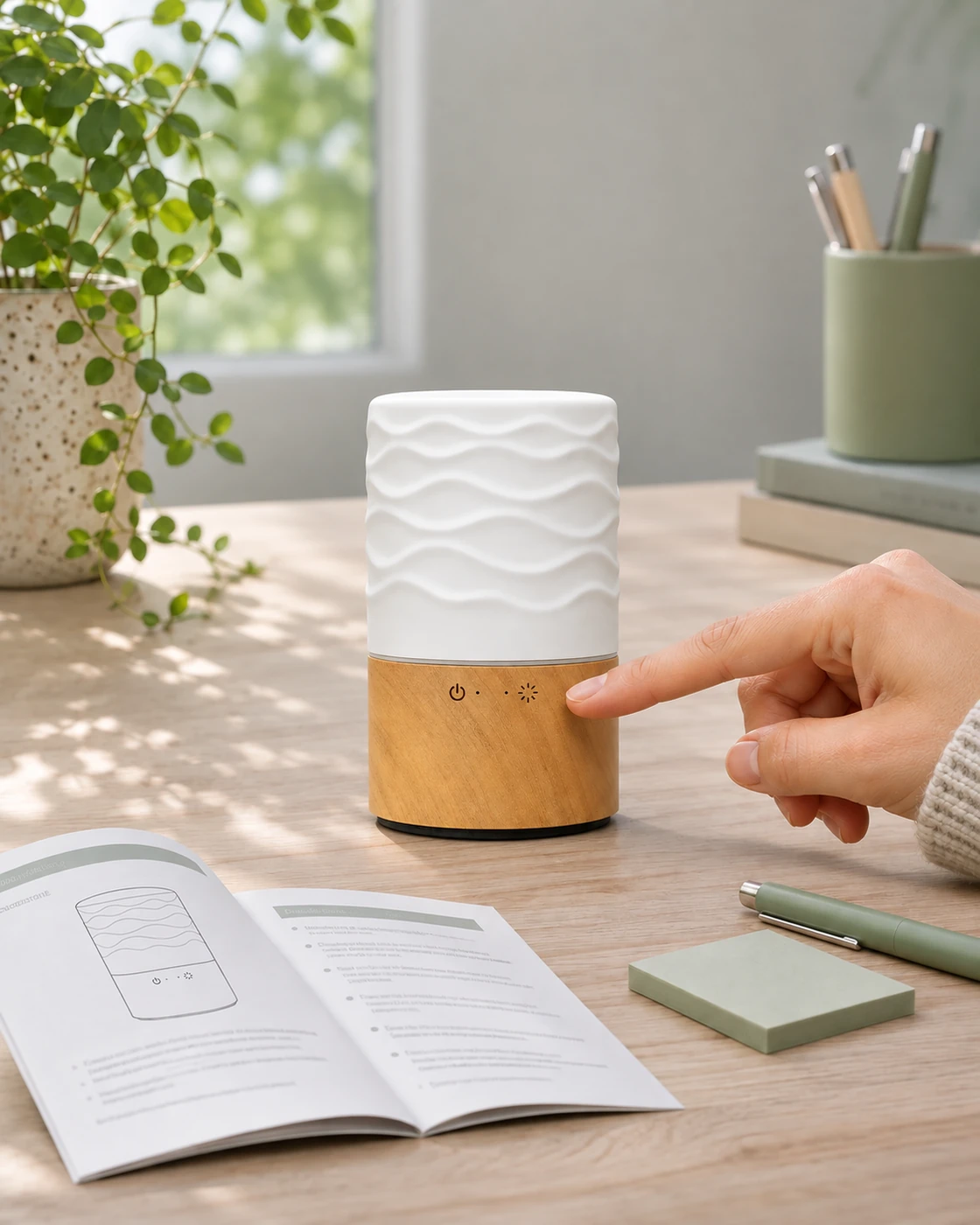
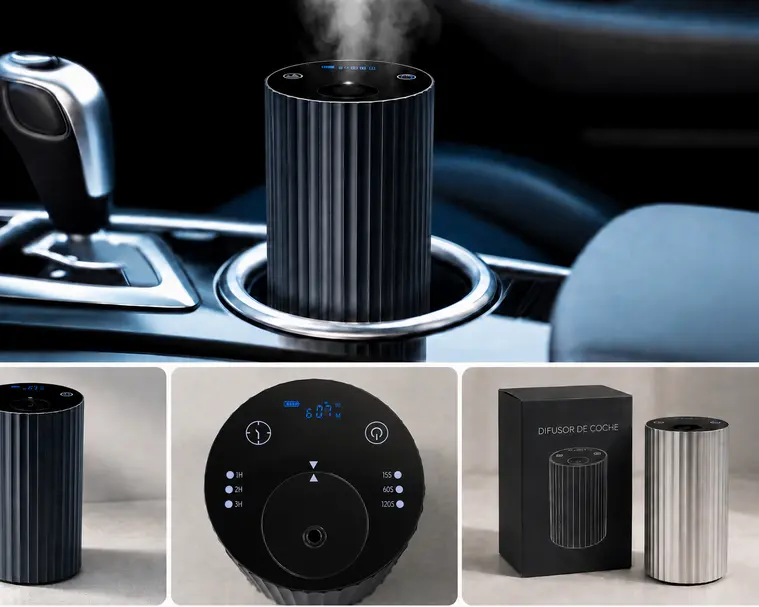
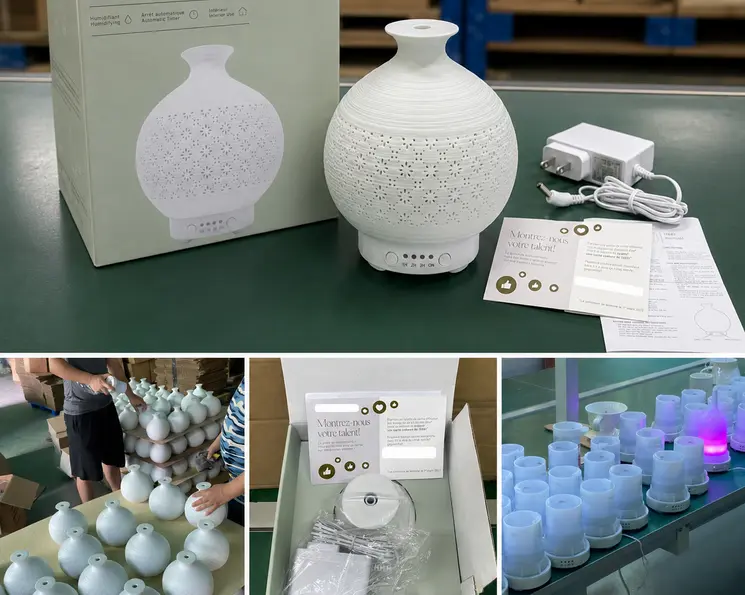
For an electric diffuser, start with the model identification, power information and supplied accessories. Compare the product label, manual and packaging against the configuration being ordered. Check which compliance or certification markings apply, where they should appear, and whether the supporting evidence covers the complete diffuser or only an accessory such as its power adapter. A change of adapter, control layout or refill connection may require changes in the text or illustrations, even when the product keeps the same family appearance.
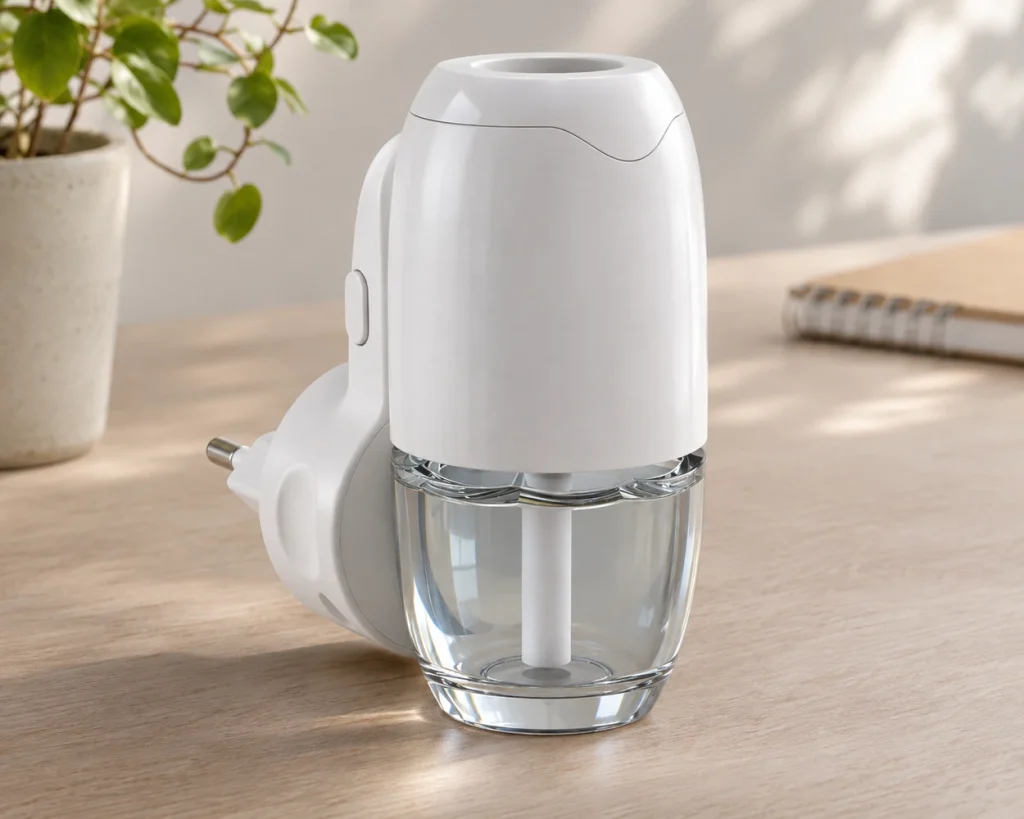
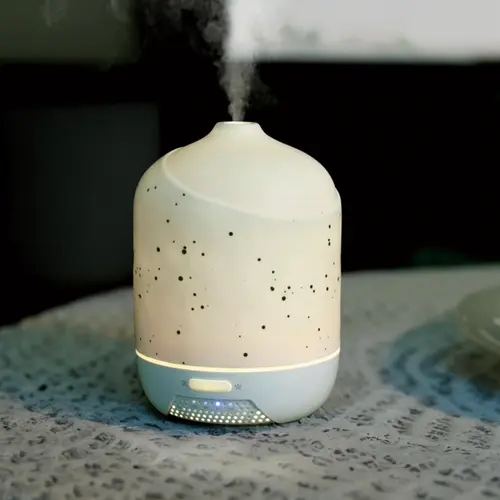
Next, check the instructions for the liquid. A water-based ultrasonic diffuser needs a clear explanation of filling and any permitted oil addition. A waterless nebulizing diffuser needs instructions for its intended liquid and bottle arrangement. A plug-in refill system needs guidance that identifies the compatible refill and shows how to fit it. These differences should be understandable without asking the user to interpret the diffuser’s technology.
Avoid phrases such as “add fragrance oil” when the product needs a more specific liquid. State the intended use clearly and base any quantities or limits on the actual combination. Green-Life normally provides the equipment or vessels for customers to test their liquids; in some projects, it also arranges longer-term observation using customer-supplied liquid. The agreed outcome should inform the instructions supplied with that product.
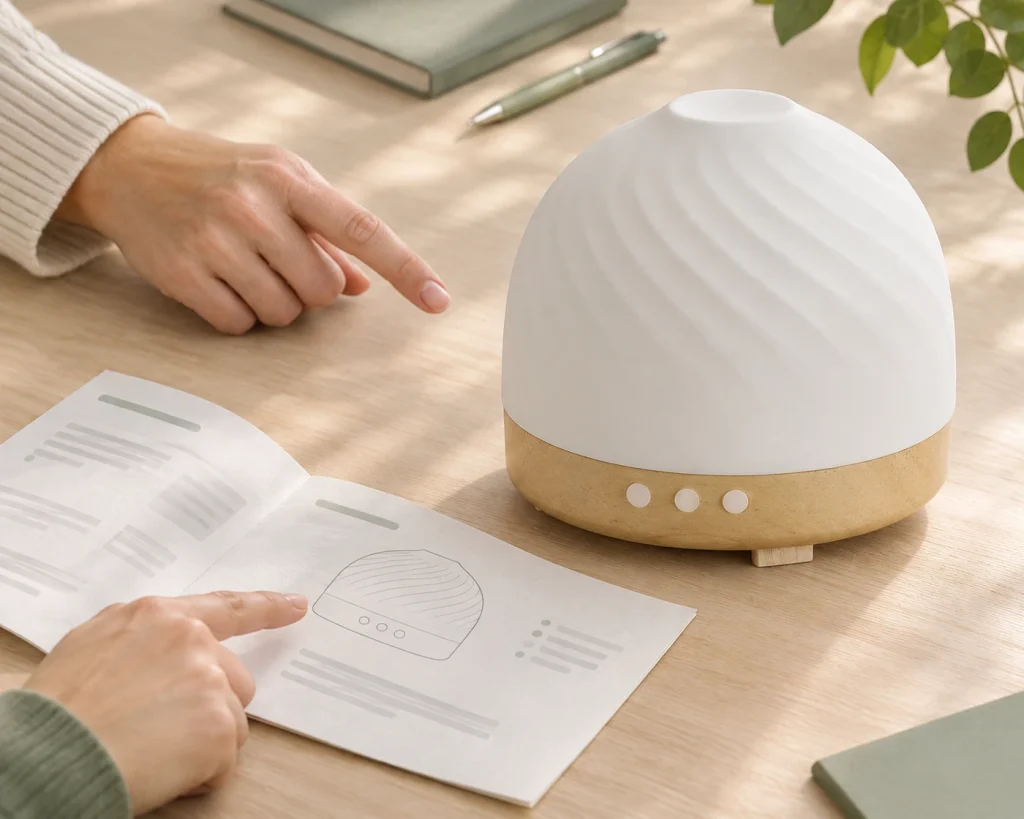
Check the cleaning illustrations just as carefully as the operating steps. They should show the correct opening, removable parts and areas that need protection from liquid. Accurate, model-specific pictures help the reader follow the handling and cleaning instructions using the product in front of them.
Non-Electric Diffusers: Explain the Vessel and Refill Together

For reed diffusers and other passive vessels, the main questions concern filling, the diffusion medium, placement and refilling. Instructions should reflect how the product is supplied: already filled, accompanied by a separate refill bottle, or sold as an empty vessel for a specified use.
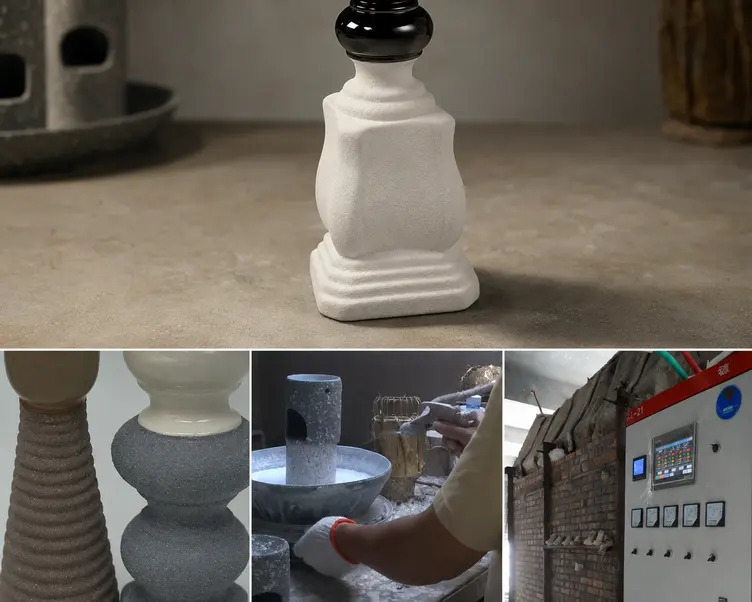
For a reed diffuser, explain how to remove the transport closure and fit the reeds where applicable. Any guidance on reed quantity, turning or replacement should suit the supplied reeds and liquid. If the vessel uses a porous ceramic flower or another absorbing component, show where the liquid is applied or filled and how the component is positioned.
Also consider what happens during ordinary handling. Review the guidance on spills, contact with furniture and changing fragrance. Where the user needs to turn the reeds, explain how to avoid dripping onto surrounding surfaces. Ask the supplier to confirm suitable spill-cleaning advice for the actual liquid, the vessel’s exterior decoration and nearby surfaces. Cleaning instructions should suit the vessel’s material and finish as well as the intended refill arrangement. An attractive coated vessel and a plain glass bottle may need different care information.
When the customer buys an empty vessel, establish who will prepare the instructions for the finished fragrance product. The vessel supplier can contribute information about its construction, intended use and care; the party arranging the liquid and final presentation needs to bring those inputs together. This handover matters more than copying a generic reed diffuser care card.
Essential Oils and Fragrance Liquids: Use Information for the Actual Product

An essential oil or fragrance liquid needs its own review, whether sold separately or included with a diffuser. Confirm the product identity, intended use, formulation reference and fill quantity with the liquid supplier. Check that the supporting information corresponds to the product being sold, particularly when a fragrance concentrate is blended into a finished refill.
Names such as “essential oil” and “fragrance oil” do not establish suitability for every diffuser. The liquid label and instructions should make its intended application clear. If the brand offers the same scent for reed and electric diffusers, give the customer a practical way to identify the appropriate version.
Obtain the relevant safety data sheet (SDS) and other supporting information, then arrange the label review for the destination market. The SDS provides chemical safety information; it is not the finished retail label artwork. An IFRA Certificate of Conformity addresses the fragrance mixture’s conformity with IFRA Standards for an intended use. It does not replace a safety assessment or local regulatory requirements, and does not establish compatibility with a particular diffuser.[1]
The useful question for a buyer is therefore: who will turn the liquid supplier’s information into the applicable wording and label for this finished product? Depending on its hazard classification and destination market, the review may need to cover hazard pictograms, signal words, hazard and precautionary statements, and supplier or product identifiers.[2] Additional items, such as an EU unique formula identifier (UFI)[3] or tactile warning, should be checked where the product falls within their scope.[4] Settle that task before the artwork is treated as ready for printing. Follow any relevant changes in the liquid through to its own label and the diffuser instructions that refer to it.
Retail liquid labels and transport-package markings need separate review. Agree who will check the transport classification, packaging and markings for the actual shipment.
Review the Content, Languages and Print Sample Before Production
Once the product information is settled, review the documents as one customer-facing set. The device, vessel, liquid bottle, box and instructions should agree on product names, supplied parts and use. Check that the illustrations remain accurate after branding or layout changes and that important text is readable at the actual printed size. For small bottles or several language versions, check the available label space against the applicable size and layout requirements before reducing the text. A fold-out label may be an option where the relevant labelling rules permit it.
The following division of work provides a useful starting point for discussion:
| Information or task | What to agree before printing |
|---|---|
| Device or vessel details | Who confirms the model, configuration, operating steps and care information? |
| Liquid information | Who supplies the information for the actual formulation and arranges the applicable label assessment? |
| Document preparation | Is Green-Life preparing the full version, adapting customer files, or reviewing and sampling existing artwork? |
| Languages and specialist review | Who reviews each language, and which certification-related content needs laboratory input? |
| Final printed version | Have both parties confirmed the text, illustrations and print sample? |

In Green-Life’s projects, customers usually review the multilingual wording, and both parties confirm the documents before bulk printing. For some projects, Green-Life also asks a third-party laboratory to review certification-related content. Define the scope of that review so it is clear which parts have been checked.
Products within the same range may need revised instructions when the model, functions or supplied accessories change. Green-Life’s projects include updating and reprinting instructions for such differences and upgrades. Before reusing an existing file, compare it with the current order. A familiar layout can be retained while the content is brought up to date.
The aim is to give the customer a clear, consistent explanation of the product they actually receive—and to resolve the content and review tasks before the printed materials enter production.
Sources
[1] IFRA — Using the Standards https://ifrafragrance.org/using-the-standards ↩
[2] ECHA — Labelling and packaging https://echa.europa.eu/en/regulations/clp/labelling ↩
[3] ECHA Poison Centres — Know your obligations https://poisoncentres.echa.europa.eu/know-your-obligations ↩
[4] ECHA — Child-resistant fastenings and tactile warnings https://echa.europa.eu/en/regulations/clp/labelling/specific-labelling-and-packaging-situations ↩