Essential oils, fragrance oils and reed diffuser liquids should not be treated as interchangeable refills. A liquid needs to suit the way a diffuser works, whether it is added to water, sprayed directly or drawn up through reeds. Adding water to a reed diffuser refill does not automatically make it suitable for an electric diffuser.
For fragrance brands adding devices to an existing range, the practical question is whether their intended liquid works reliably in the selected product. The name on the bottle is only the starting point.
First, clarify what the liquid is intended for
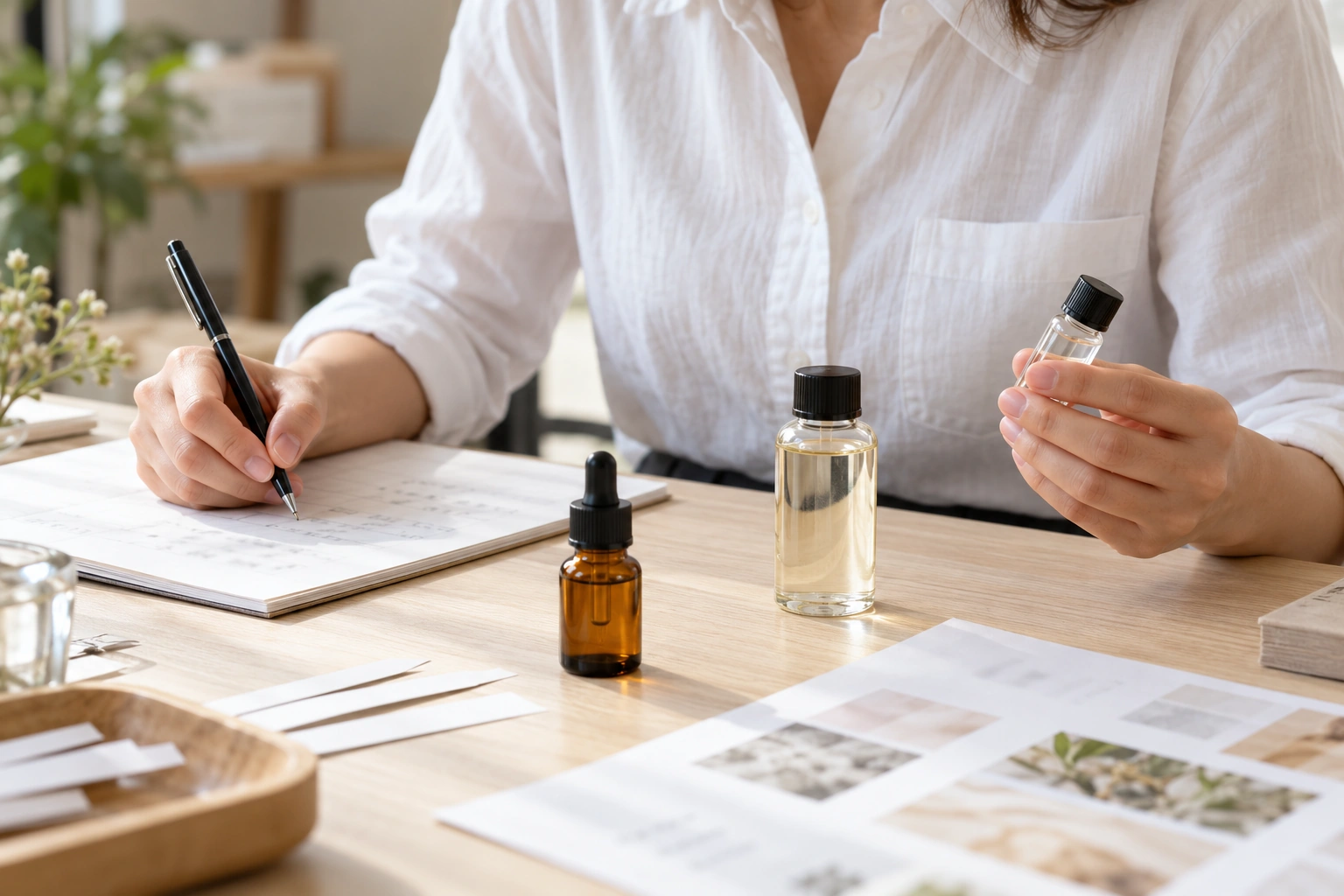
An essential oil is an aromatic material obtained from plants.[1] Its natural origin does not tell you which diffuser can use it, or whether it should be added to water. Check whether the product is pure essential oil or a finished blend containing a carrier or other ingredients.
“Fragrance oil” is a broader term for a formulated scent. It may contain natural and synthetic aromatic ingredients, together with solvents or other formulation components.[1][2] It does not specifically mean a liquid developed for ultrasonic diffusers. A fragrance supplied for candle making and a finished ultrasonic diffuser liquid can have very different requirements.
A reed diffuser liquid is a finished formulation intended to travel through reeds and release fragrance by evaporation. It already includes the base needed for that use. It should therefore be assessed as a complete refill, rather than treated as another bottle of concentrated fragrance.
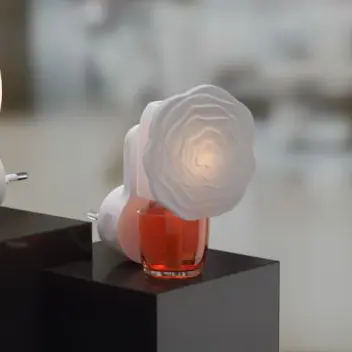
A heated plug-in air freshener refill is also a finished fragrance formulation, developed to work with a particular warmer and wick system. Its suitability for that system does not make it a refill for an ultrasonic or nebulizing diffuser.
When discussing samples with a supplier, use a description such as “fragrance liquid for use with water in an ultrasonic diffuser” or “water-free liquid for a two-fluid nebulizing diffuser.” This makes the intended application clearer than “diffuser oil.”
Match the liquid to the diffusion method
The following distinctions help brands decide which combinations to evaluate.
| Product type | Intended liquid and use | What the buyer should confirm |
|---|---|---|
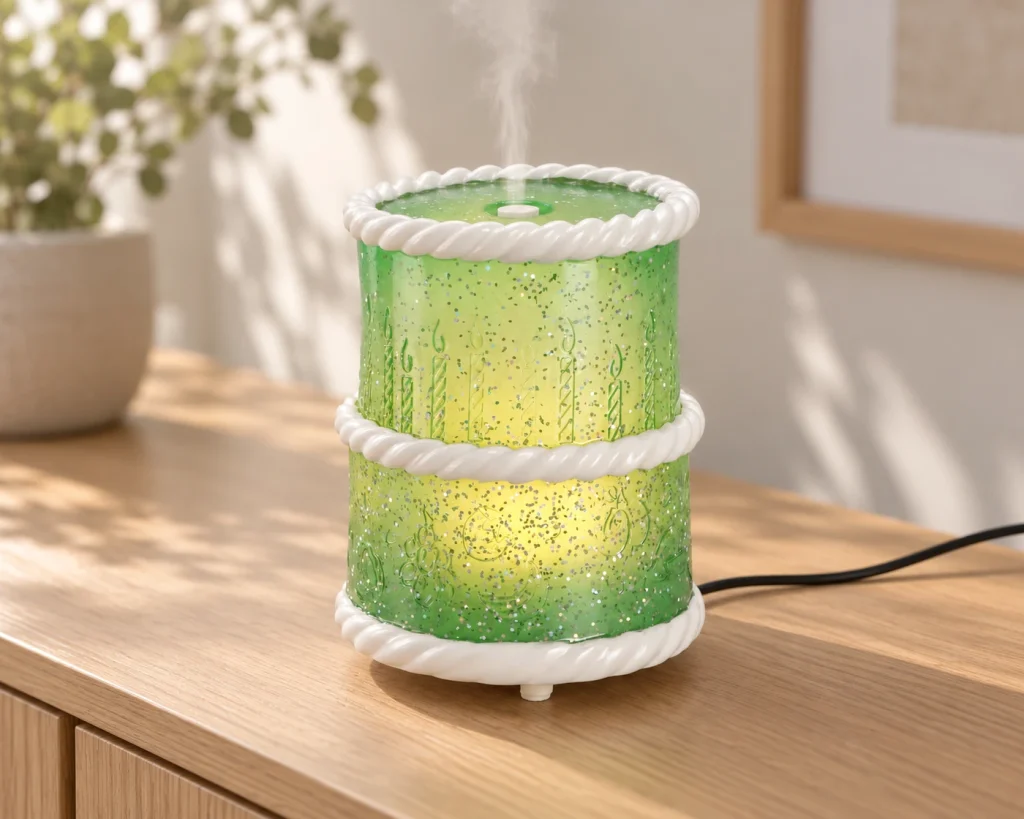
| Water-tank ultrasonic diffuser | Water with a small amount of suitable essential oil, or a fragrance liquid developed for ultrasonic use | Whether to add water, the intended dose, and performance as the diffuser is used |
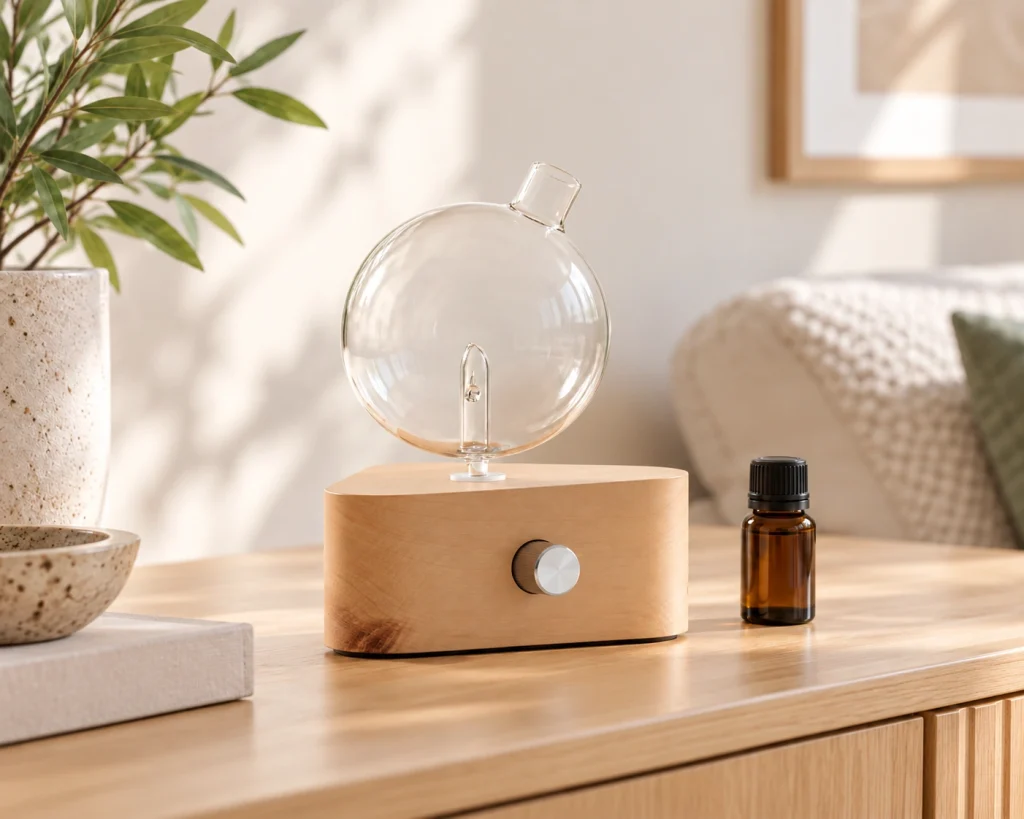
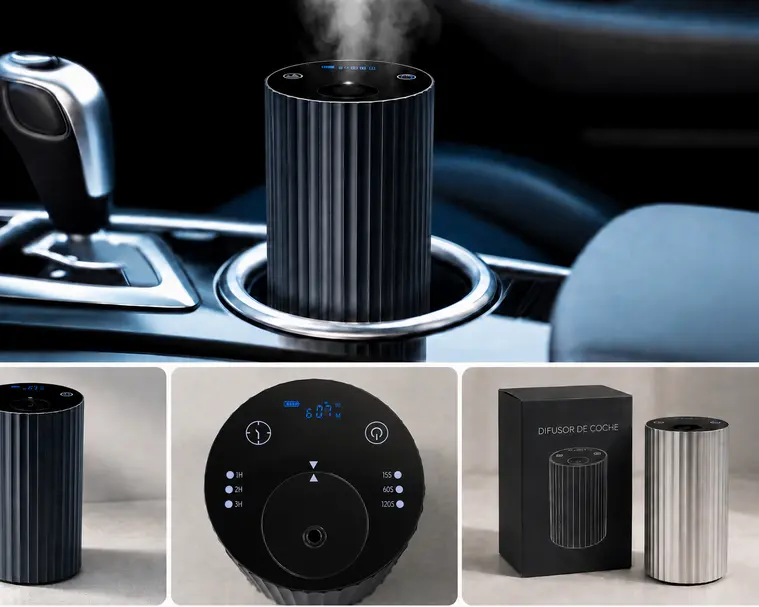
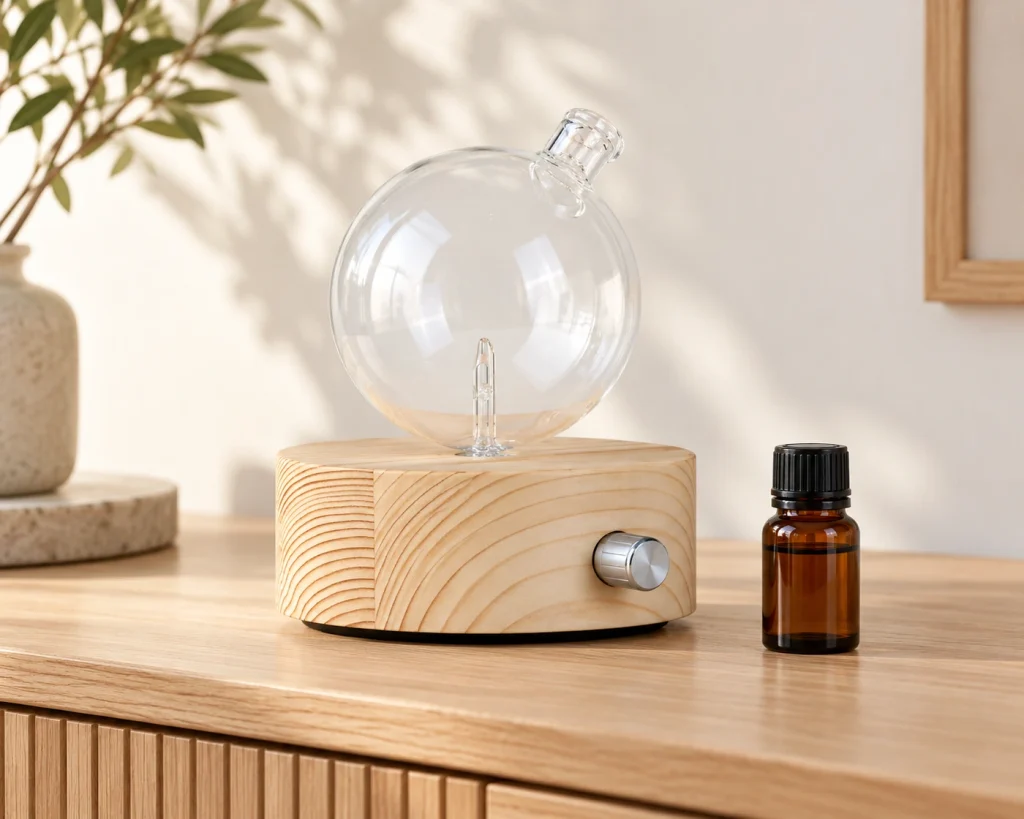
| Two-fluid nebulizing diffuser | A suitable water-free essential oil or fragrance formulation, sprayed directly | Whether the liquid flows and atomizes properly in the selected model |
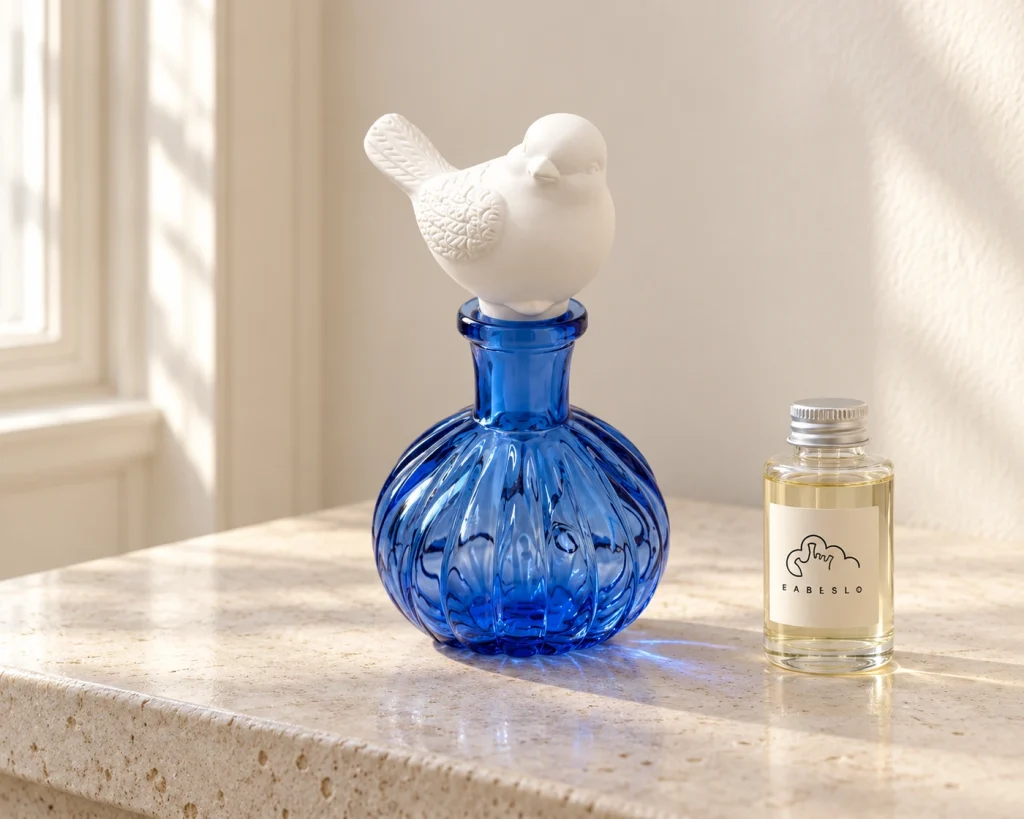
| Reed diffuser | A finished liquid formulated for uptake through reeds and evaporation | How the liquid performs with the chosen reeds and vessel |
| Heated plug-in fragrance system | A refill developed for the heater, bottle and wick combination | Compatibility with that complete refill system |
For the water-tank ultrasonic models Green-Life works with, pure essential oil is added in small amounts to water; it does not replace the water in the tank. A fragrance concentrate intended for dosing into water should be used at the specified amount. A finished water-based fragrance liquid developed for the device may already contain the water needed for use, or may require further dilution according to its instructions. The label should clearly distinguish these products and their preparation methods.
For Green-Life’s two-fluid nebulizing models, the liquid is used without adding water. Suitable liquids have low to moderate viscosity, meaning they flow easily enough for the atomizer to spray them. A water-free formula still needs to be tried in the chosen device.
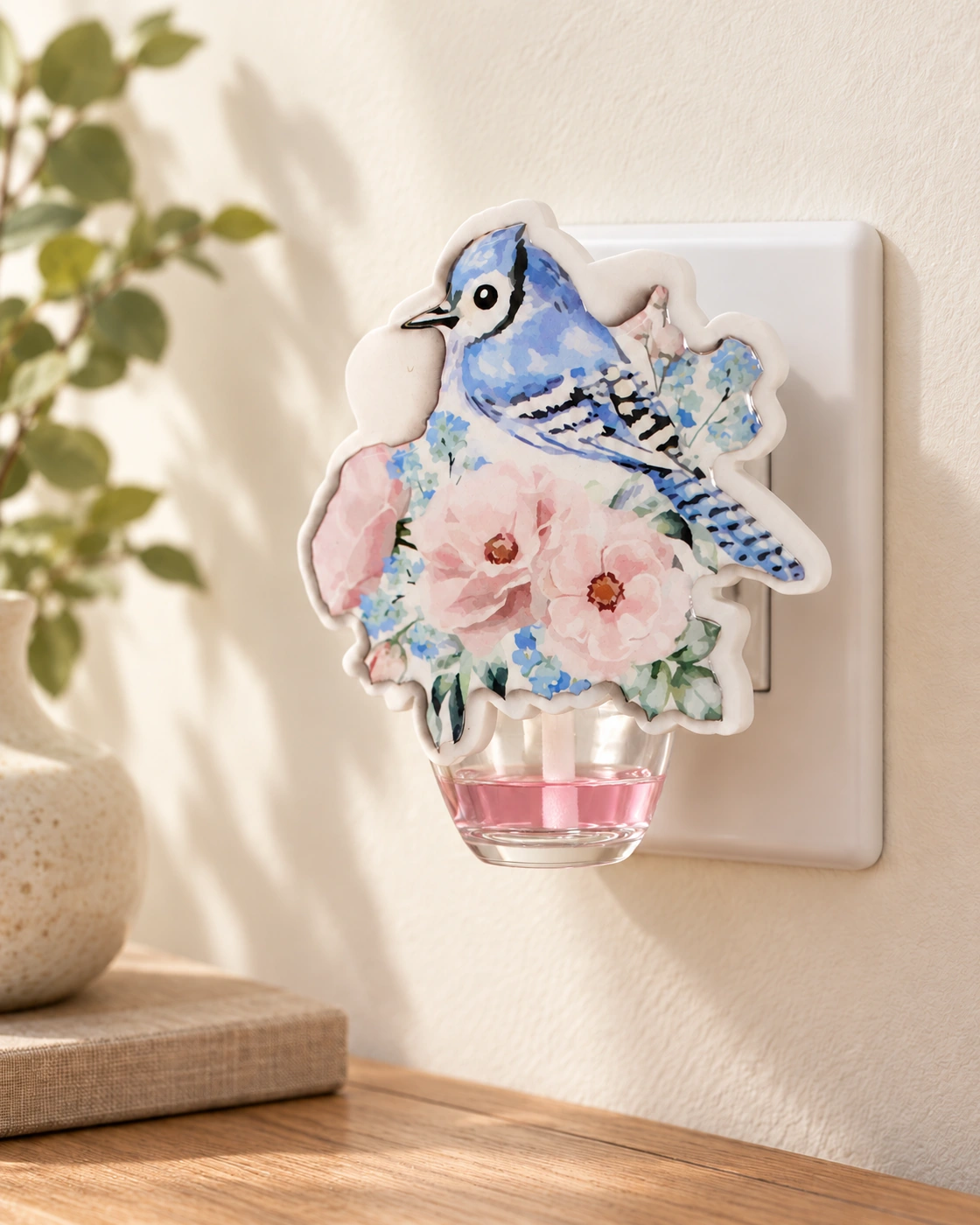
For a heated plug-in air freshener, the liquid must travel through the wick and release fragrance when warmed. Brands should evaluate the liquid, refill bottle, wick and heater together, including the scent as the refill is used. A bottle fitting the warmer does not establish that its liquid is suitable; use the refill specified for that system rather than substituting reed liquid or another fragrance oil.
Why adding water does not make a reed refill suitable
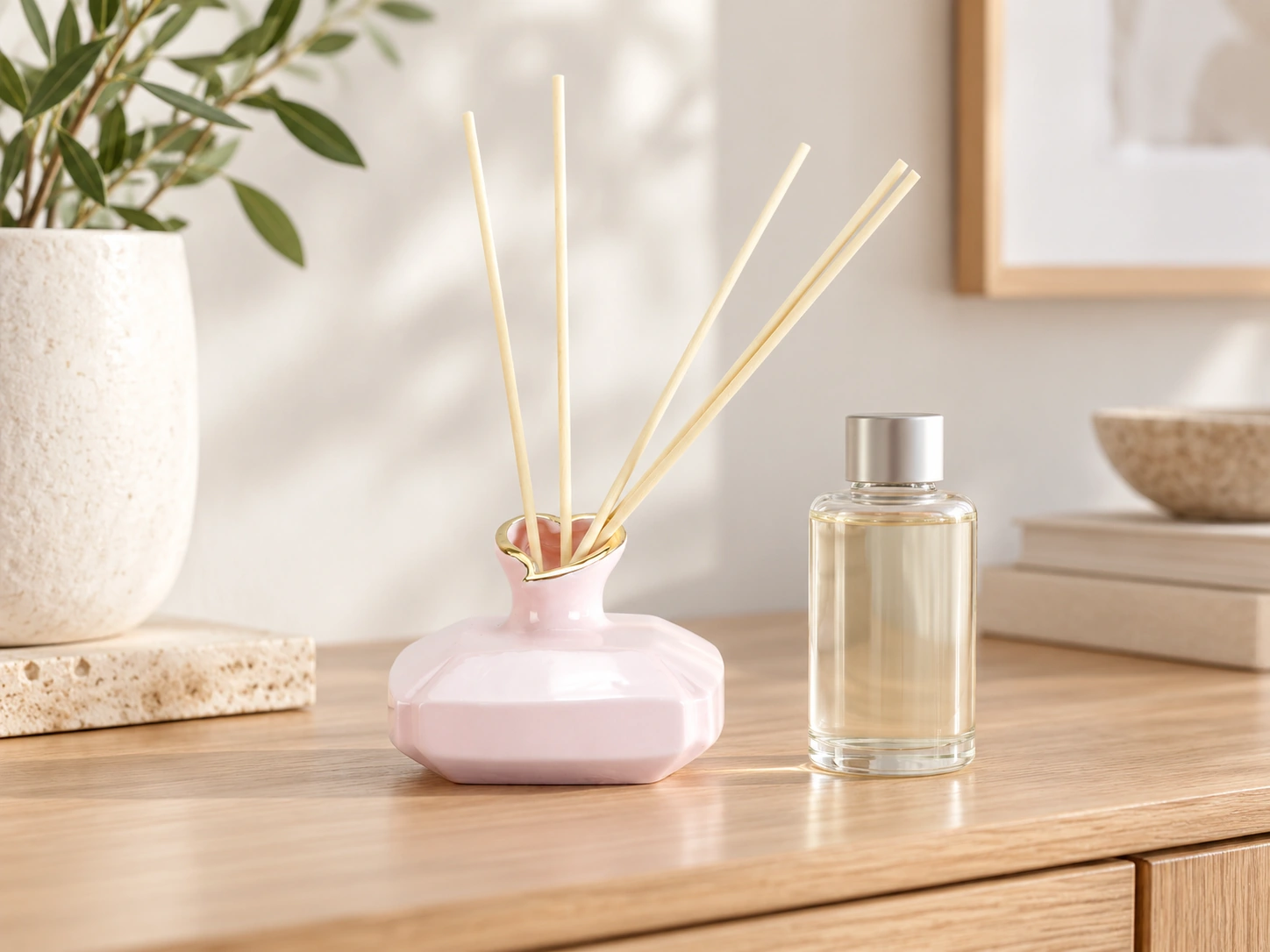
In Green-Life’s experience, reed diffuser liquids are often relatively viscous and formulated around reed uptake and evaporation. Most of the reed refills encountered in this work are unsuitable for electric diffusers. Adding water does not resolve that mismatch.
The refill’s base and fragrance components remain part of the liquid after water is added. Whether that combination can disperse properly and work with an atomizer is a different question from whether it performs well through reeds.
For a brand with a successful reed diffuser scent, the useful next step is to ask its fragrance supplier for a version developed for the intended electric device. The fragrance identity can remain part of the same collection while the formulation and usage instructions change for each format.
Even an ultrasonic fragrance liquid needs a trial
A liquid described as being for ultrasonic use still needs to work well with the selected model and intended dose.
Green-Life has encountered ultrasonic fragrance liquids that were too viscous in use. An oily film accumulated on the ceramic atomizing disc, weakening the mist output. In severe cases encountered by the team, the atomizing disc failed and the device was damaged.
This makes performance over time important. A diffuser producing mist when first switched on does not show how the same combination will behave after repeated use. Brands should look for changes in mist output, residue on the disc, and how easily the tank and atomizing surface can be cleaned according to the device instructions.
If mist output declines and oily deposits appear, stop the trial and review the liquid, dose and cleaning requirements. Increasing the fragrance dose to recover scent strength can add more residue instead of resolving the compatibility problem.
Test the combination your customers will receive

Green-Life usually provides the device or vessel for the customer to carry out liquid testing. This allows a fragrance brand to evaluate its own formula with the actual hardware it plans to sell.
Some customers also request longer-term tracking by Green-Life. In those projects, the customer supplies the liquid, and Green-Life assigns a person to conduct the testing, organize the observations and provide records to the customer.
For a new project, agree on the device, formula, intended dose or refill configuration, and operating conditions before testing starts. A useful record identifies the combination tested and follows the observations that matter for that product: mist performance and deposits for an ultrasonic diffuser, spray behavior for a nebulizer, liquid uptake and evaporation for a reed system, or wick feed and fragrance release during use for a heated plug-in. The trial duration and evaluation points should reflect the intended use.
Also check the parts that contact the liquid, such as the tank or bottle, seals and wick, for changes such as swelling, cracking or leakage during the trial.
Once a combination is confirmed, make it easy for consumers to recognize the correct refill. State the intended device, whether water is required, how much liquid to use and the relevant cleaning instructions. For a heated plug-in, identify the compatible warmer and explain how to replace the refill. If a collection offers the same scent for reeds, ultrasonic diffusers, nebulizers and heated plug-ins, distinguish those versions clearly on the packaging. This helps a coordinated fragrance range remain straightforward to use.
Sources
[1] IFRA — How is fragrance made?. https://ifrafragrance.org/about-fragrance/how-is-fragrance-made. Accessed 24 October 2026. ↩ ↩
[2] IFRA — About the IFRA Transparency List. https://ifrafragrance.org/transparency-list/about-the-ifra-transparency-list. Accessed 24 October 2026. ↩