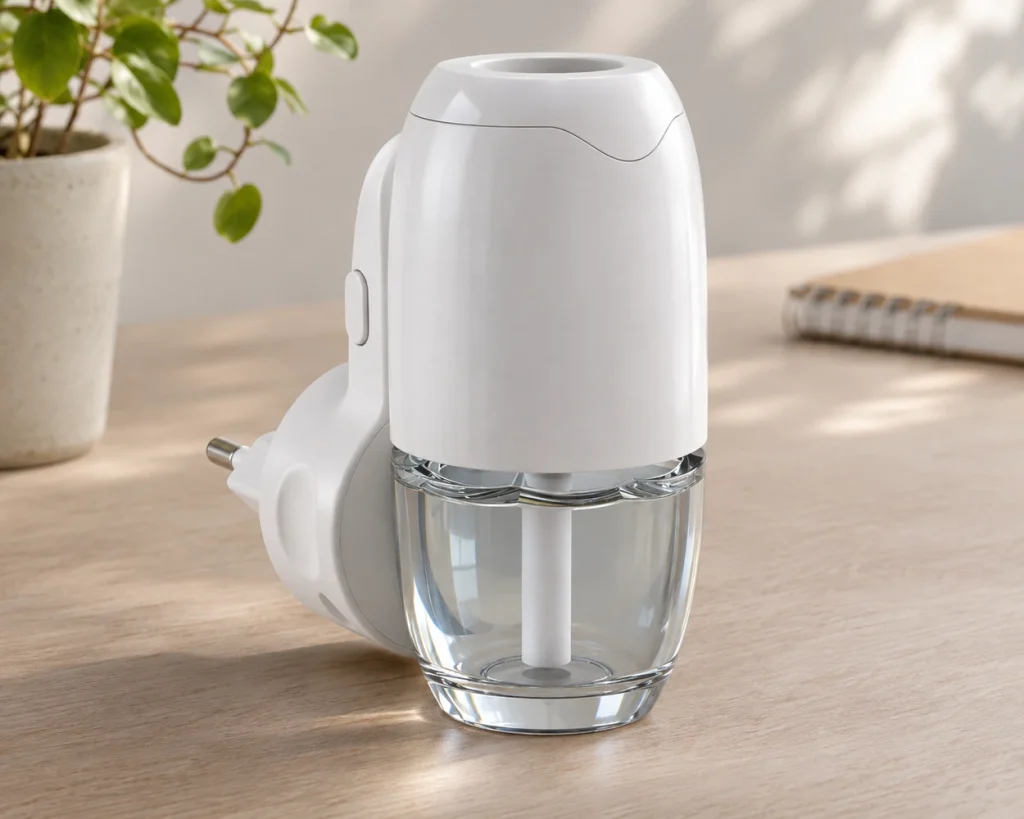
A refill that fits into a plug-in warmer still needs to work with its heater. The bottle connection, seal, wick and fragrance liquid all affect how the product performs, from the first use to the end of the refill.
For brands developing a new fragrance or sourcing replacement bottles, compatibility should be checked with the actual liquid, refill components and warmer model together. A good first impression is useful, but the combination also needs to maintain fragrance delivery without leakage or damage during its intended use.
This article focuses on heated plug-in products with liquid refills. In Green-Life’s product range, models without a decorative plate are called Plug-In Air Fresheners, while those with a decorative plate are called Plug-In Diffusers. The heater assembly depends on the model; the presence of a decorative plate does not determine which heater it uses.
1. Check the Bottle Connection, Seal and Wick Position
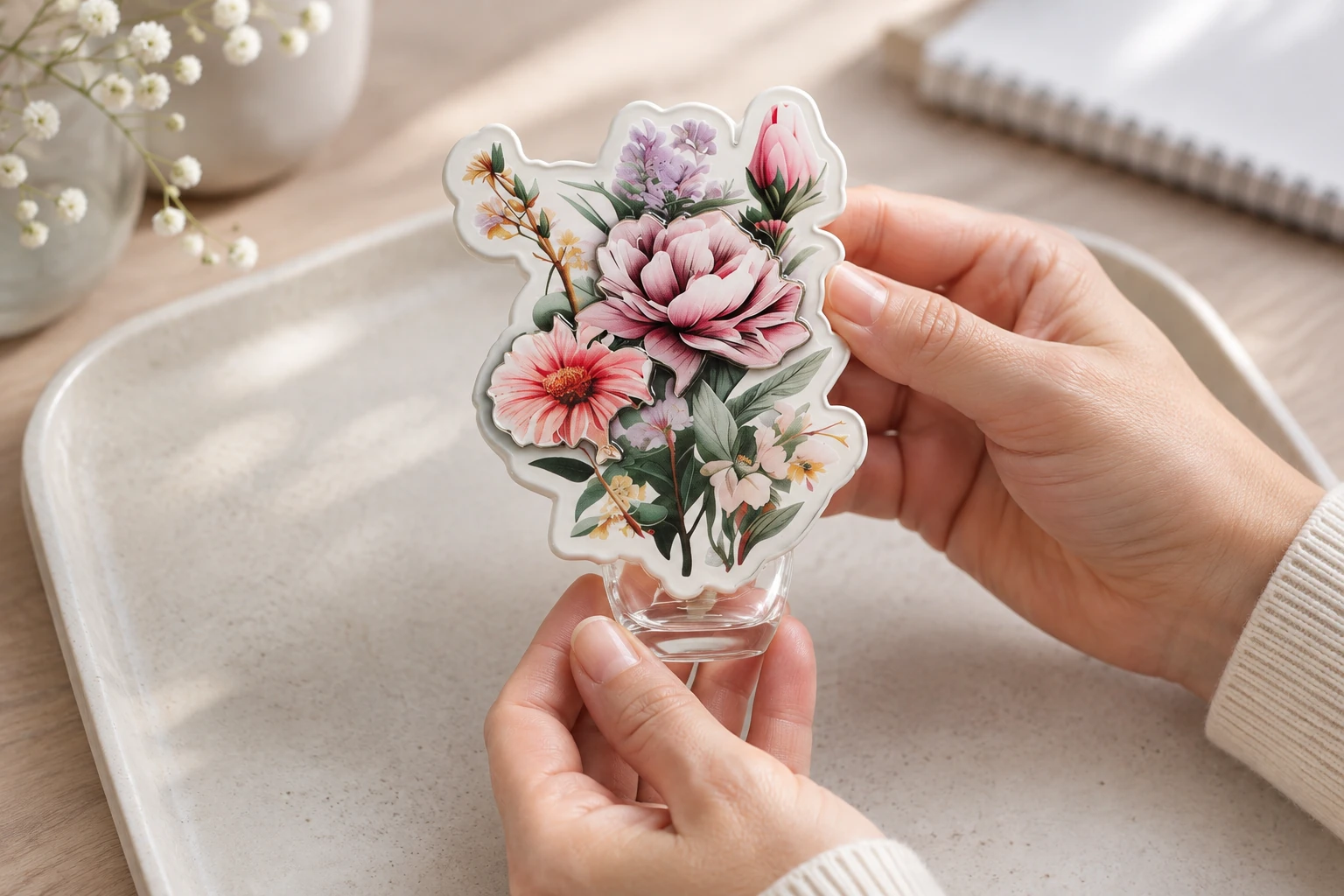
Common refill fixing arrangements in Green-Life’s experience include snap-fit and threaded screw-in designs. Each needs to hold the bottle securely and position the wick correctly relative to the heater.
Pay particular attention to the sealing arrangement where the refill meets the plastic components around the plug-in heater assembly. The bottle, inner plug and mating parts must work together to contain the liquid, while leaving the intended fragrance-release passages unobstructed.
A useful sample check should cover:
- Whether the bottle seats fully and remains secure in its normal operating position.
- Whether the inner plug and other sealing parts fit consistently, without visible gaps or distortion.
- Whether the wick stays straight, with the correct exposed length and clearance from the heater.
- Whether fitting or removing the bottle bends the wick or displaces a sealing part.
Check the assembled product rather than judging the bottle and warmer separately. Dimensional variations in the bottle neck, inner plug and mating parts can combine to affect sealing and wick position. Confirm the critical dimensions and acceptable variation for the model. A refill that looks similar to an approved one may therefore need a fresh compatibility check.
2. Match the Fragrance Liquid, Wick and Heating Power

The wick draws liquid from the bottle toward the heated area by capillary action through its small internal passages. Its material and pore structure influence liquid delivery, while the fragrance formulation and heater influence how readily that liquid evaporates.[1]
The polymer wicks used in Green-Life projects are selected to suit the model and fragrance. Material, density specification, dimensions and installed position should be confirmed together. Selecting a wick by appearance alone leaves important differences unaddressed.
Green-Life has encountered high-viscosity fragrance liquids that initially worked but showed very little further evaporation after one or two days. This experience illustrates why an initial scent check is insufficient: the liquid must continue feeding and evaporating as the product runs.
At the other extreme, some formulations with a high proportion of readily evaporating solvent have depleted too quickly. When the customer’s formulation cannot be changed, Green-Life has addressed this in projects by selecting a lower heating-power configuration for production and testing the revised combination.
The aim is a workable balance between liquid delivery and evaporation. A thicker liquid does not automatically call for more heat, and reducing power alone does not establish compatibility. Before a revised heater configuration enters production, confirm whether it remains within the applicable safety assessment and certification scope. Where certification is involved, agree the change with the certification provider and complete any required testing or document updates.[2]
3. Test Through a Complete Refill Cycle
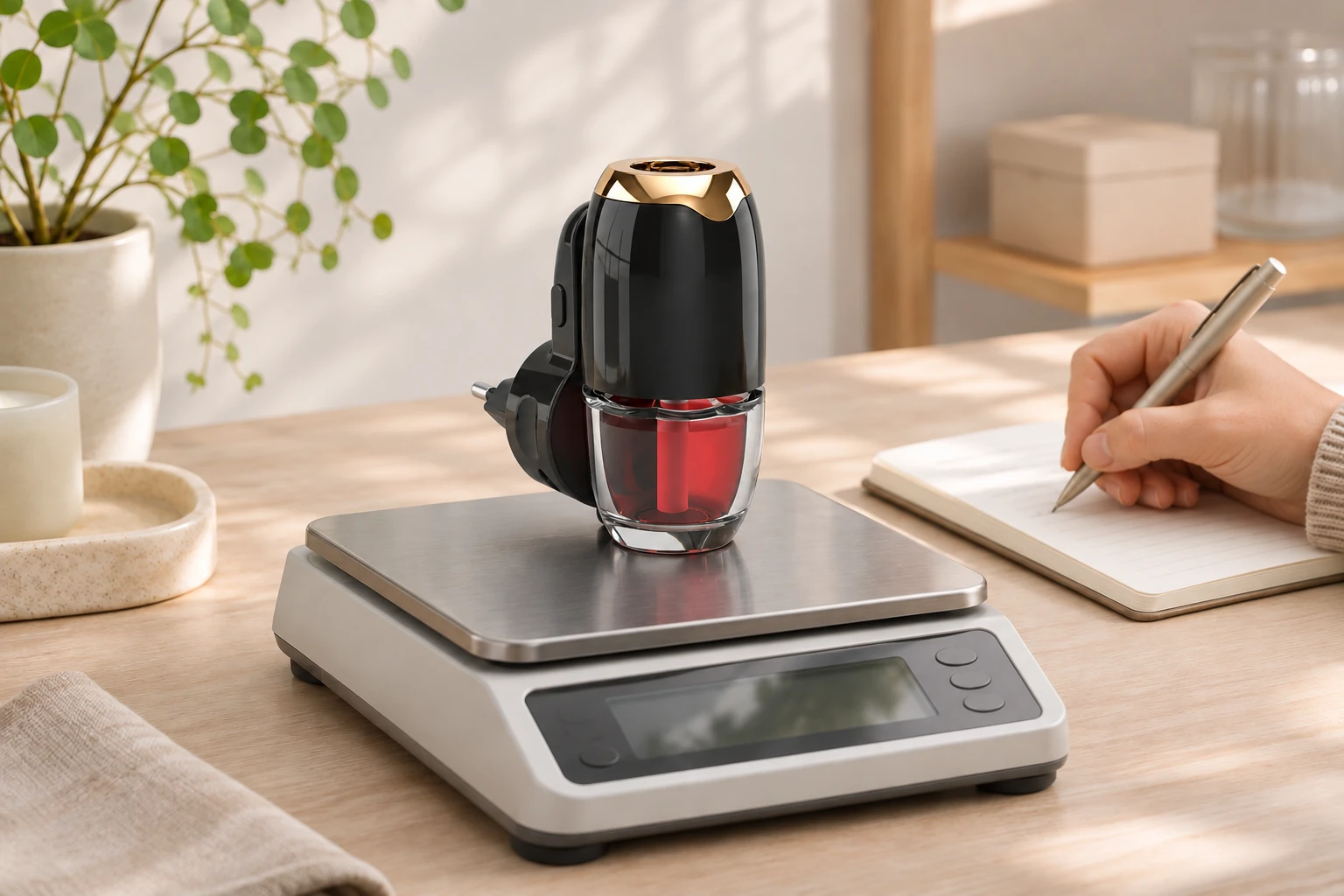
For a new fragrance liquid, Green-Life normally carries out at least one complete practical-use cycle, using up one bottle. This typically takes one to three months. When enough samples are available, two or three bottles are tested at the same time for comparison.
The one-to-two-day problem described above was an early failure during use, not the normal test duration. Following the full cycle helps reveal changes that a short trial can miss, including declining output, uneven consumption, wick discoloration and liquid remaining after effective fragrance delivery has fallen away.
Green-Life also uses weight tracking during practical-use testing to follow consumption over time. For comparison trials, use a consistent weighing method and record sample mass at agreed intervals. If readings are expressed as grams per day, account for the elapsed time between measurements. Unexpected mass loss should be checked against leakage observations; a straight consumption curve is not a requirement by itself.
Record the warmer model, refill and wick specification, fragrance version, fill quantity and operating setting, together with ambient temperature, humidity and operating schedule. Keep conditions comparable where practical so that differences between samples can be interpreted.
During the cycle, observe:
- Fragrance delivery: Does useful scent output continue, or does it weaken unusually early?
- Liquid consumption: Does depletion progress reasonably consistently, and how much usable liquid remains when performance drops?
- Wick condition: Does the wick remain correctly positioned, with any darkening, deposits or deformation recorded?
- Seals and surrounding parts: Is there swelling, cracking, distortion or liquid appearing around the bottle connection or heater opening?
Material compatibility also needs attention where fragrance can contact a part directly or collect as condensate. Use the actual formulation and specified material grade, and consider the heat and assembly stress experienced by the part. An unstressed immersion sample may reveal chemical effects but can miss cracking that develops in an assembled component under load.[3]
Scent perception should be considered alongside liquid consumption and physical observations. Familiarity with a fragrance can make it less noticeable, so a weaker perceived smell alone does not establish that evaporation has stopped.
These practical trials help assess the selected combination. Two or three comparison bottles do not establish production-wide reliability, and practical-use testing complements the electrical safety assessment required for the product and market.
4. Investigate Wick Darkening and Liquid Around the Heater
Two visible problems deserve careful investigation because both can be mistaken for a simple fragrance issue.
A Darkened or Discolored Wick
Green-Life has received feedback involving wicks that appeared scorched. One recurring issue to check is a wick that becomes tilted during refill installation and sits too close to the heating head.
Start by checking the wick’s alignment, exposed length and clearance in the assembled product. Then check whether liquid is reaching the heated section properly and whether deposits have accumulated. Fragrance residues or changes in the liquid at the heated tip may contribute to discoloration. Inspect these alongside the wick itself to distinguish deposits from heat-related damage.
The investigation should connect the visible change with the actual installation and operating conditions. This gives the supplier a basis for deciding whether to improve refill guidance, component positioning, liquid compatibility or the heater configuration.
Liquid at the Heater Opening
In Green-Life’s troubleshooting experience, poor airflow through the fragrance-release passages is one issue considered when liquid appears around the heater opening. The passage layout, local heating conditions and liquid movement along the wick need to be examined together.
First identify where the liquid starts. A leak at the bottle or inner plug needs a different correction from liquid collecting near the exposed wick. Check the seal, operating orientation, liquid feed and release passages; also consider whether vapor is condensing on nearby surfaces. Finding liquid at the opening does not, by itself, establish that excessive temperature is the cause.
A unit showing leakage or apparent heat damage should be taken out of use for investigation rather than kept running to complete the trial.
5. Confirm the Tested Combination Before Production
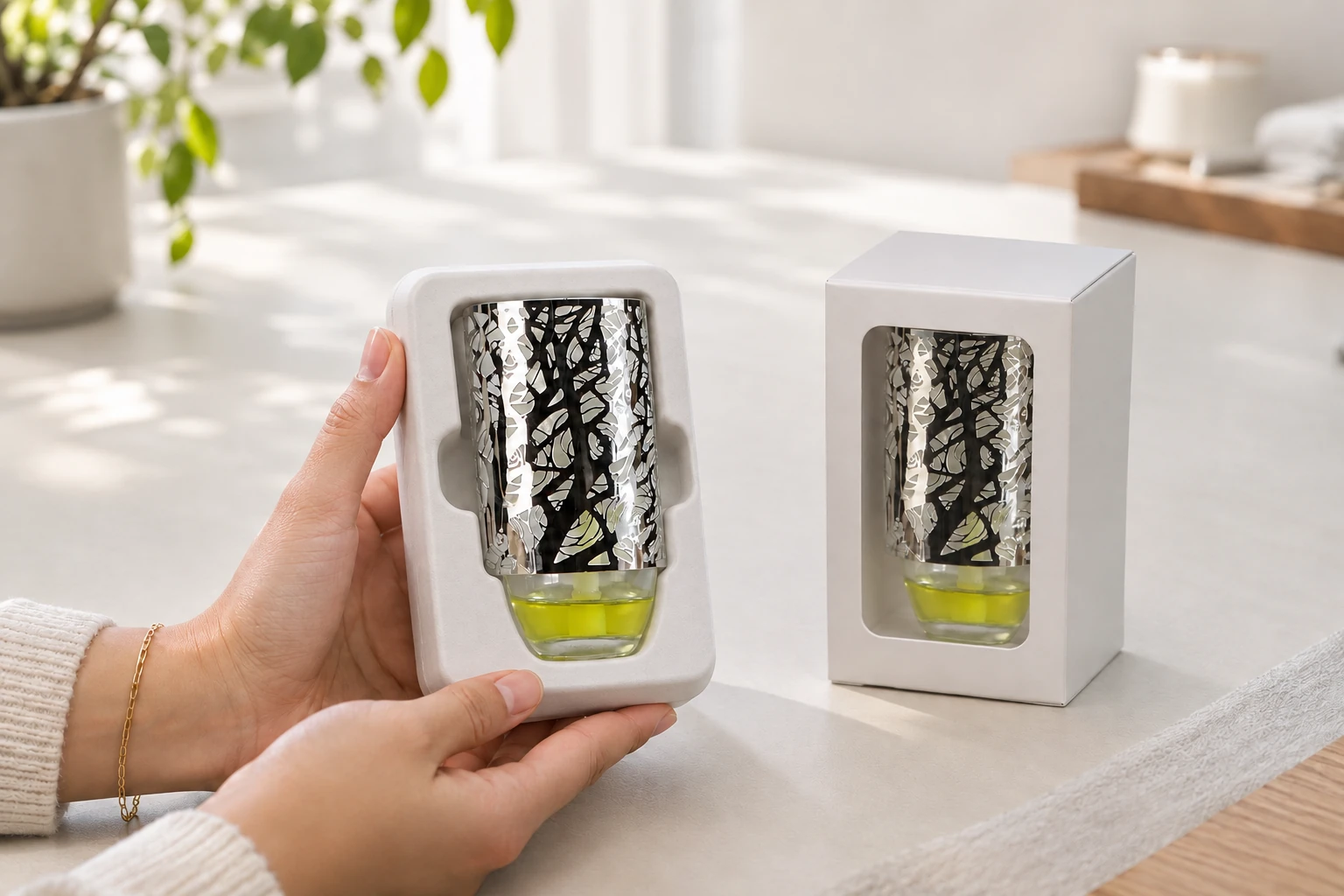
The filling arrangement determines who needs to bring the final components and fragrance together for validation.
When a customer supplies its own fragrance liquid, Green-Life can provide empty bottles, inner plugs, wicks and caps, usually packed separately for the customer to fill. The customer’s filling operation should use the agreed components and actual fragrance, with responsibility for the final assembled-product checks settled before production.
When fragrance is sourced through Green-Life’s supporting supplier, Green-Life handles filling and packaging. The liquid, refill components and corresponding warmer still need to be confirmed as a combination.
Plan leakage checks separately for the closed refill as shipped and the opened refill installed for use. For the closed bottle, agree storage orientations, such as side storage or inversion, and transport checks suited to the final packaging. For the installed refill, assess the intended orientation and relevant foreseeable handling. Agree the test conditions for each state according to the actual product design.
For either route, keep a clear record of the approved warmer model and heater configuration, bottle and closure specifications, wick specification, fragrance version and practical-test findings. Agree which results are acceptable, approve the corresponding reference samples together, and identify them by version for production checks.
Record proposed changes to the fragrance formulation, wick, sealing parts or heater, and agree which checks need to be repeated before implementation. A decorative change also deserves review if it alters the space around the heated area or fragrance-release passages. This allows later orders and replacement refills to be matched to the combination that was actually evaluated.
Sources
[1] Porex — What Makes a Plug-In Air Freshener Work? https://www.porex.com/area-of-expertise/consumer-goods/what-makes-a-plug-in-air-freshener-work/ ↩
[2] UL Solutions — Follow-Up Services https://www.ul.com/resources/follow-up-services ↩
[3] ISO — ISO 175:2010: Plastics — Effects of immersion in liquid chemicals https://www.iso.org/standard/55483.html ↩