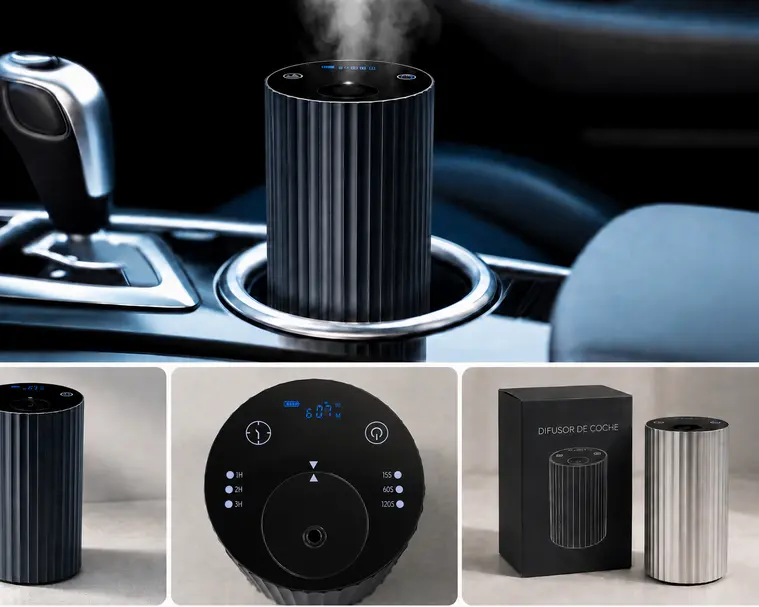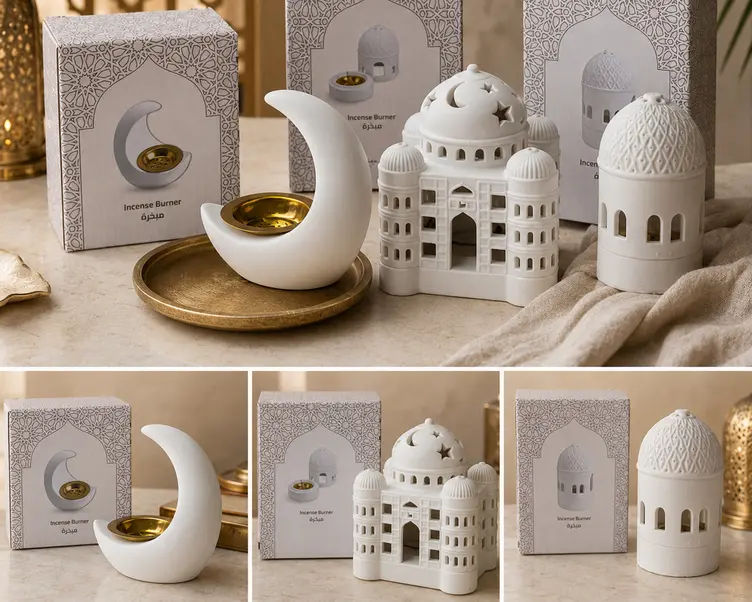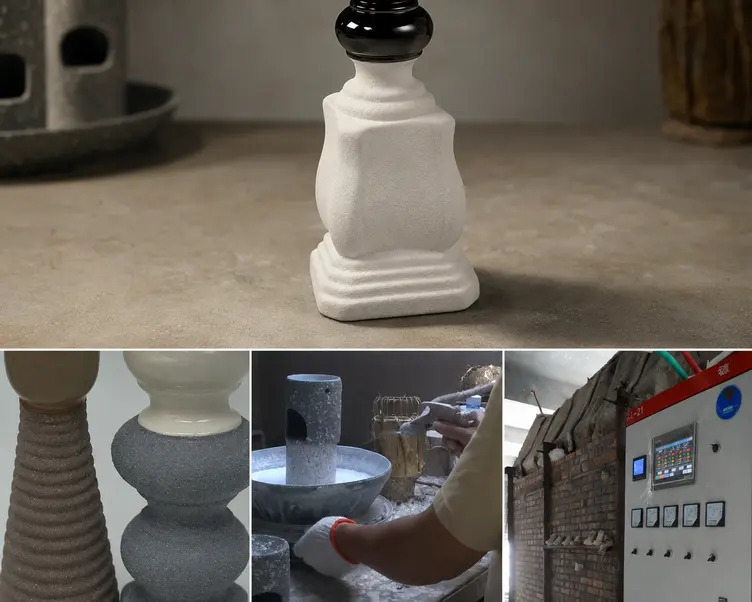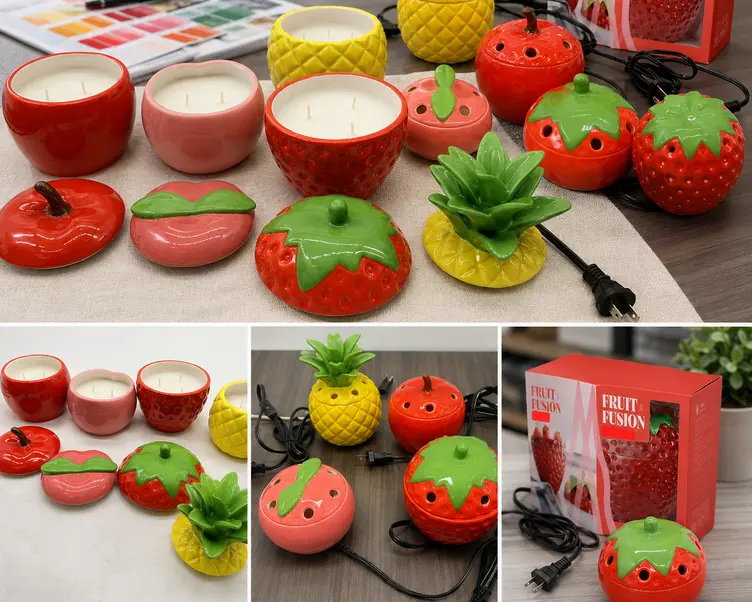
Two ultrasonic diffusers can look almost identical and still carry quite different prices. Before deciding that one supplier is expensive, check whether both quotes cover the same electronic features, materials, power accessories, packaging and delivery terms. The testing requirements and the way production is managed also deserve a closer look.
The useful question is: what will each price actually deliver for your project? Start with the version you want to sell, then ask each supplier to make the differences clear.
Start with the electronics and power accessories
Similar dimensions and water capacity say little about the control system inside a diffuser. In Green-Life’s sourcing experience, infrared remote control, Bluetooth, Wi-Fi app control and a rechargeable lithium battery can create substantial cost differences between otherwise similar products. Timer functions, LED quantities and the number of available light colours can also affect cost, usually on a smaller scale.

Write down the functions your range needs and check them against both quotes. For app-controlled versions, identify the app and the intended connection method; “app control” alone is too broad a description for a useful comparison. Confirm how mist, timers and lighting work on the corresponding sample.
Treat a rechargeable model as a separate power version, with its battery, charging and protection arrangements identified. Its battery transport requirements also need to be checked when comparing delivery costs.
The small piezoelectric atomizing disc that creates the mist is another important component to identify. Compare its model, operating frequency, protective surface and suitability for the intended fragrance liquid. Green-Life commonly encounters specifications around 2.4–3.0 MHz and a stated atomizing life of 5,000 hours. Ask what operating conditions and end-of-life criteria support that rating; it is not the service life or warranty of the complete diffuser. A disc specified only for water humidification should not be assumed suitable for fragrance use. Where a glass-glazed protective surface is specified, confirm the component’s suitability for the intended liquid as well.
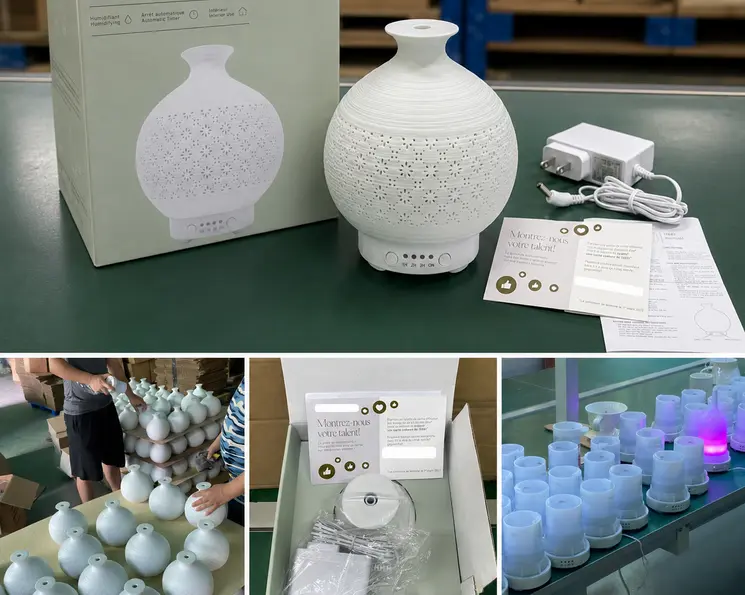
Power accessories are particularly easy to overlook. A photo showing a cable beside the diffuser does not establish what the quoted package includes. Ask explicitly:
- Is the power cable included, and what are its length and specification?
- Is a power adapter included, or is the quote for the diffuser and cable only?
- Which adapter model, electrical ratings and plug version are being supplied?
Cable construction and specification can differ even at the same length. Equally, “adapter included” needs to refer to the agreed adapter, rather than any unit that happens to fit the connector. Record these details alongside the product version before comparing prices.
Check that the quoted adapter model has the documents and markings required for the destination market, and that it matches the diffuser configuration covered by the relevant assessment.
Look beyond the colour of the outer cover
A matching colour or finish can hide different materials and workmanship. Green-Life encounters several distinctions worth clarifying:
| Outer cover | What to compare |
|---|---|
| Plastic | Resin type and grade, together with the agreed appearance and finish |
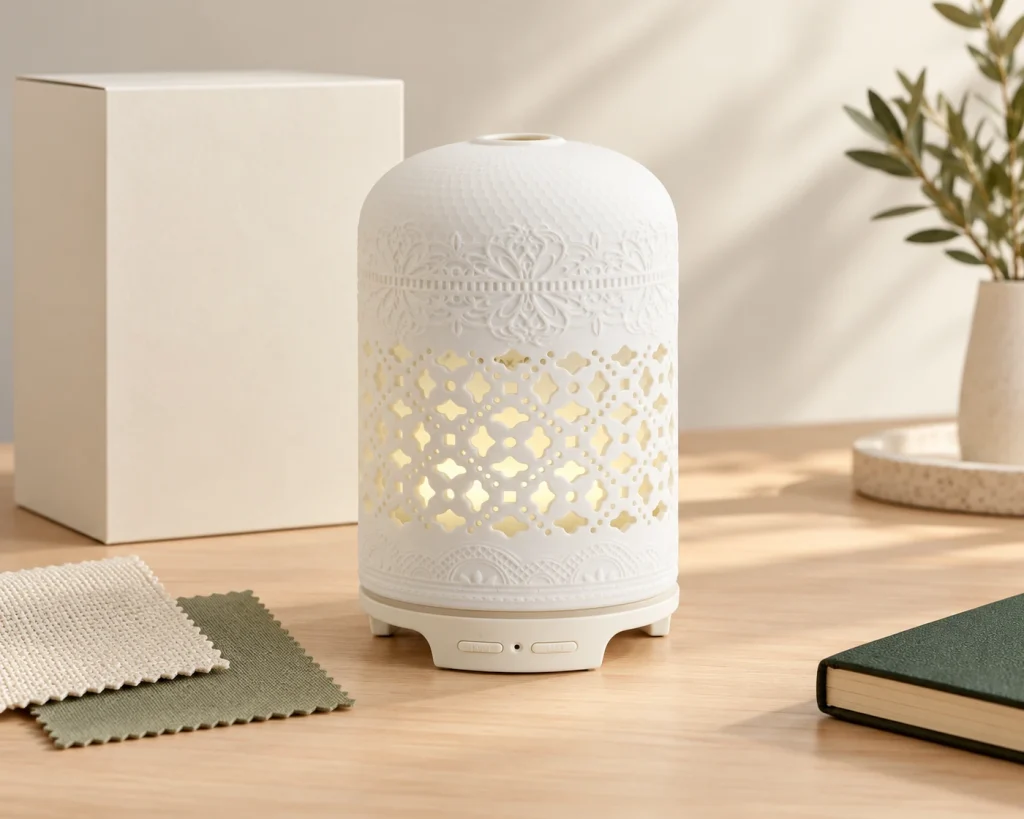
| Ceramic | Ceramic body material, surface treatment and workmanship |
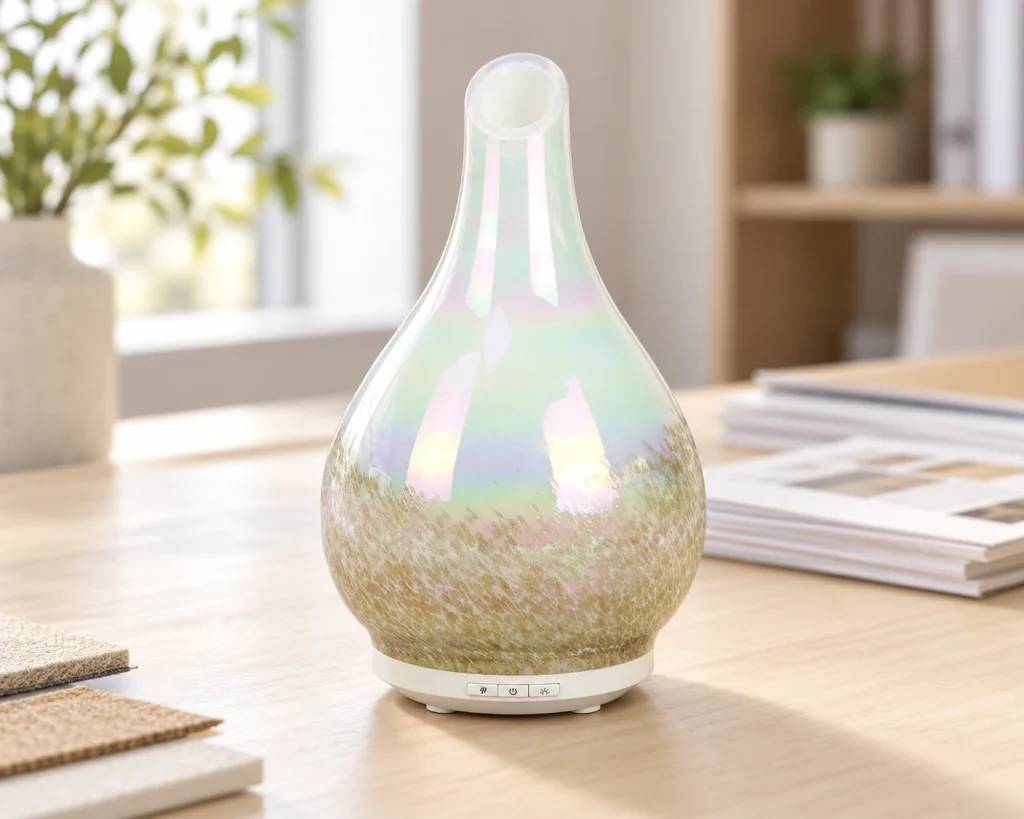
| Glass | Glass composition, thickness and agreed limits for bubbles, pinholes or other visible imperfections |
| Metal | Base metal, material grade, thickness and the plating or coating specification |

For example, a painted or plated metal cover could use ordinary steel sheet, 201 stainless steel or 304 stainless steel. A similar surface appearance does not identify the metal underneath. Thickness can also change the cost within the same material grade.
Where the cover may encounter moisture, condensation or fragrance spills, agree on suitable surface protection and verification for that exposure.
Use the material and finish that suit the intended product, then define what an acceptable piece looks like. For decorative glass, ask suppliers to work to the same expectations for visible imperfections. For ceramic, compare the actual finish and workmanship on samples, rather than relying on the word “ceramic” in both quotations.
These details help explain price differences. A heavier cover or a more expensive material is not, by itself, proof that the whole diffuser is better suited to your range.
Compare the packaging as part of the product

“Colour box included” leaves much of the packaging undefined. The insert, board, printing and finishing processes all need to be understood.
Green-Life’s experience includes meaningful differences between paperboard inserts and expanded polyethylene foam inserts, as well as between different box materials. A 350 gsm specialty paper and a 250 gsm whiteboard paper are different specifications, not interchangeable descriptions of a printed box. Paper weight should be considered alongside paper type and box construction.
Gold or silver foil stamping, spot UV coating and film lamination can add further operations and cost. Confirm which finishes are included, whether the price covers your artwork and branding, and whether any setup charges are listed separately.
Ask to see how the diffuser, cable and adapter fit inside the proposed packaging. A simpler pack may be suitable for one sales channel, while another project needs a different presentation or protective arrangement. Both quotes should refer to the packaging you actually intend to purchase.
Establish the testing requirement before treating quotes as alternatives
For a diffuser intended for Europe, the United States, Japan or Australia, clarify the relevant product and market requirements early. In Green-Life’s experience, the design, components and verification work needed to meet the specified laboratory tests can create a meaningful cost difference.
Separate three questions: what testing evidence already exists, whether it covers the quoted version, and what additional work the project requires. Ask for the report’s model and configuration details, the standards and editions used, and the laboratory information. Where laboratory accreditation is relevant, check that its scope covers the testing concerned.[1]
Also clarify whether the quoted price includes any newly requested testing, samples or related work. An existing report and a promise to arrange testing are different starting points. Passing particular tests should not be presented as blanket approval for every target market.
If a requirement is essential for your intended sale, put it into the common brief before seeking revised prices. A quote with an unresolved essential testing requirement is still awaiting confirmation, however attractive its unit price appears.
Ask what sits behind the quoted production price
Factory scale and management can influence costs that are less visible in a quotation. Purchasing and production efficiency, management overhead, inspection arrangements and the handling of problems can all affect the offer and the work needed to deliver it.
Factory size alone is a weak basis for a buying decision. Ask how the supplier will keep production aligned with the approved sample and agreed configuration, what checks are included, and how changes or nonconforming pieces will be handled. Concrete answers are more useful than a general claim of “high quality”.
Keep this discussion focused on your order. The aim is to understand the production and support arrangements behind the price, rather than to pay more simply because a factory is larger.
Put both prices on the same commercial basis

EXW, FOB, CIF and DDP allocate different delivery responsibilities and costs. Compare the stated rule, named place or port, and applicable Incoterms® edition before placing two prices side by side.[2] A higher quoted price may include delivery costs that another offer leaves for the buyer to arrange.
Also align the quantity and colour split, currency, payment terms and quotation validity. Identify separately charged items such as custom packaging setup or project-specific testing. Ask for confirmation where a line is unclear; an omission from the quote does not automatically mean that the item is excluded.
Check the sample, then request a comparable quotation
Green-Life’s practical sequence is to examine the sample, check its configuration, test the actual functions, align the packaging requirements and then requote. This connects the written specification with the product the buyer has evaluated.
A short comparison sheet can keep the discussion clear:
| Comparison item | What both quotations should identify |
|---|---|
| Product and electronics | Exact version, controls, modes and required features |
| Atomizing disc | Model, frequency, protective surface, liquid suitability and basis of any life rating |
| Power accessories | Cable length and specification; adapter and plug version |
| Cover | Material, grade, thickness where relevant, finish and appearance requirements |
| Packaging | Insert, box material, print, finishing and included accessories |
| Testing | Existing evidence, applicable configuration and additional work required |
| Production and support | Agreed checks, handling of changes and included support |
| Commercial terms | Quantity, currency, delivery rule and place, separate charges and validity |
Once the differences are clear, you can request matching quotations or deliberately compare two different product options. The final choice should reflect the version, presentation and delivery arrangements your business needs, with any outstanding requirements resolved before the order is confirmed.