Two glass candle jars with the same stated capacity may use different glass types and come with different packaging, finishes and quality requirements. Start by confirming the glass material and basic specification, then check what each supplier is including before comparing prices.
In Green-Life’s experience, differences in packaging method and the number of jars per carton are among the most common findings when comparing quotations. Physical samples then help buyers compare glass workmanship and appearance. For customers with demanding quality expectations, a detailed acceptance specification can make differences between suppliers’ prices much clearer.
For empty glass candle jars, the useful comparison starts with the complete supply requirement: the jar, its accessories, its packaging and the quality the supplier is being asked to deliver.
1. Confirm the Glass Material, Jar and Accessories
First, confirm whether both quotations are for the same type of glass, such as soda-lime or borosilicate. A soda-lime jar and a borosilicate jar are different product options, even if their stated capacities match. Establish which material the project requires before comparing them as equivalent quotations.
“Same capacity” is a starting point. Confirm whether the quoted figure refers to volume at the brim, volume at an agreed fill level, or an estimated wax fill weight. These descriptions are not interchangeable.
Then compare the jar’s shape, height, diameter, glass weight and agreed dimensional tolerances. Include the decoration: clear or coloured glass, surface coating, printed artwork and the extent of the finish should be described clearly enough for both suppliers to quote the intended result.
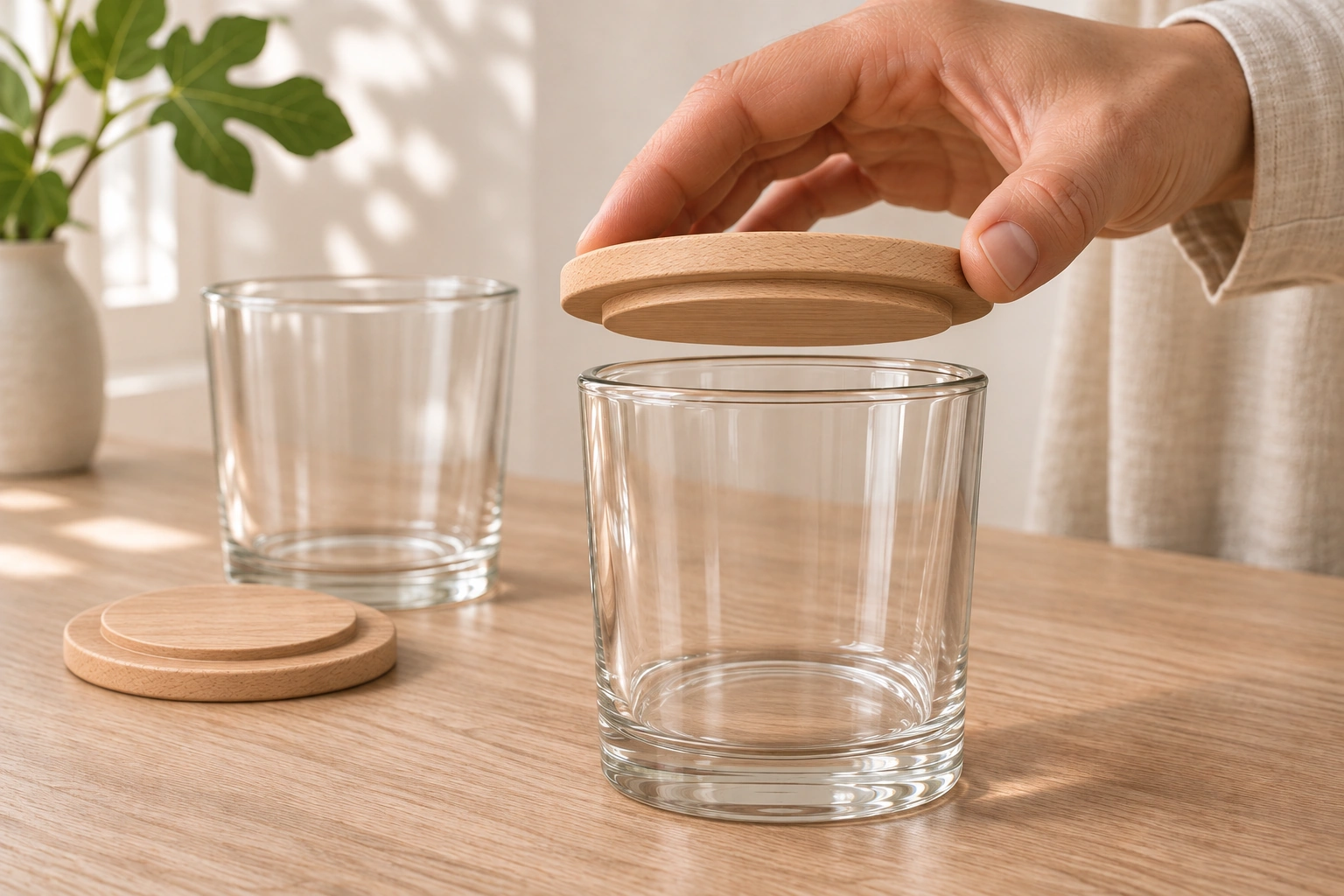
Where a lid is required, confirm its material, finish and fit, along with any liner or insert included in the supplied set. A photograph showing a lid does not establish that the quoted unit price includes it.
Use these details to establish a common specification. A heavier jar may create the appearance or hand feel a brand wants, but weight alone does not establish better quality or suitability for candle use.
2. Compare the Packaging Method and Carton Quantity
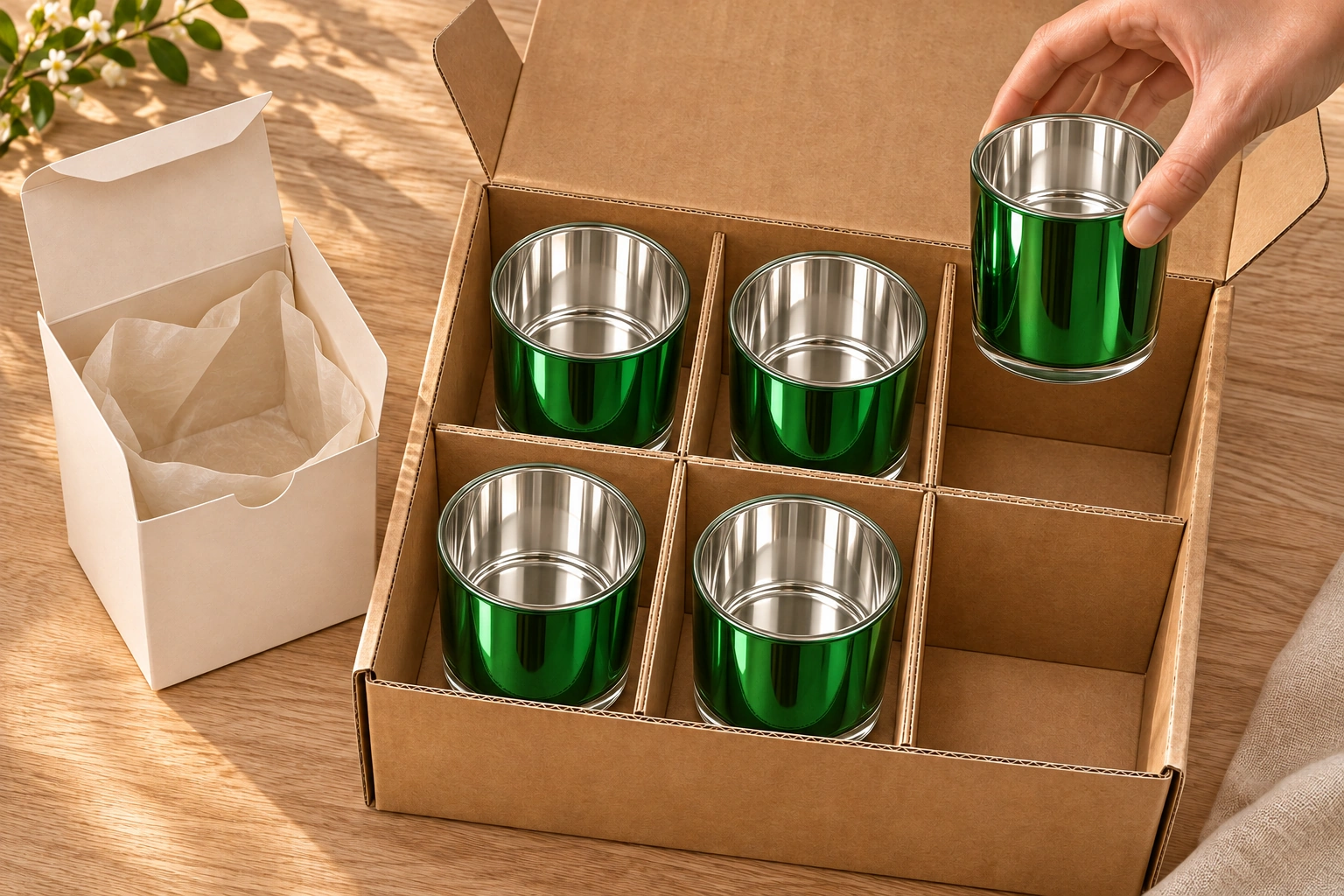
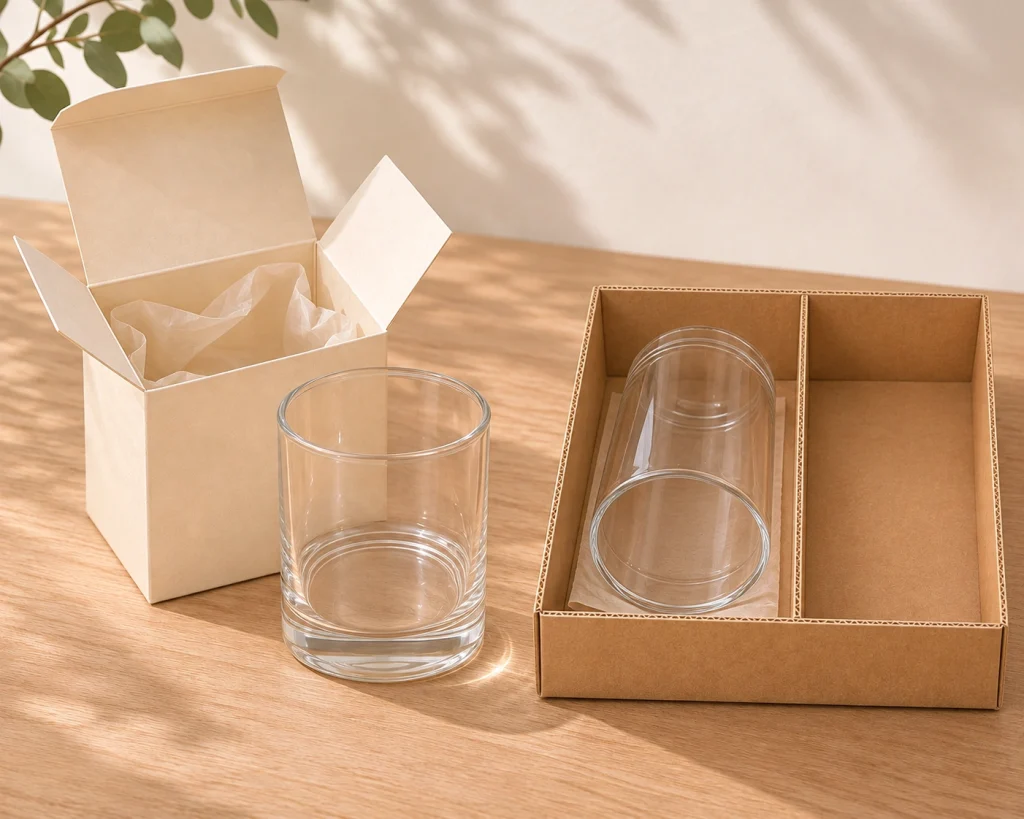
A quotation for jars packed together in divided cartons covers a different requirement from one for individually boxed jars. Even when both suppliers describe their packaging as “standard export packing,” the materials, protection and number of jars per carton may differ.
Ask each supplier to state:
- Whether the jars are bulk packed or individually boxed.
- What separates and protects the jars inside the carton.
- How many jars are packed in each inner pack and outer carton.
- The outer carton dimensions and gross weight for that packing arrangement.
- Whether lids are fitted to the jars or packed separately.
Keep the order quantity separate from the packing quantity. An order for the same number of jars can use different numbers and sizes of cartons. Compare the total packed volume and weight for the order, including the pallet arrangement where applicable. A higher carton count alone does not establish a higher freight cost; the shipment arrangement and the freight service’s charging basis also matter.[1]
In Green-Life’s experience with thin-walled borosilicate jars, transport protection needs particular attention. Review the protection around the actual jar and lid, together with any agreed transport-packaging tests.
Packaging should also suit the next step in the buyer’s operation. For jars going to a filling facility, consider how they will be unpacked and handled before filling. A separate box may serve transport protection or retail presentation; confirm which purpose the quotation covers. Confirm who will provide the final packaging for the filled candle so that neither quotation quietly leaves that work to the buyer.
If the packing descriptions differ, ask both suppliers to quote against the same packing requirement before negotiating the jar price.
3. Use Physical Samples to Compare Workmanship

When samples are available, compare them side by side under the same viewing conditions. This makes it easier to discuss differences that a product photograph or short specification may conceal.
Depending on the design, useful points include glass clarity, visible bubbles and mould lines, the finish around the rim and base, and the consistency of colour, coating or printing. Check whether the jar rocks when placed on a flat surface. Check the lid on the actual jar as well as looking at the two parts separately.
For soda-lime jars, Green-Life pays particular attention to annealing quality and the agreed bubble limits. Bubbles can be assessed against the appearance specification; annealing quality needs its own checks or supporting reports.[2] A visually clean sample alone does not establish that annealing is satisfactory.
Record the differences that matter to the product range. “The glass looks better” is difficult to use in a revised quotation. A marked photograph, a sample reference and a short description give the supplier something more specific to review.
A selected sample shows the finish being proposed. To make it useful for production, connect that sample to written requirements and the agreed inspection arrangements. This turns the comparison into a supply requirement that both parties can refer to later.
4. Make Higher Appearance Requirements Explicit
Detailed appearance requirements are especially useful for brands whose customers expect a high level of visual consistency. In Green-Life’s experience, price differences between factories with different quality levels become more apparent when the buyer lists those requirements clearly.
For example, a customer might require that each jar have no bubble larger than 1 mm and no more than two bubbles in total. This is an example of a customer’s appearance specification, rather than a universal acceptance rule for glass candle jars.
Before using that wording for quotation and inspection, agree how bubble size will be measured and how bubbles will be observed and counted. Reference photographs or samples can help both parties understand the intended standard. Apply the same clarity to any other appearance feature that is important to the range. Also agree the inspection coverage and how the results will be used to accept or reject a production lot.

The supplier can then assess whether it can consistently supply to the requested level and confirm its price and inspection arrangements. If one quotation assumes the supplier’s usual appearance standard while another includes the buyer’s tighter requirements, the prices are answering different requests.
A higher price becomes meaningful when the supplier identifies the requirement it covers and confirms how it will be controlled. For buyers with more moderate appearance expectations, choose acceptance criteria that fit the product’s positioning and customer needs. The aim is to pay for the quality the range requires.
Keep appearance acceptance separate from the checks needed for the jar’s intended candle application. Agree which vessel checks or reports are included and who will arrange the filled-candle validation.
5. Request Revised Quotes on the Same Basis
Once the differences are clear, send both suppliers one comparison specification. It can be a short document covering the jar reference, glass material, dimensions, capacity definition, decoration, lid, packaging, carton quantity and quality requirements.
Confirm the minimum order quantity (MOQ) for the jar and for each decoration or packaging version. Ask whether the planned quantity split per design or colour meets those requirements.
Then align the commercial conditions: order quantity and quantity per design or colour, currency, trade term and named location, quotation validity, and any separately charged tooling, decoration setup, samples or testing. Confirm what is included in the unit price and what will be charged separately.
Ask each supplier to identify any requirement it cannot meet or any alternative it proposes. Keep those differences visible when reviewing the revised prices.
This gives the buyer a practical choice: accept a lower-priced specification that meets the range’s needs, pay for a clearly defined improvement, or request a different arrangement. The remaining price difference can then be judged alongside the samples and the supplier’s confirmed scope.
Sources
[1] DHL — What Are the Cost Drivers of Less Than Container Load Ocean Shipping? https://www.dhl.com/de-en/home/global-forwarding/freight-forwarding-education-center/the-cost-drivers-of-lcl-rates.html ↩
[2] ASTM International — ASTM F2179-26 https://store.astm.org/f2179-26.html ↩