For home fragrance brands, candle producers, importers and distributors buying empty glass candle jars, pre-shipment approval starts with the jar itself. A clear-looking sample and a tidy outer carton do not establish that production quality and transport protection are ready for the order.
Confirm the glass specification and product quality requirements, then validate the actual packing configuration against the delivery route. Product inspection and packaging testing answer different questions. Both need agreed acceptance criteria before shipment.
Which Glass Quality Requirements Should Buyers Agree on First?
Set a measurable baseline for the jars before judging the packaging. Otherwise, damage found after a test can be difficult to distinguish from defects already present in the sample.
Specify the Material, Dimensions and Finish
Record the glass type, key dimensions, weight and finish against the approved drawing or sample. Where wall or base thickness is important, agree on measurement locations and tolerances for that design. A single thickness measurement does not describe the whole jar, and there is no reason to copy a tolerance from a different design.
Keep appearance and material specifications separate. If a supplier uses descriptions such as “high-white,” ask what glass composition and appearance criteria the term represents for that product. Clarity alone does not establish strength or suitability for candle use.
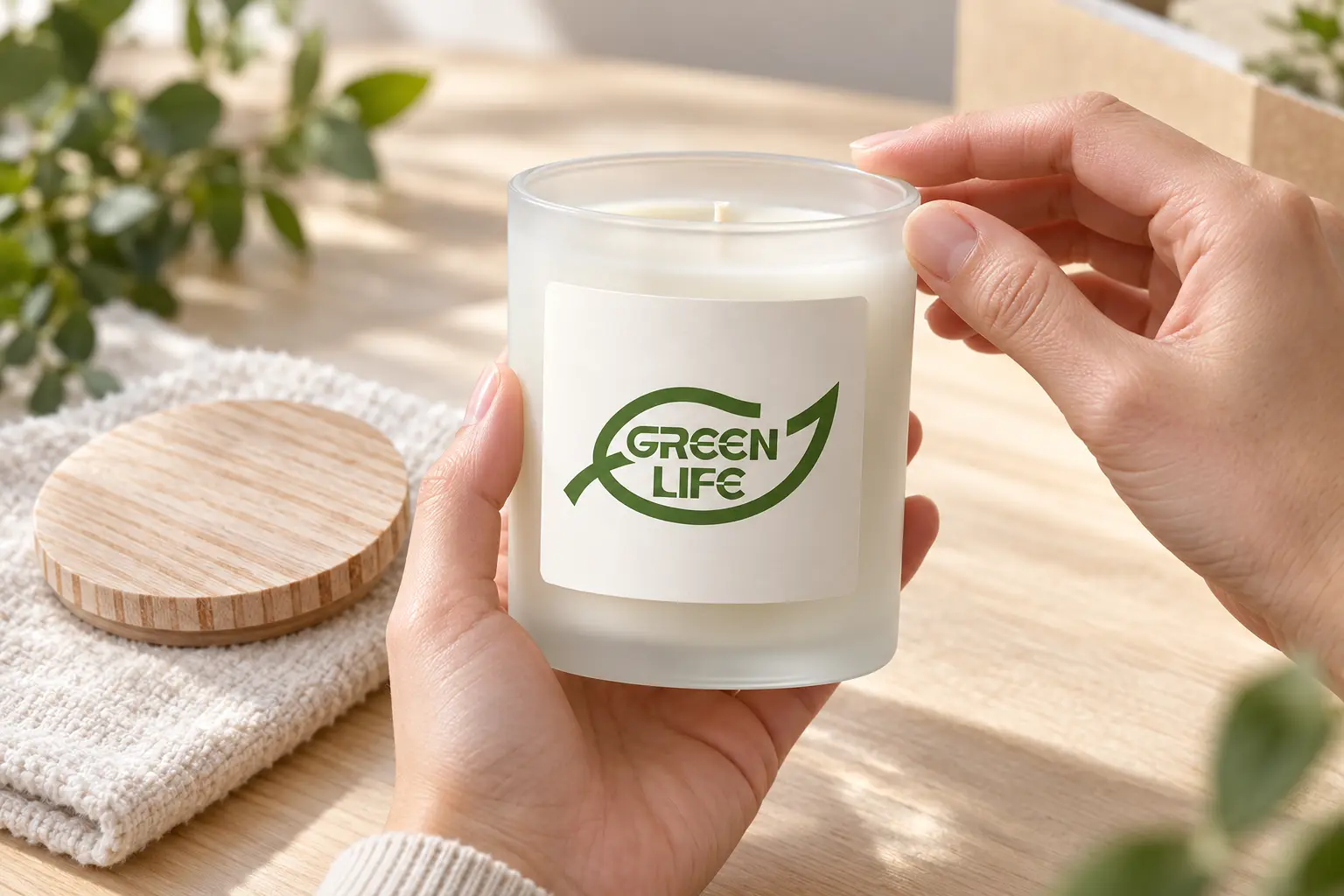
Agree how visible features will be assessed: cracks, chipped rims or bases, sharp edges, surface marks and, where present, mould seams. Define which conditions require rejection or technical review and which appearance variations can be accepted against a reference sample. Do not treat every visible mould line as a structural defect.
Ask How Annealing Quality Is Verified
Annealing is controlled cooling used to reduce residual stress—stress remaining within the glass after manufacture. Buyers should ask what annealing verification[1] applies to the jar and which production records or test results support it.
A visual inspection or carton drop test does not measure residual stress. If stress testing is required, agree on the method, acceptance limits and responsible party with the manufacturer or laboratory. Do not assume a clear-looking jar has passed that assessment.
This article focuses on preparing empty jars for shipment. Their suitability for wax filling and candle use needs its own relevant product assessment; transport testing does not replace it.
What Should Buyers Confirm Before Testing Glass Candle Jar Packaging?
The first question is simple: does the test package match what will actually be shipped?
Confirm the Empty Jars, Accessories and Packing Configuration
Identify the jar design, glass type, dimensions and any lids or accessories packed with it. Confirm the number of jars per inner box and outer carton, together with the dividers and cushioning used.
A test using a few jars in a loosely described “standard carton” gives buyers little useful information. The result needs to refer to a defined product and packaging version that the supplier can reproduce for the order.
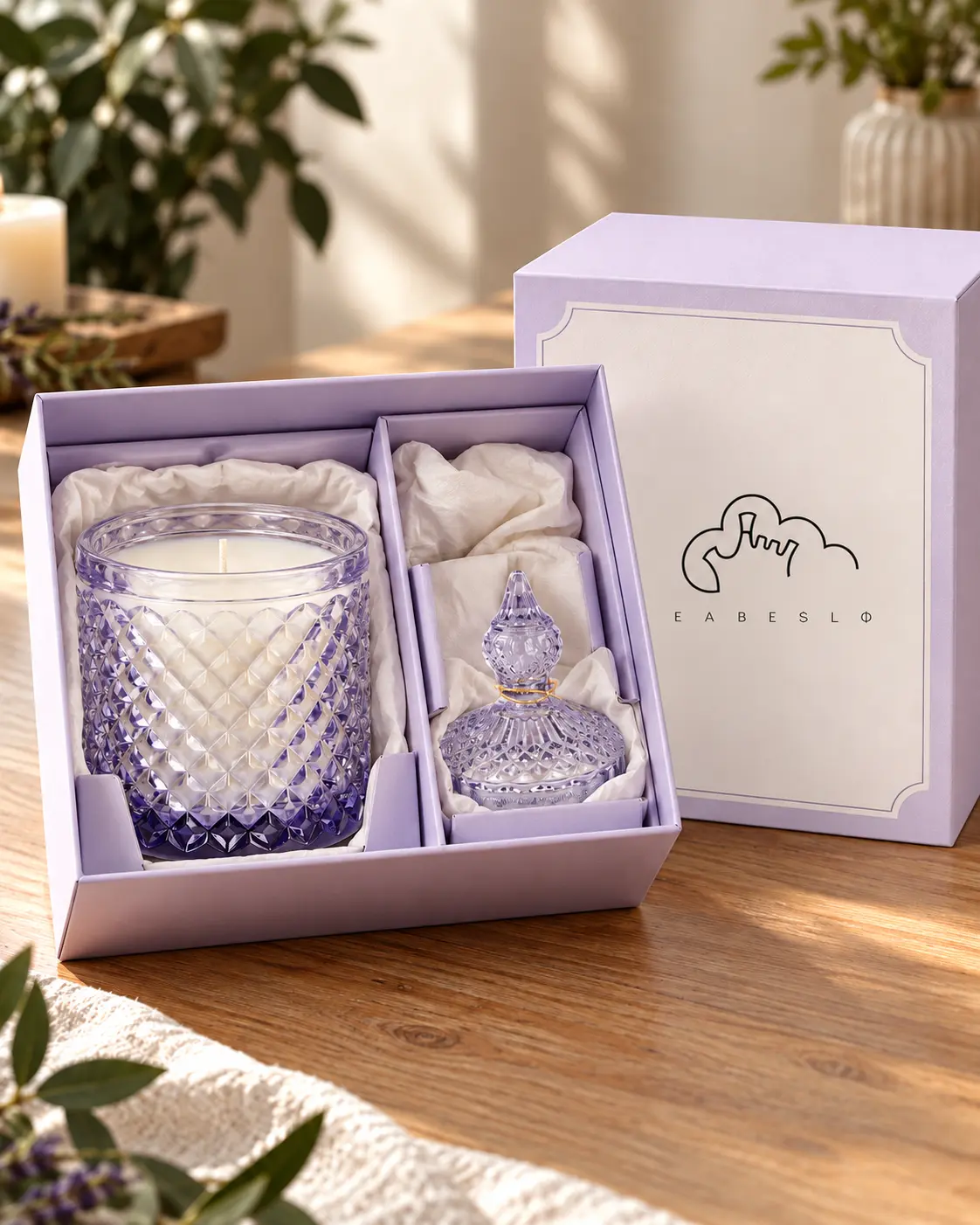
Keep the product state clear, too. This article concerns empty jars. Filling them with wax changes the shipment weight and may involve different retail packaging. Packaging approval for empty jars should not automatically carry over to filled candles.
Identify the Delivery Point and Any Further Handling
In Green-Life projects, candle-producing brands commonly ask for empty jars to be delivered to a designated filling location. This makes the handover to that location an important part of the packaging discussion.
Ask whether cartons will arrive on pallets, whether they will be unloaded individually, and whether the jars will be stored or moved again before filling. If cartons will be removed from a pallet for onward delivery, that stage also needs consideration.
Buyers do not need to choose a technical test procedure before starting the conversation. A clear description of the journey helps the supplier and, where needed, the testing laboratory propose a relevant plan.
How Should Dividers, Inner Boxes and Pallets Work Together?
Each packaging layer has a different job. The useful question is whether those layers work together around the actual jars.
Check Protection Inside the Carton
For many Green-Life customers, the usual packing arrangement combines dividers, inner boxes and an outer carton.
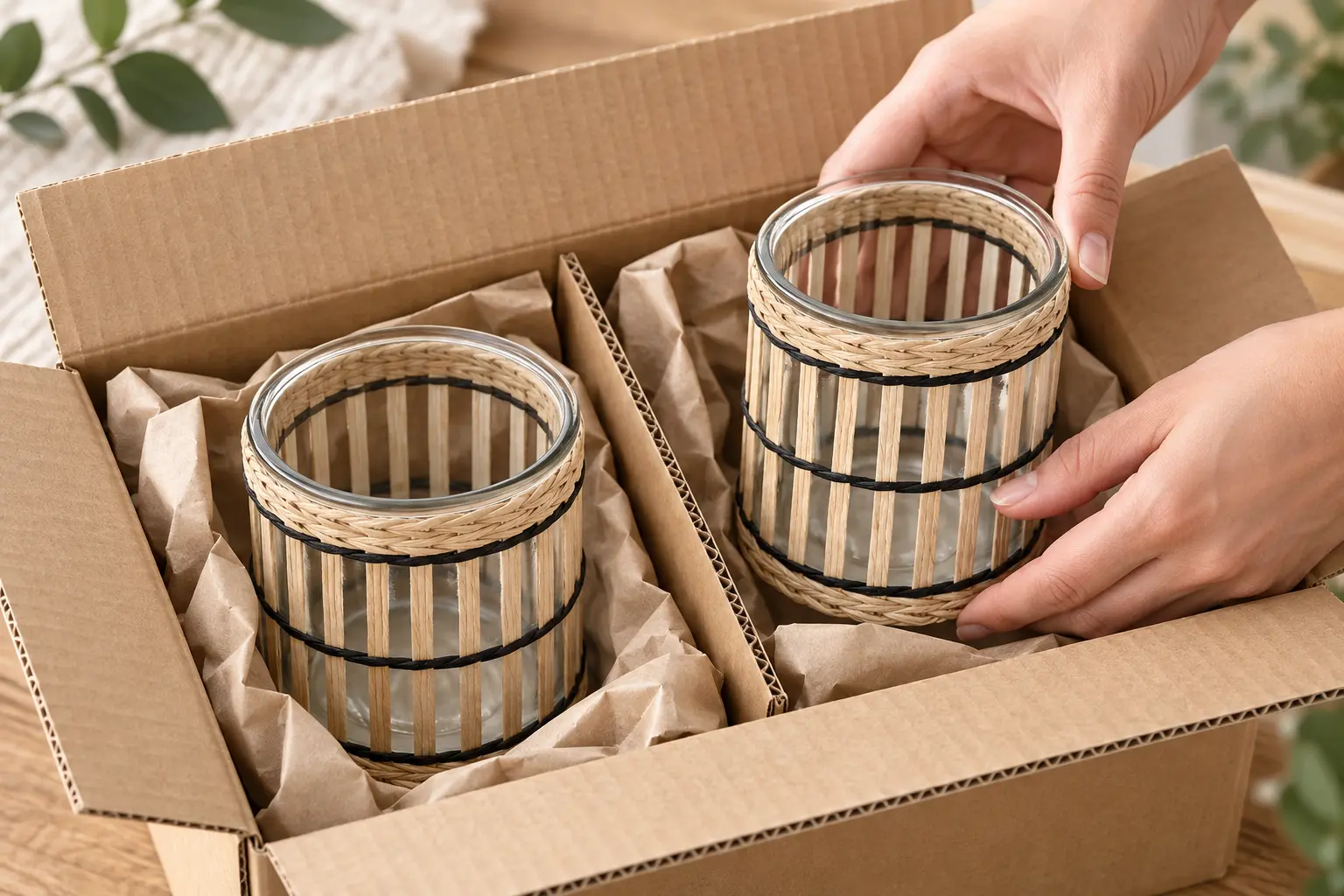
Dividers separate the jars. Inner boxes help organize and contain them. The outer carton holds the packed units together for handling. Check the assembled package rather than approving each component only by its appearance.
Look for movement that could allow jars to strike one another. Check whether lids or accessories can contact the glass, whether the dividers stay in position, and whether the jars fit without being forced into the packaging. These checks help identify where protection needs attention before testing.
More packing material is not automatically a better solution. Any revised arrangement should be checked with the actual jar and confirmed through the agreed validation process.
Confirm When Palletization Is Required
Palletization means grouping cartons on a pallet so they can be handled as a load. In Green-Life’s experience, larger customers, particularly supermarket and retail brands, often require this additional packing level.
Confirm the customer’s pallet requirements before finalizing the carton arrangement. Discuss how the cartons will be stacked, secured and received, rather than treating “with pallet” as a complete specification.
A pallet does not replace protection inside each carton. If cartons will later be handled separately, the packaging plan also needs to account for that part of the journey.
Do Thin-Walled Glass Candle Jars Need Extra Protection?
Thin-walled designs deserve particular attention when reviewing packaging.
In the glass candle jar projects Green-Life has handled, thin-walled borosilicate designs have been more prone to breakage and have needed extra protection. The ordinary soda-lime glass designs encountered in those projects have generally been less prone to breakage by comparison.
This is a project observation about particular jar designs. It does not establish that every borosilicate jar is weaker than every soda-lime jar. Borosilicate glass is known for its low thermal expansion[2], but resistance to temperature changes should not be treated as a measure of packaged drop performance.
For buyers, the practical step is to show the supplier the actual jar and ask where the packing needs additional support or separation. Review how it sits in the divider or inner box, how much it can move, and whether another packed component can strike it.
Do not approve a package solely because the material is described as soda-lime glass. Equally, do not reject a borosilicate design solely because of its material name. Use the actual product and packing configuration to assess protection.
What Does a Carton Drop Test Actually Tell You?
A carton drop test assesses the packed product under specified impact conditions. Its value depends on knowing those conditions and checking the contents afterward.
Agree on More Than the Drop Height
In Green-Life’s experience, large retail chain and supermarket brand customers commonly request carton drop tests before shipment, with requested minimum heights starting at 45 cm. Their goods are distributed directly from their warehouses to individual retail outlets or stores, making packaging protection during onward distribution an important consideration. This is a description of customer requirements encountered in Green-Life projects, rather than a universal minimum for glass candle jars.
“Passed a 45 cm drop” leaves several questions unanswered. Before testing, agree on:
- The complete carton contents, packing configuration and weight.
- The drop height, orientations, number of drops and impact surface.
- The number of test packages and the method for checking them afterward.
- What counts as unacceptable product or packaging damage, and who confirms the result.
The acceptance criteria are the agreed conditions for passing or failing. Record the jars’ condition before testing, then assess breakage, chips, cracks, surface damage and displaced packaging afterward. If dividers move and permit glass-to-glass contact, record that finding even when no jar has visibly broken. Separate product damage from packaging damage in the report.
If lot inspection uses AQL—acceptance quality limit[3], an index used in sampling plans—document that sampling plan separately. It does not supply the drop-test conditions or replace the agreed pass/fail criteria for the test package.
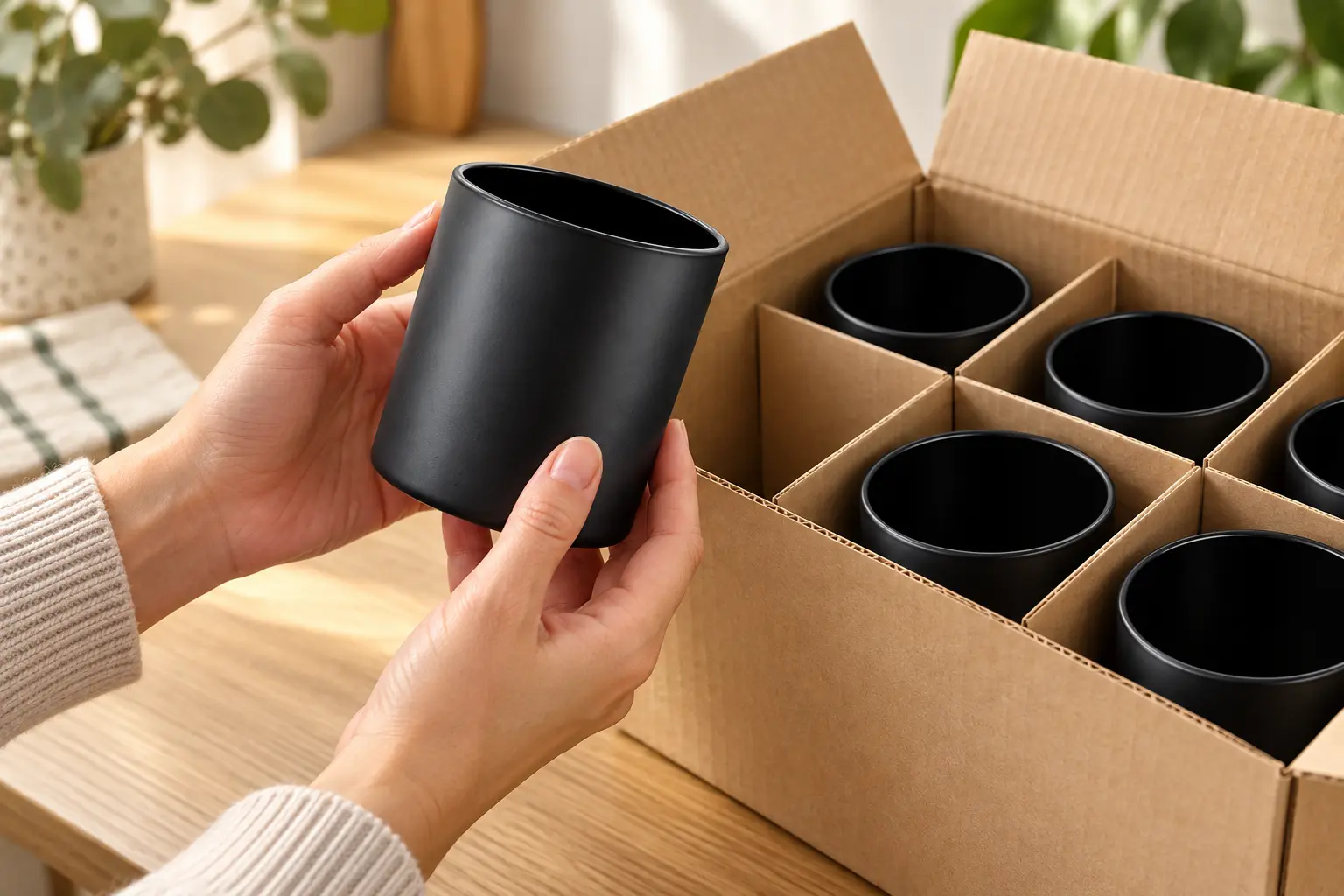
An outer carton that still looks tidy is not enough. Inspect the jars and internal packaging as required by the agreed test plan, and document the findings. State the inspection method: an ordinary visual check cannot certify the absence of every microscopic crack.
Check Whether the Transport Route Needs Broader Validation
A drop test addresses impact under the chosen conditions. It does not, by itself, assess every risk along a transport route.
Depending on the journey and customer requirements, the plan may also need to consider vibration, stacking loads or environmental exposure. A parcel shipment and a palletized delivery can involve different handling conditions.
If a customer specifies an ISTA[4] or ASTM procedure, confirm its version, scope and required packaging configuration with the supplier and testing laboratory. A customer-defined carton drop check should not be described as passing a complete named procedure unless that procedure was actually followed.
What Should Be Recorded Before Shipment Approval?
Pre-shipment quality control should connect product inspection and packaging validation to the actual shipment. A short checklist can cover the essentials:
- Product: the glass specification, jar and accessory versions, agreed dimensional and appearance criteria, and applicable annealing verification records.
- Packaging: dividers, inner boxes, outer carton, quantities and any pallet arrangement.
- Validation: agreed test conditions, acceptance criteria, results and photographs.
- Follow-up: any damage found, packaging changes and further checks or tests.
- Traceability and confirmation: the relevant batch or lot reference, responsible parties and version approved for shipment.
If a divider, carton, packing quantity or jar design changes after testing, review whether the previous result still applies. Record and verify improvements before relying on them for the shipment.
For your next order, share the jar reference, product quality requirements, proposed packing arrangement and delivery destination. Agree on both product inspection and transport validation, so shipment approval refers to a defined jar, package and set of results.
Sources
[1] ASTM International. ASTM F2179-26: Standard Specification for Annealed Glass Containers That Are Produced for Use as Candle Containers. ↩
[2] SCHOTT. Borosilicate Glass. ↩
[3] ISO. ISO 2859-1:2026 — Sampling procedures for inspection by attributes. ↩
[4] ISTA. Test Procedures. ↩