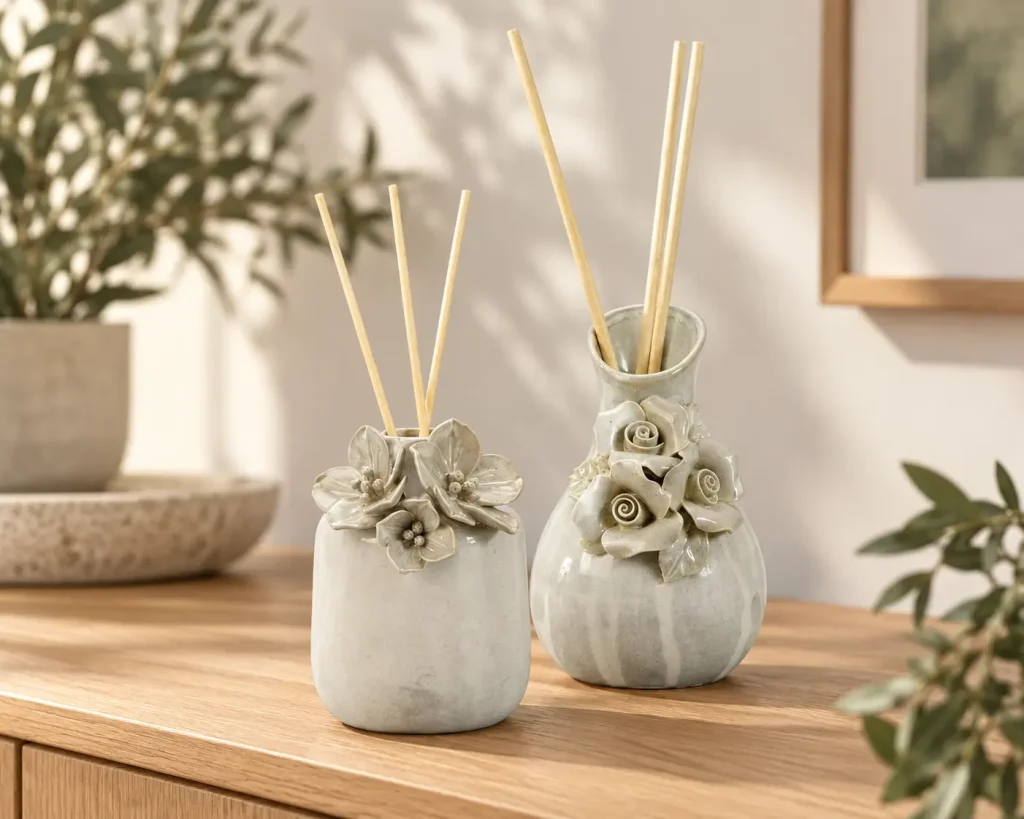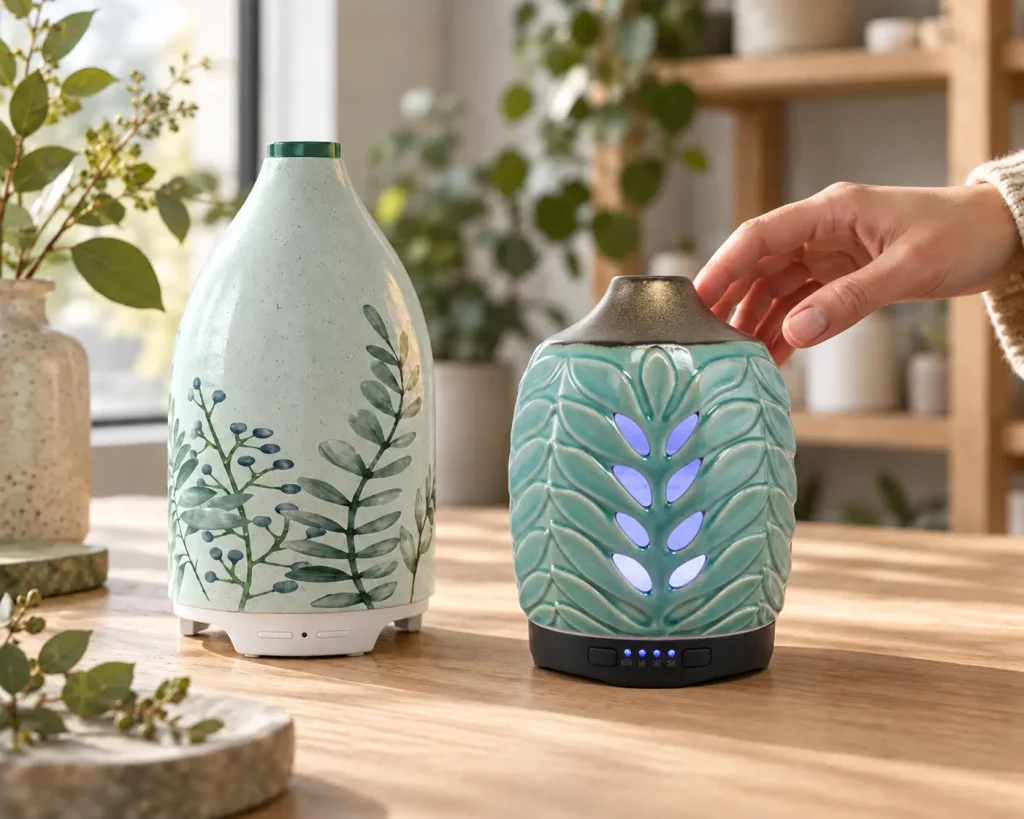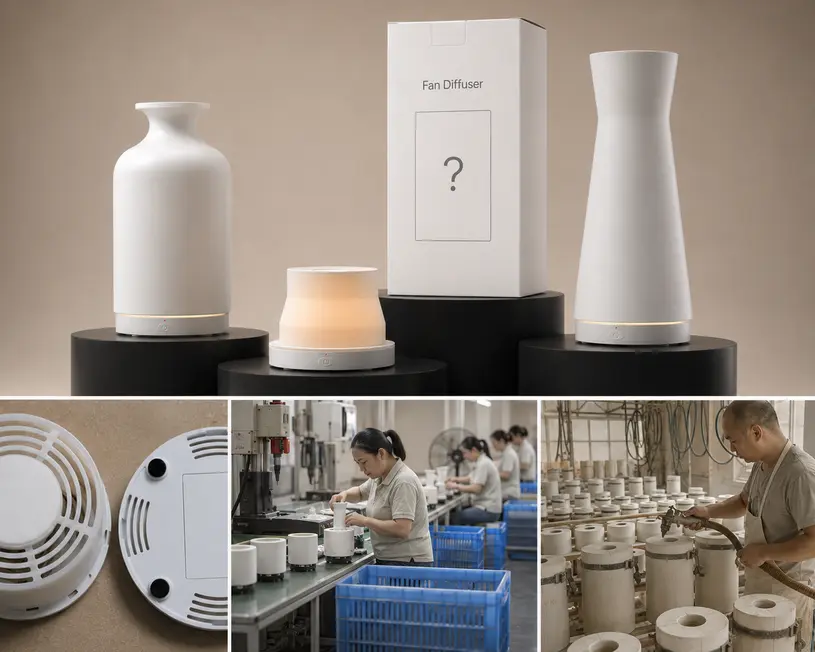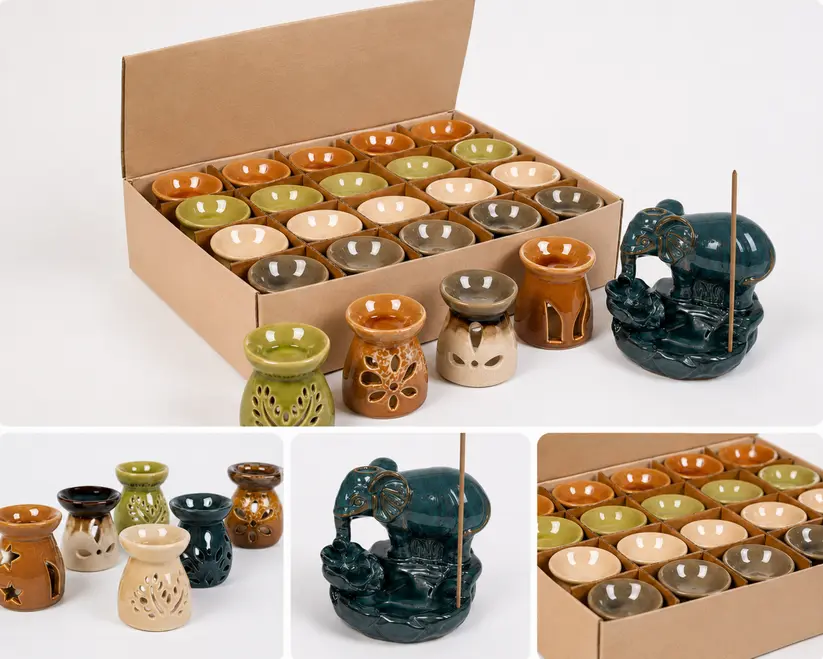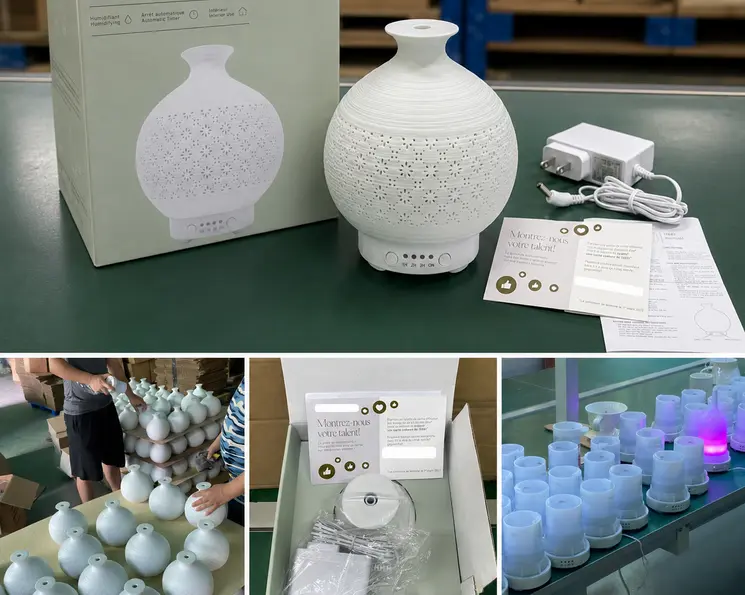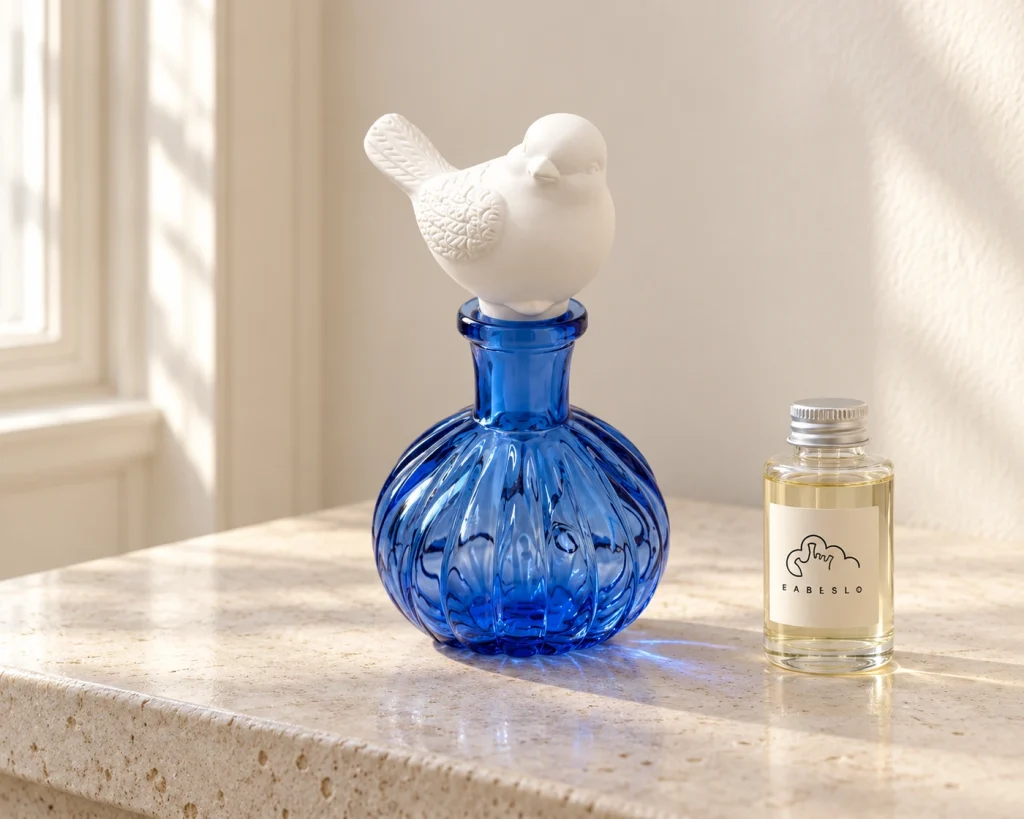
A decorative reed diffuser can be the starting point for a range of fragrance refills and replacement accessories. The opportunity is to let customers retain the decorative object while renewing the fragrance experience. For brands, this works only when the next purchase is easy to identify, suitable accessories are available, and care instructions support continued use. Refillability alone does not establish repeat demand.
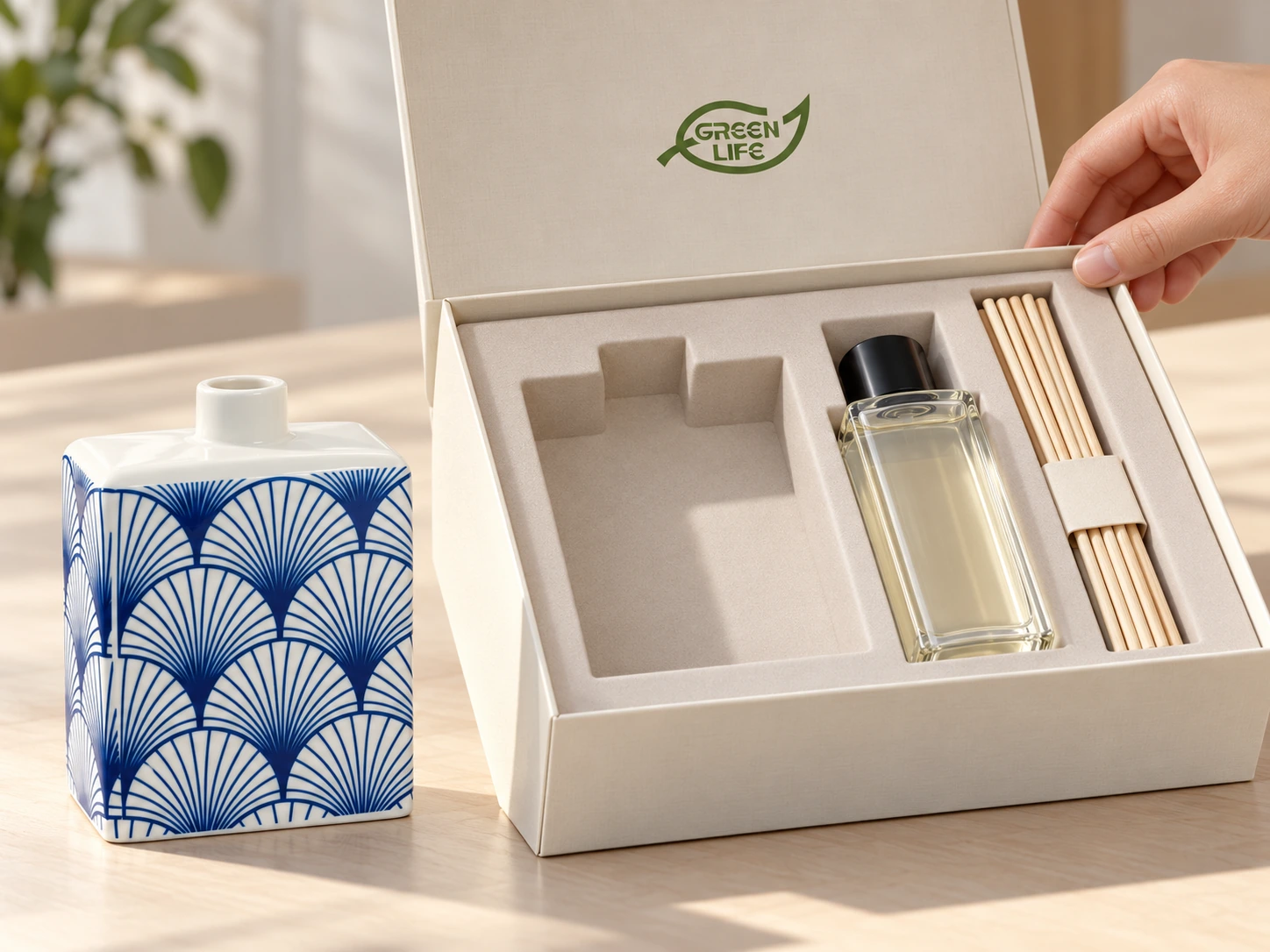
For Green-Life, this often starts with an empty decorative glass or ceramic vessel. A brand may pair it with its own fragrance refill, offer the vessel as a promotional item, or create a gift set with a separately sealed fragrance bottle. The decorative vessel is filled by the consumer. A useful refill plan connects these sales formats with practical instructions and accessories that fit.
What Does the Refill Model Change for Brands?
In a refill model, the decorative vessel and the replenishment purchase serve different purposes. The vessel carries the design identity of the collection. Later purchases supply fragrance liquid and, when needed, new diffusion media. This changes the development question from choosing an attractive first set to deciding which parts of the range should remain consistent over time.
Public product examples make this distinction visible. Diptyque offers a refillable glass diffuser vessel with directions for cleaning and changing fragrance. Rituals offers its Mehr fragrance-stick refill with fresh sticks and instructions to use them. These examples show established refill offers with different component policies. They do not establish market-wide growth or show how often customers repurchase.
For a brand, the useful question is whether its customers can obtain the next refill and recognise the right components. A decorative object may remain usable while a missing replacement flower, wick or set of sticks interrupts the experience. The commercial opportunity therefore depends on the supporting assortment and supply arrangements as well as the vessel.
What Will Customers Keep, Refill and Replace?
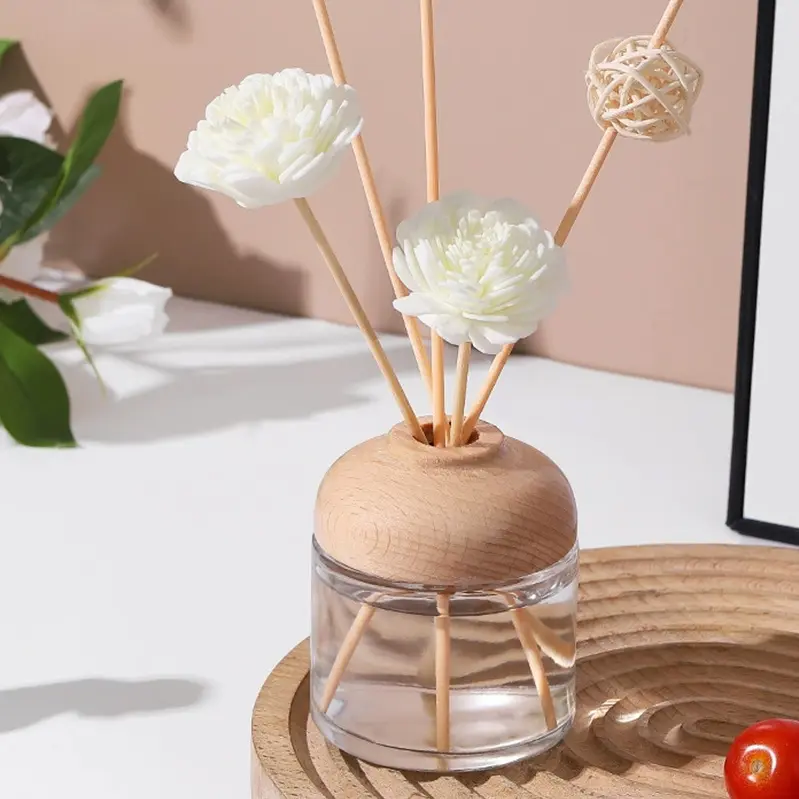
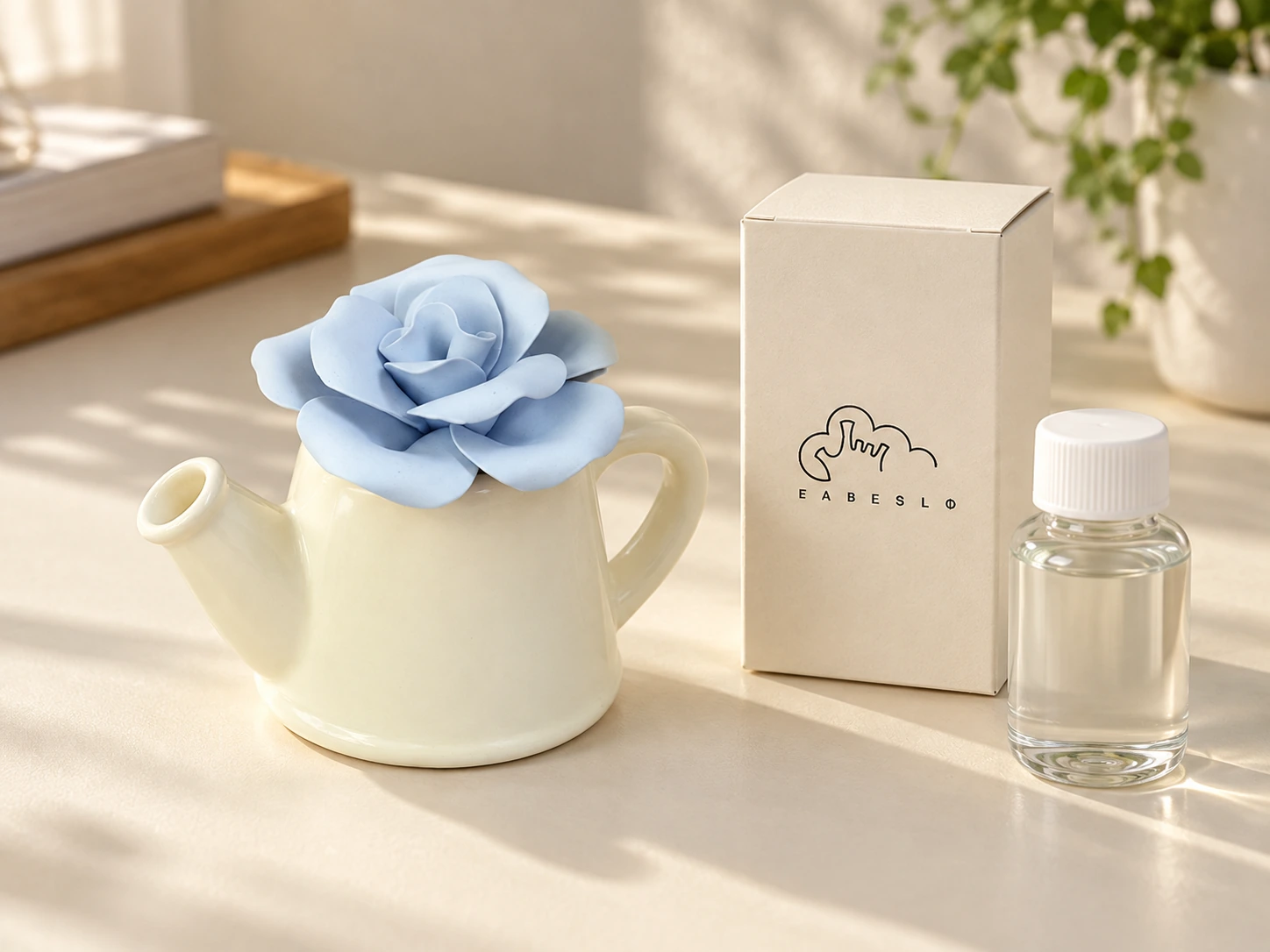
The vessel, fragrance liquid and diffusion medium have different roles. The diffusion medium is the part that draws up and releases the liquid, such as natural rattan reeds, fibre sticks, a porous ceramic flower or a plaster (gypsum) flower, or a cotton wick connected to a decorative flower.
A reusable vessel does not mean every component should be retained through every refill. Brands need to decide whether replacement media will be included with the fragrance or sold separately, and explain that choice before customers run out.
For a brand developing its own range, define two routes: topping up the same fragrance and starting a different fragrance. They may require different replacement packs and care instructions.
Which Sales Format Can Support the Next Purchase?
Consider the intended channel before expanding the refill assortment. For a fragrance brand selling directly online, a refill listed against a named vessel and matching accessories can give returning customers a clear choice. In a gift-led range, the recipient may not be the original purchaser, so the pack needs to identify the compatible refill and where it can be obtained. If a retailer buys only a seasonal gift set, confirm whether it will also carry replenishment products or whether the brand has another route to supply them.
These are planning considerations rather than claims about every channel. A one-off promotional vessel may not justify a dedicated replacement range. Where continued use is part of the offer, confirm how consumers will access the required liquid and media before presenting the product as an ongoing refill system.
How Will the Refill Fit the First Purchase?
Start with the intended first purchase. Does the customer receive an empty decorative vessel for an existing fragrance collection, or a gift set containing the vessel, fragrance and diffusion medium? Then specify what the second purchase contains.
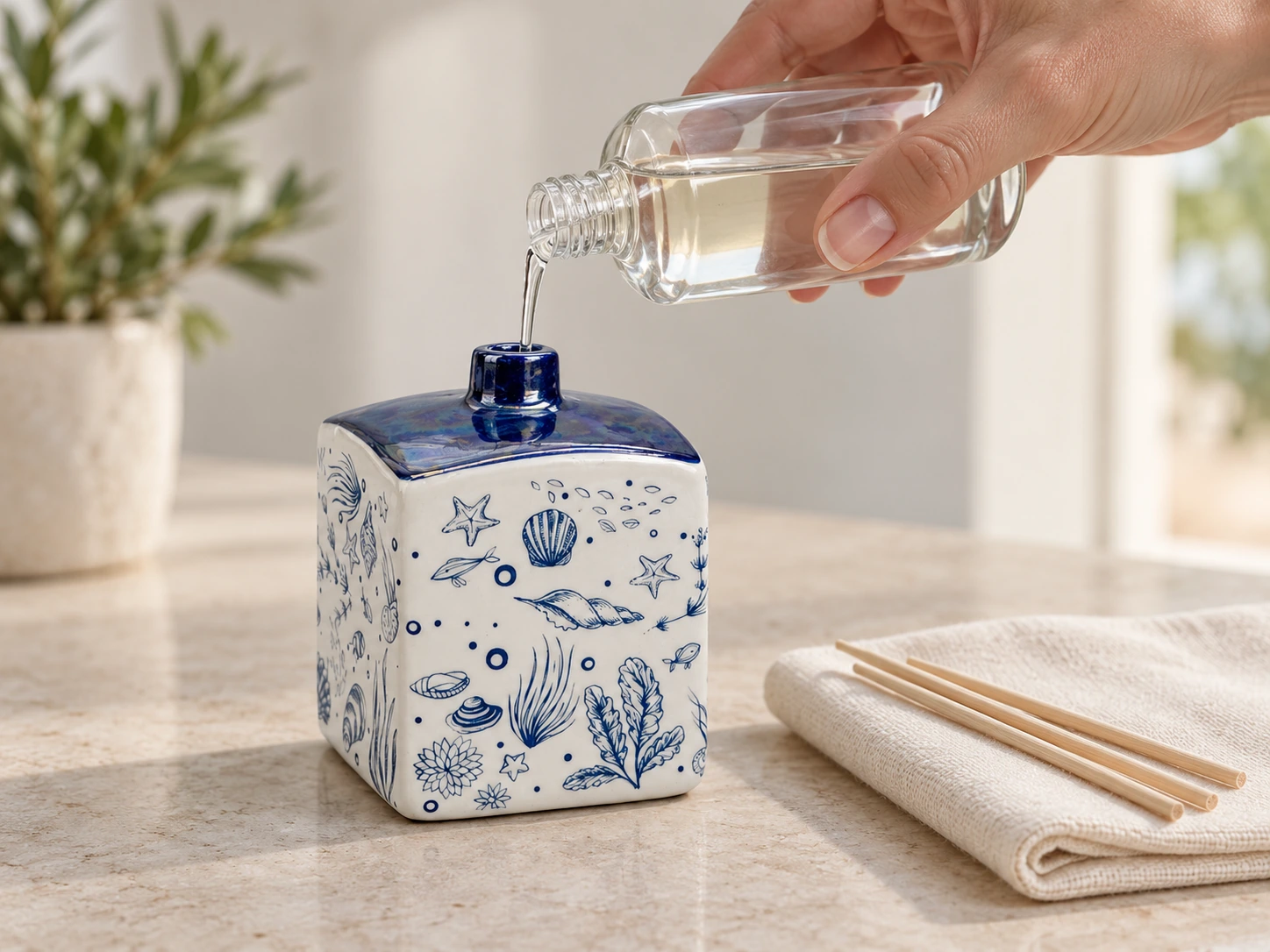
The refill bottle's total volume and the vessel's working fill are separate decisions. A larger refill may supply several additions. The decorative vessel does not need to hold the entire bottle at once. Agree an appropriate fill amount using the actual vessel and inserted accessories, and make the consumer's filling action easy to understand.
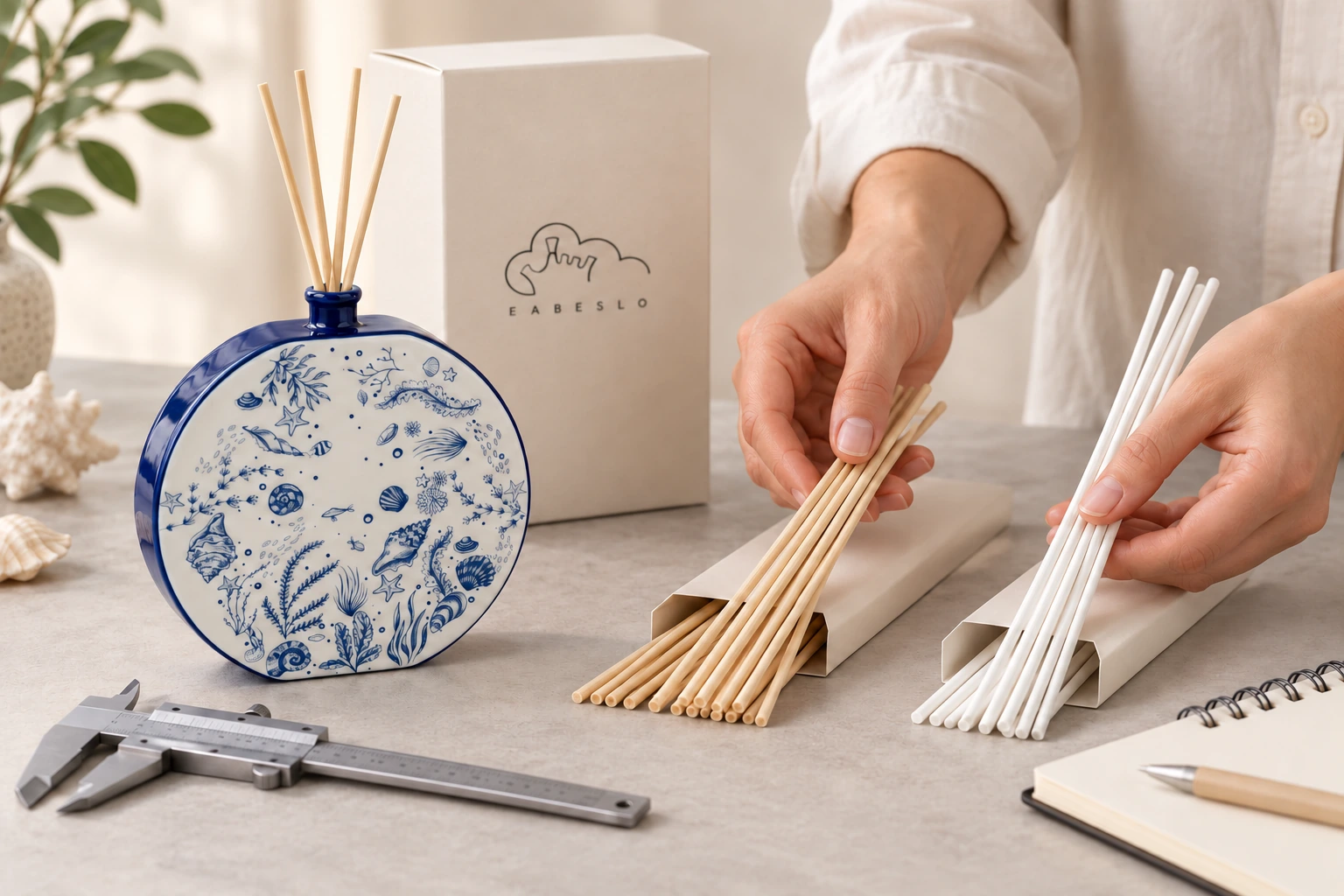
Replacement accessories also need more than a visual match. When customers request them, Green-Life confirms the vessel's material, capacity and dimensions, with particular attention to internal depth and the opening's internal diameter. These details help assess the length and fit of reeds, ceramic stems and cotton wicks. Agree acceptable dimensional variation for mating parts and check fit on representative samples; nominal dimensions alone do not establish interchangeability.
The liquid matters too. Ask the brand about its formulation and fragrance concentration, and assess viscosity, meaning how readily the liquid flows. Concentration alone does not establish viscosity or prove compatibility. Solvent choice, fragrance solubility, how the liquid wets the medium, and evaporation behaviour also belong in the assessment. Ask the fragrance partner to evaluate the finished formula with the selected medium under the intended conditions of use.
In Green-Life's selection experience, fibre sticks are usually the first option to evaluate for more viscous fragrance liquids. For thinner, solvent-based liquids, natural rattan or fibre sticks may both be candidates. Absorbent ceramic, plaster and cotton wicks are generally considered for low- to medium-viscosity liquids. These are starting points for sampling. The actual liquid and accessory combination still needs checking before approval. Porous ceramic and plaster are different materials; neither should be treated as a substitute for the other without confirming the specific component and formula.
What Must Be Checked Before Calling the Vessel Refillable?
Repeated use includes handling, exposure to fragrance liquid, cleaning and installing replacement accessories. A sample review should cover these actions together, including the vessel's interior, rim, decoration and any surfaces likely to contact spilled liquid.
Agree the intended cleaning method and acceptance conditions with the brand. Do not promise a fixed number of refill cycles without supporting evidence. Instructions should also identify when a damaged vessel or deteriorated accessory should stop being used.
Topping Up the Same Fragrance
In Green-Life's practical experience, a vessel does not necessarily need washing before the same fragrance is added again. Dust, visible dirt or cloudy remaining liquid are reasons to stop topping up and assess the contents and vessel first.
An intact absorbent ceramic or plaster flower may remain in use with the same fragrance, subject to the brand's instructions and satisfactory performance. Natural rattan and fibre sticks may also be considered for reuse while they remain flexible and in suitable condition. Hardened sticks, blackening, spots or clumped deposits are replacement prompts. A cotton wick that has hardened should also be replaced.
These visible and tactile checks help consumers recognise deterioration. They do not establish that an accessory is clean, compatible or still diffusing adequately. If the brand specifies fresh media with every refill, its instructions should be followed.
Changing to a Different Fragrance
Green-Life recommends starting a new fragrance with a cleaned, thoroughly rinsed and completely dry vessel, together with new diffusion media. That includes reeds, fibre sticks, absorbent ceramic or plaster components, and cotton wicks.
For the vessel, the brand should identify a suitable mild cleaning agent or solvent and confirm compatibility with the material, glaze, coating and decoration. A product described as neutral is not automatically suitable for every finish. Where the approved method includes a water rinse, let the vessel dry fully before adding fragrance. Assess the finished refill for sensitivity to residual water and cleaning agents rather than assuming all solvent systems behave alike. Do not prescribe alcohol rinses or heated drying without checking the product and cleaning instructions.
Green-Life has received consumer feedback about mixed or changed scents where old diffusion media, incomplete vessel cleaning or filling before complete drying were reported. These are useful points to investigate. An unusual smell alone does not establish the cause or confirm chemical deterioration of the liquid. Care instructions should tell customers how to obtain help if the problem continues.
How Will Replacement Parts and Product Changes Be Managed?
A replacement should be identified by its intended combination of vessel, liquid and diffusion medium. Record the approved dimensions and accessory construction, rather than relying only on a product photograph or collection name.
If a vessel's depth or opening changes, revisit accessory fit. If the fragrance formulation changes, reassess the selected medium with the new liquid. A component that looks similar should not automatically be described as interchangeable.
Before launch, discuss how replacement parts will be ordered and how changes will be communicated. Agree what information the brand must provide when requesting replacements and what the supplier needs to confirm. Future availability, order quantities and compatibility should be checked for the project rather than assumed from the first order.
There is also an assortment trade-off. Sharing a verified accessory across several vessel designs can reduce the number of replacement items to manage, but may constrain the designs. Dedicated flowers or stems can strengthen a collection's identity while creating more separate parts to order and stock. Compare minimum order quantities (MOQs), any tooling costs, and replenishment needs for the accessory and its packaging before expanding the range. A low-volume replacement SKU can leave unused parts or printed packaging in stock. Shared components may consolidate demand, but do not automatically lower a supplier's MOQ. A successful first sample does not resolve later production consistency or supply availability.
A separately sold liquid refill also needs its own packaging review. Confirm the bottle, closure and seal with the actual liquid and distribution route. Assess the pouring opening or dosing aid for controlled filling and contact with nearby finishes; no single seal or closure suits every refill.
Have the responsible brand and fragrance partner review each refill's label and packaging against its finished formulation, intended market and use. An empty decorative vessel's information does not establish the requirements for the liquid refill. In the EU, assess applicable CLP classification, labelling and packaging duties[1]. IFRA Standards[2] address fragrance-ingredient use and do not replace legal obligations.
What Should Be Agreed Before Launch?
Use the complete sample to settle the refill offer and the customer instructions together.
| Decision | What the brand and supplier should confirm |
|---|---|
| First purchase and refill offer | What each pack contains, including any replacement media |
| Vessel and accessory fit | Material, working fill, internal depth, opening and accessory dimensions |
| Liquid and medium | Actual formulation, wetting and evaporation behaviour, and sample performance |
| Reuse and fragrance change | What may be retained, replacement prompts, approved cleaning and complete drying |
| Follow-up orders | Component identification, ordering information and review of product changes |
The brand, vessel supplier and fragrance partner should agree their respective responsibilities for the complete product, its instructions and sample approval. A refill range is a stronger proposition when the brand can support the next purchase as carefully as the first. If replacement access, acceptable reuse or the required accessory assortment remains unresolved, narrow the offer before adding more vessel designs or fragrance variants.
Sources
[1] European Chemicals Agency (ECHA) — Decide on classification and labelling. Accessed 13 October 2026. ↩
[2] International Fragrance Association (IFRA) — About IFRA. Accessed 13 October 2026. ↩