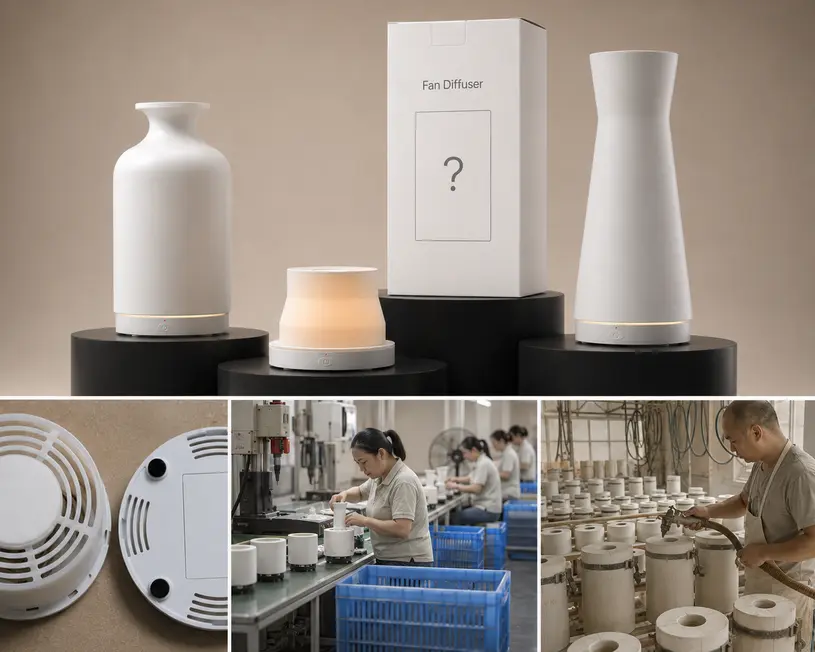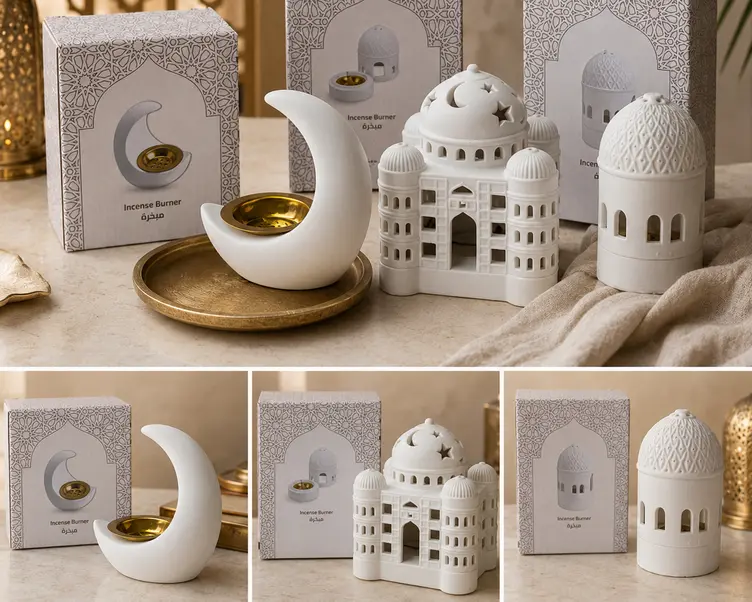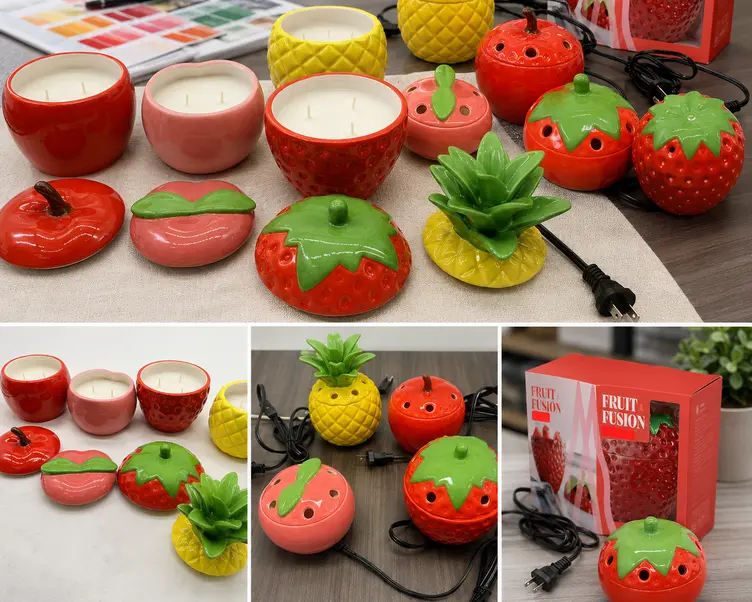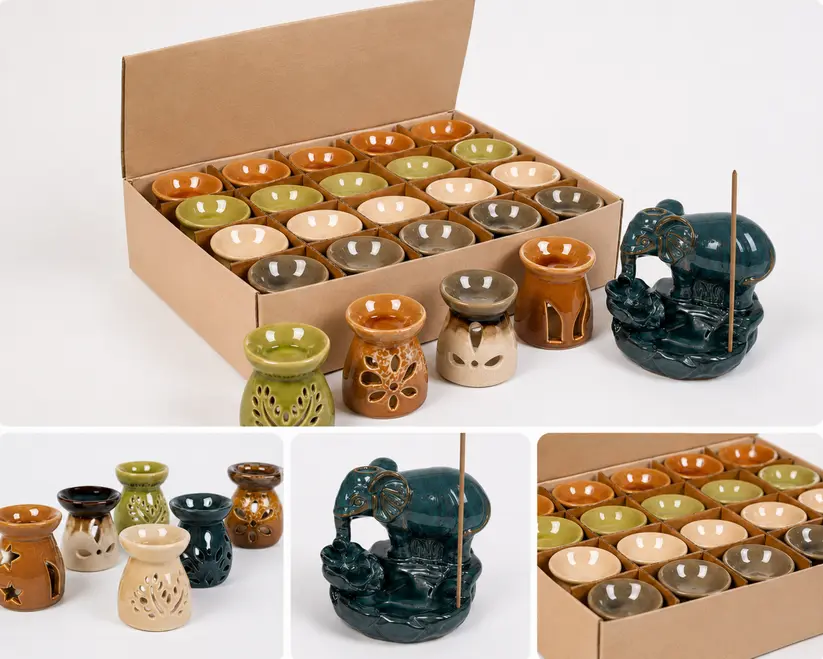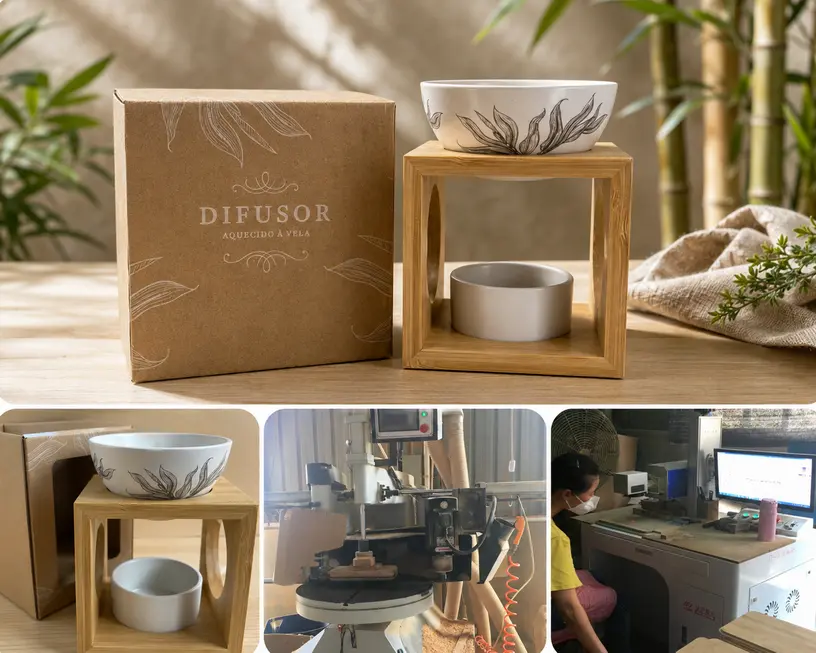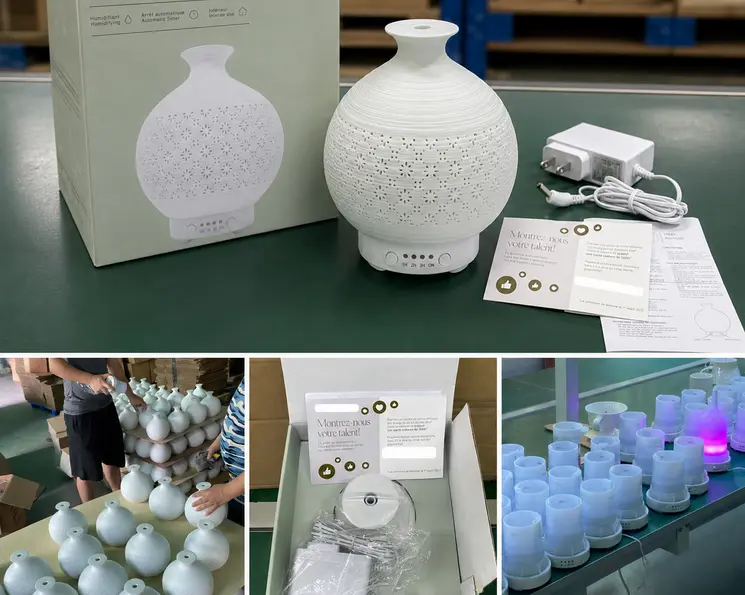
You have found a diffuser, candle jar or warmer that could fit your business. You want to know the price, but you have not decided on quantities, packaging or the exact specification. Do you need to finish that work before contacting a supplier?
You can start with the product that interests you. A photo, product link or simple description is enough to open the conversation. A few details about your business then help the supplier give a more useful response. The remaining requirements can develop through discussion.
Can you inquire before knowing exactly what you need?
Yes. An initial inquiry can help you decide whether a product is worth exploring. You do not have to arrive with a complete request for quotation, or RFQ.
Start by pointing to the product and saying what you would like to learn. Are you checking whether it fits your first product range? Looking for an alternative to something you already sell? Or exploring branded packaging for an existing design?
If you send a reference image, mention what attracted you. With a ceramic diffuser, it might be the shape, finish or overall style. With a candle warmer lamp, it might be the appearance or how it would fit an existing candle collection. This helps the supplier understand whether you want that particular model or are open to related options. A reference photo is a useful starting point. From there, you and the supplier can clarify the specifications and confirm which options are available.

Your first message can be simple. For example, this is an illustrative inquiry, not a customer case:
“I’m interested in this candle jar for a home-fragrance business I’m starting in Canada. Could you share the minimum order quantity and price? I may want branded boxes, but I have not decided on the design yet.”
The message identifies the product, market, business stage and a possible packaging need. It leaves room for advice. There is no need to invent an order quantity or select technical terms just to make the inquiry look complete.
Which background details make a supplier’s reply more useful?
Business context helps a supplier understand what you are trying to achieve. These details can come up naturally during the exchange. They do not need to become a questionnaire you must finish before receiving a response.
Your market and the business you operate
Say where you intend to sell or use the product. Your sales market may differ from your own location. For example, a company based in one country may be sourcing for customers in another.
The market gives the discussion a direction. For a powered diffuser or warmer, it helps identify the appropriate electrical configuration and applicable market documentation requirements. For an empty candle jar, it helps establish the commercial context, while the intended use and filling requirements still need their own discussion. Naming a country does not by itself establish that a particular model meets all applicable requirements.
It also helps to explain whether you are buying as an individual developing a business or for an existing company, and what that business does. “We sell fragrance oils and want to add matching accessories” tells a supplier more than “We need high-quality aroma products.”
An existing candle brand adding jars, a homewares retailer exploring decorative holders and a fragrance business considering diffusers may be interested in similar-looking products. Their next questions can be quite different. Describe your own situation in ordinary language; a formal company presentation is unnecessary for opening the conversation.
Whether this is a new venture or an established range
Both are reasonable starting points. Sharing your stage helps explain the kind of guidance you need.
A new business might be trying to understand which products and quantities are practical for a first launch. An established business might already have a packaging format, a product range or a specific gap to fill. These are illustrative situations, not assumptions a supplier should make about every buyer.
You can make the distinction clear with a short sentence: “This would be our first product in the category,” or “We already sell candles and are considering a matching warmer.” Neither statement commits you to a budget or order size.
Whether you are considering branded packaging

Mention custom packaging early if it is part of your plan. You do not need finished artwork to say that you may want a branded retail box, a gift set or your logo on the packaging.
This helps separate the product you are considering from the package you ultimately want to sell. An empty vessel, a vessel with accessories and a finished gift presentation are different scopes to discuss. Do not assume a product image shows everything included in the quoted price.
If you are undecided, ask what packaging the initial quotation covers and what would need a separate review. Detailed artwork and construction can follow once the product direction is clearer.
AI can help organize your message, especially when you are writing in another language. Read the result before sending it. Remove requirements you have not actually chosen, and keep the details that explain your business. A brief, accurate introduction gives a supplier something concrete to respond to.
How can you explore prices before deciding on quantity?
Ask for the price at the product’s minimum order quantity, or for available quantity-based pricing. This gives you a starting point for judging whether the product could fit your purchasing plan.
At Green-Life, buyers often start by sharing a product they are interested in, without a complete brief. We gradually learn about their market, business, stage and packaging needs, then provide MOQ-based or tiered quotations for the product under discussion. The applicable quantities, prices and conditions depend on that product and project.
You do not need to choose a large quantity just to request a quotation. If you are still evaluating the opportunity, say so. Asking for quantity tiers is a way to explore options; it is not a promise to buy at the highest tier.

When reviewing the response, focus on what each price covers:
- Quantity basis: Does the minimum apply to one model, one color or a particular configuration? Do not assume several variants can be combined to reach it.
- Product and packaging scope: Which accessories and packaging are included? Is the price based on standard packaging while your branded box is still being discussed?
- Delivery scope: Is this a product quotation, or does it include transport to a stated destination? Avoid treating a unit price as your complete delivered cost.
These are questions to clarify with the supplier, not details you must solve alone before making contact. If a quotation uses an unfamiliar trade term, ask what it means for the proposed shipment and which costs remain outside the quote.
A lower unit price also needs to make sense for your business. Compare the total purchase commitment and the amount of stock you would hold, rather than choosing a larger order only because its unit price is lower. If your realistic first order is smaller, discuss that openly. Feasibility and any different conditions still need confirmation.
What should you work out after the first exchange?
The first conversation should help you identify what is worth investigating next. You can then narrow the details around a product and purchase plan that interest you.

For an empty candle jar, the next discussion might cover dimensions, capacity, lid options and the intended candle application. Appearance alone does not confirm suitability for your finished candle. For a diffuser or warmer, it might cover functions, power configuration, included accessories and the requirements of the intended market. Once you narrow down the model, ask the supplier which technical details and supporting documents need confirmation for your intended use and market.
Packaging can become more specific at this point too. Once you have selected a product direction, discuss how it will be presented, what needs branding and which packaging details require approval. A general wish for “custom packaging” can gradually become a defined scope for evaluation and quotation.
If there is a firm launch date, raise it early, even while other details are open. State whether you mean shipment from the supplier or arrival at your destination. The schedule still needs to be assessed; sharing a target date does not make it a confirmed delivery commitment.
Before placing an order, the chosen configuration, quantity, packaging, applicable documentation, delivery arrangements and quotation conditions need to be confirmed. Those decisions matter, but they do not all belong in the first message.
Start with the product that interests you and a few honest words about your business. If you are unsure about the next step, say what you are trying to find out. Green-Life can use that conversation to help clarify the product and purchasing options with you.




 English
  Français
  Deutsch
  Español
  Português do Brasil