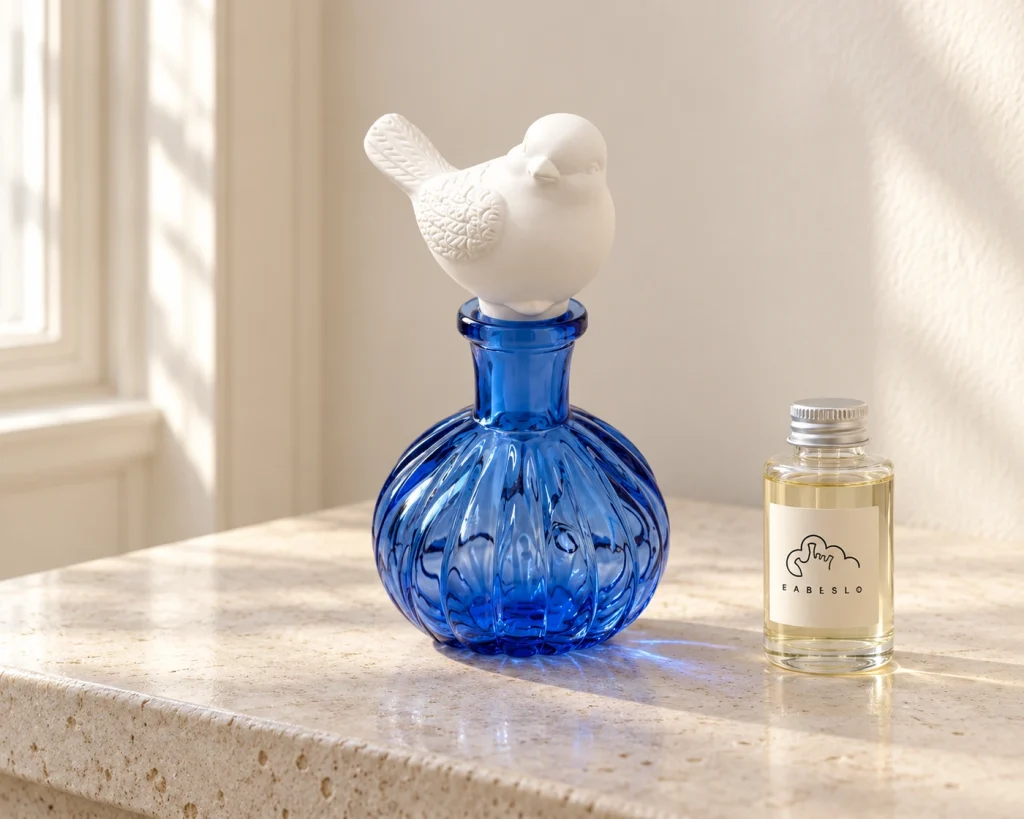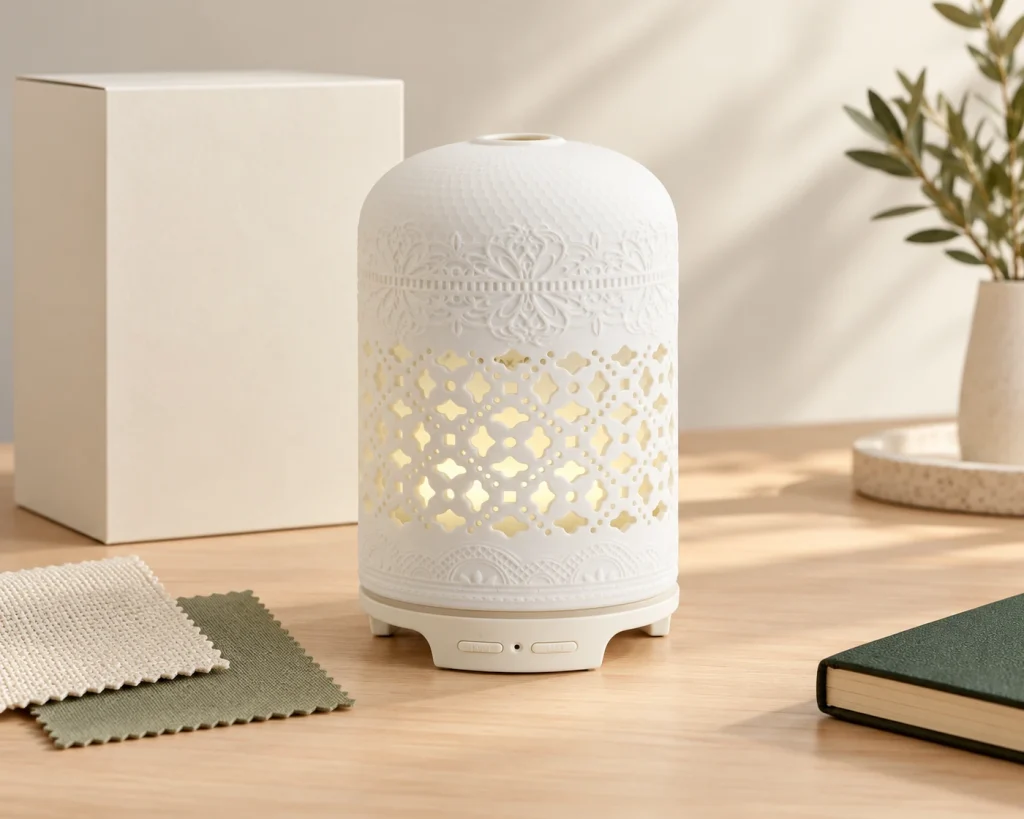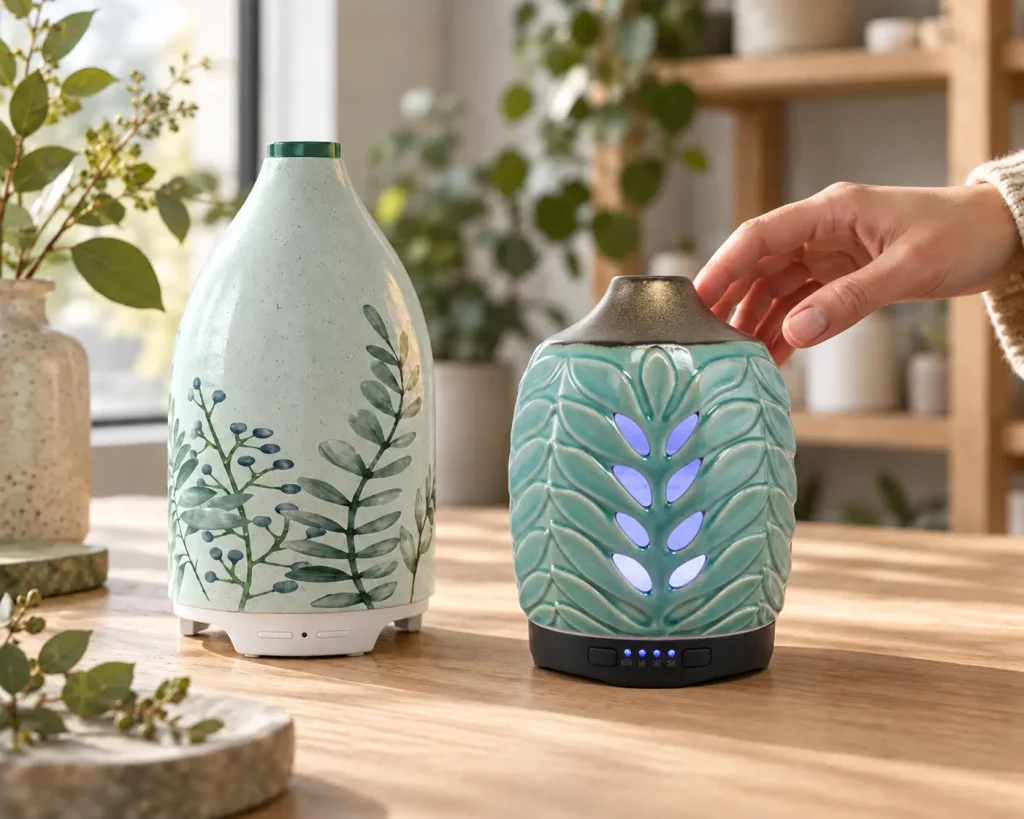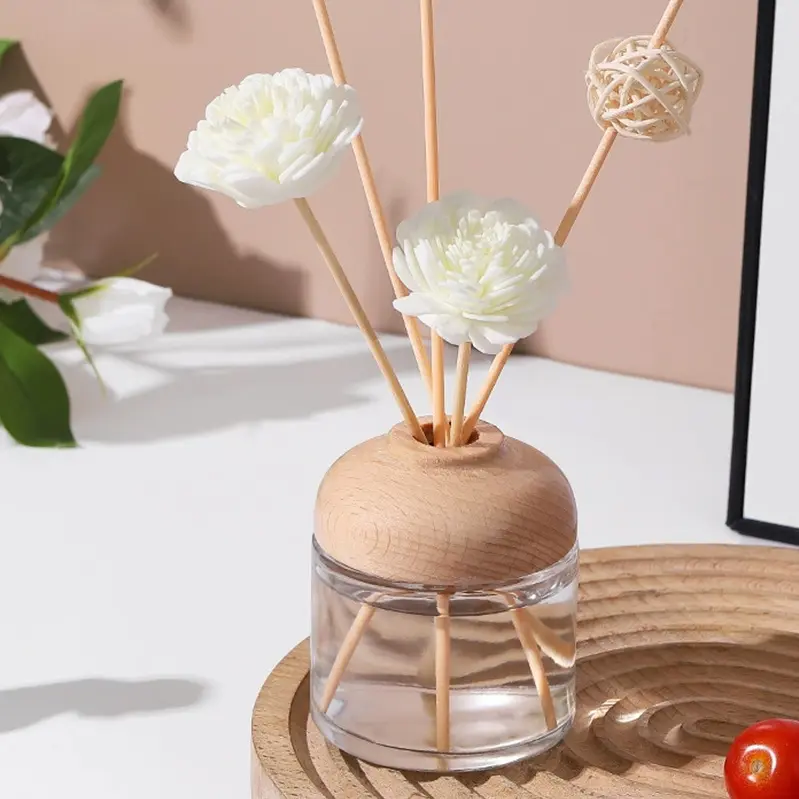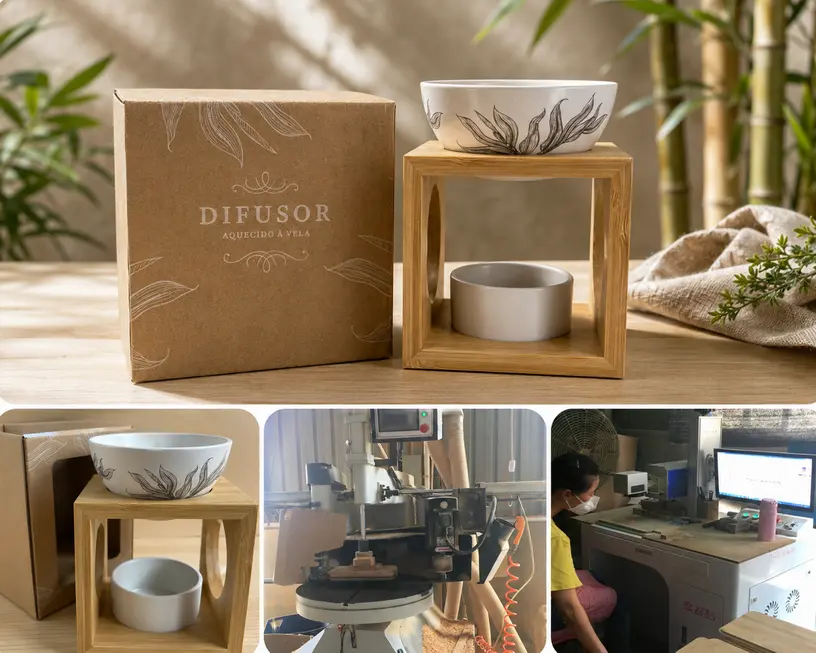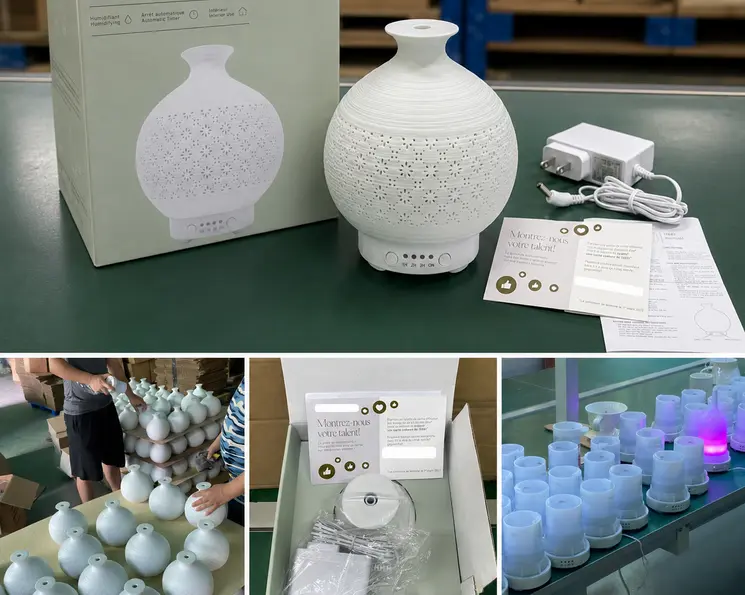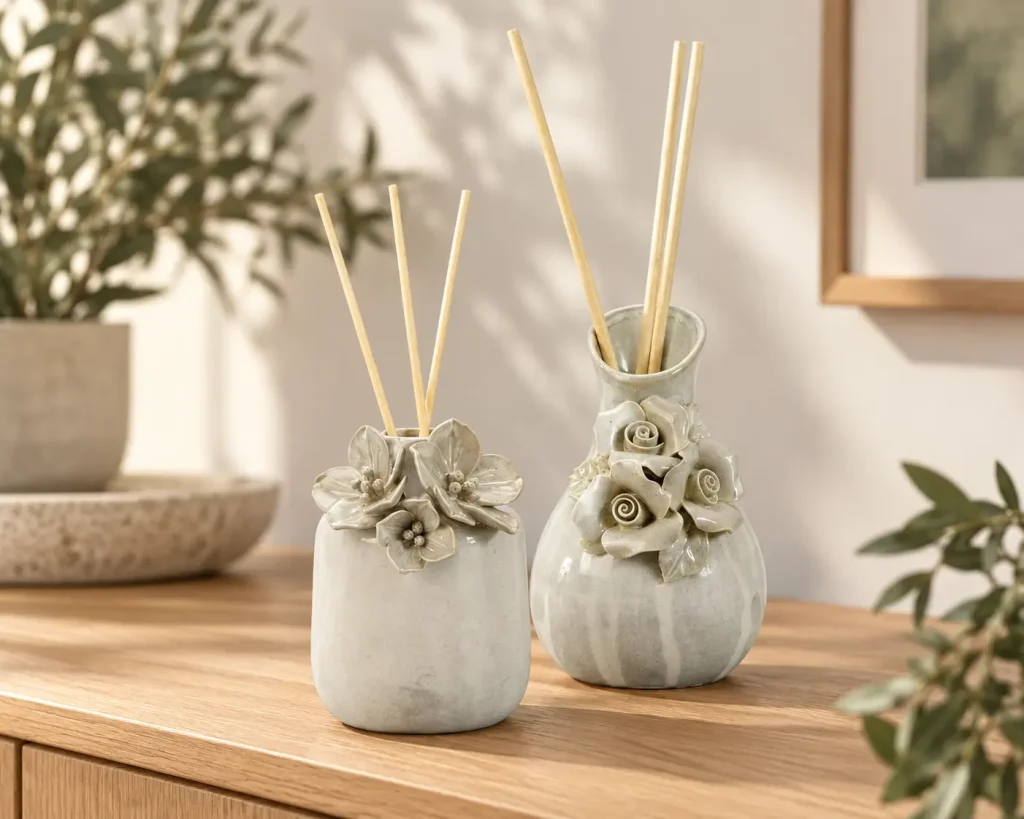
A decorative diffuser vessel can help a fragrance brand turn its refill range into a coordinated home accessory or gift. But a bottle that looks right may still have an unsuitable body, an awkward pouring opening, or poor support for the intended reeds or ceramic flower.
Choosing a suitable vessel starts with how it will be sold and used. Material, neck opening and working capacity need to work together, with the complete sample evaluated using your actual fragrance liquid and diffusion medium. This is the basis for selecting decorative vessels supplied empty for consumers to fill at home.
How Will the Decorative Vessel Be Sold?
Decide what the customer will receive and how they will use it before choosing a shape.
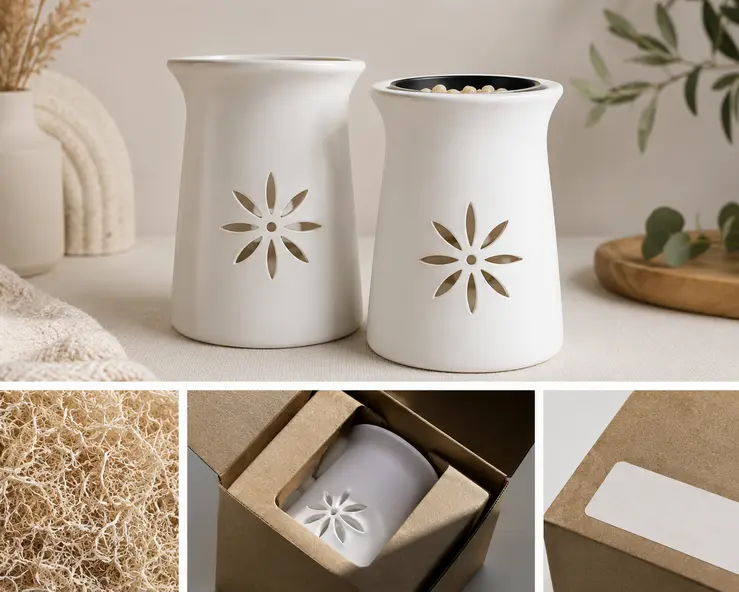
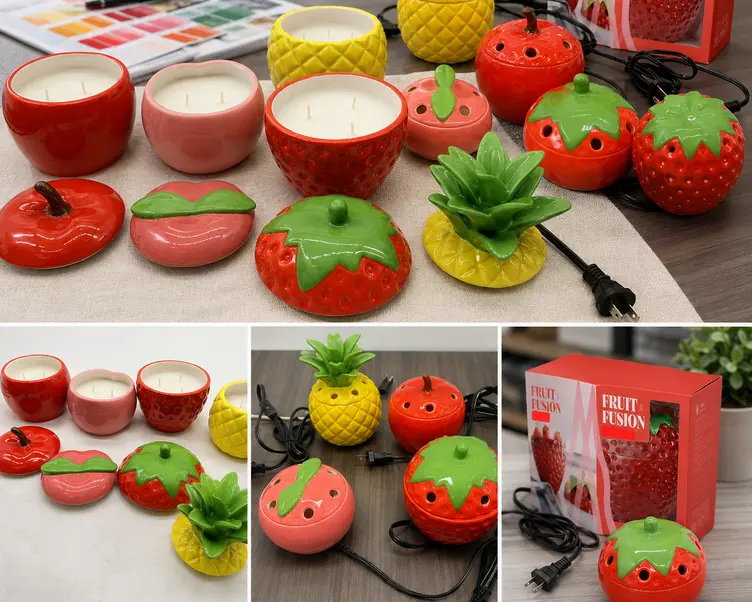
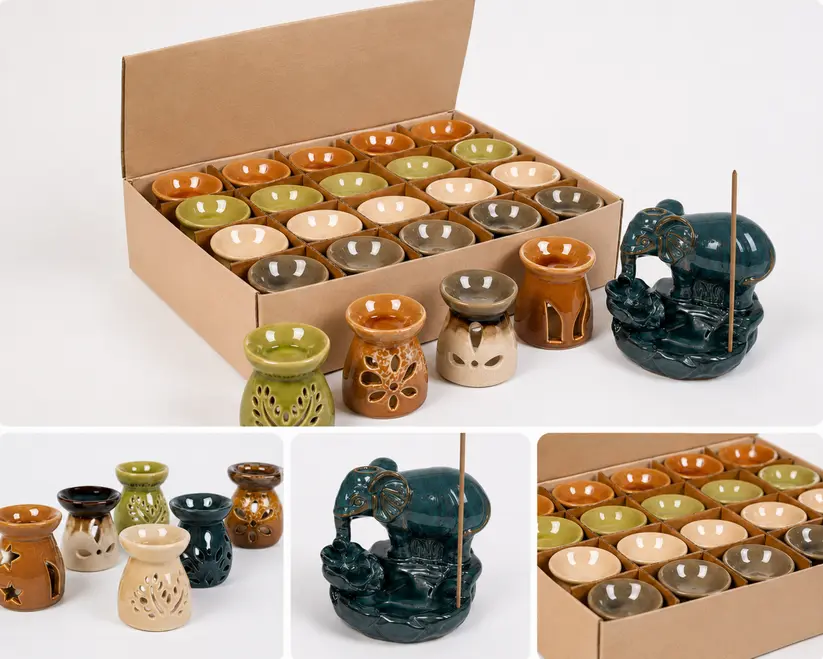
At Green-Life, we usually supply decorative ceramic or glass diffuser vessels without a sealing closure. Fragrance brands can pair them with their own larger refill bottles, sell them as accessories, or offer them as promotional gifts. Alongside reeds, many customers source hand-shaped ceramic flowers or other decorative ceramic diffusion forms from us. Our strong ceramic supply network in Dehua supports both decorative ceramic vessels and matching ceramic diffusion components.
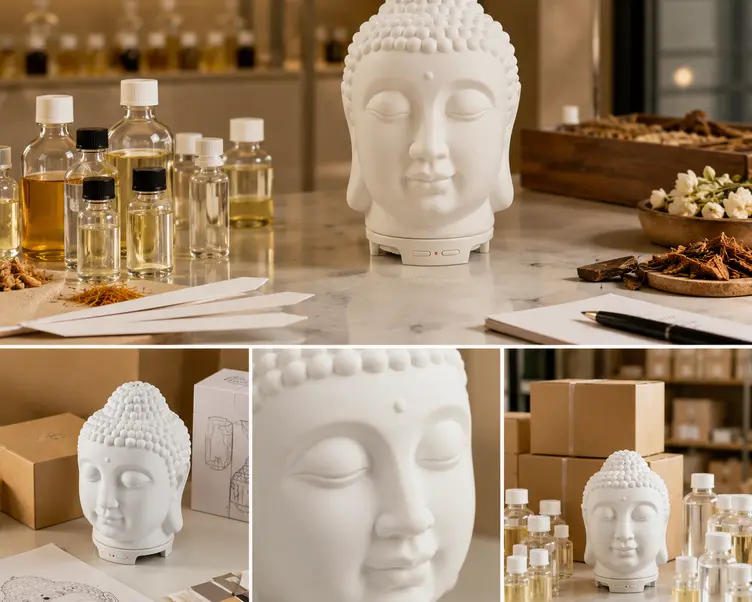
For home, gift and retail brands, another option is a coordinated gift set. The decorative vessel stays empty in the pack. A separate, sealed fragrance bottle holds the specified scent, and the consumer pours the liquid into the vessel before use. Small fragrance bottles, such as 30ml or 50ml, are examples of this format. The volume and scent should be agreed for the individual project.
This choice affects the whole set. A vessel sold alongside a large refill needs clear guidance on how much to pour each time. A gift set needs space and protection for the empty vessel, fragrance bottle and selected diffusion medium. A promotional vessel should still be suitable for the intended liquid and easy to use.
Glass or Ceramic: Which Material Fits Your Product Range?
Choose the material for both its decorative role and its suitability as a liquid container.
Glass: A Non-Porous Body with Design Trade-Offs
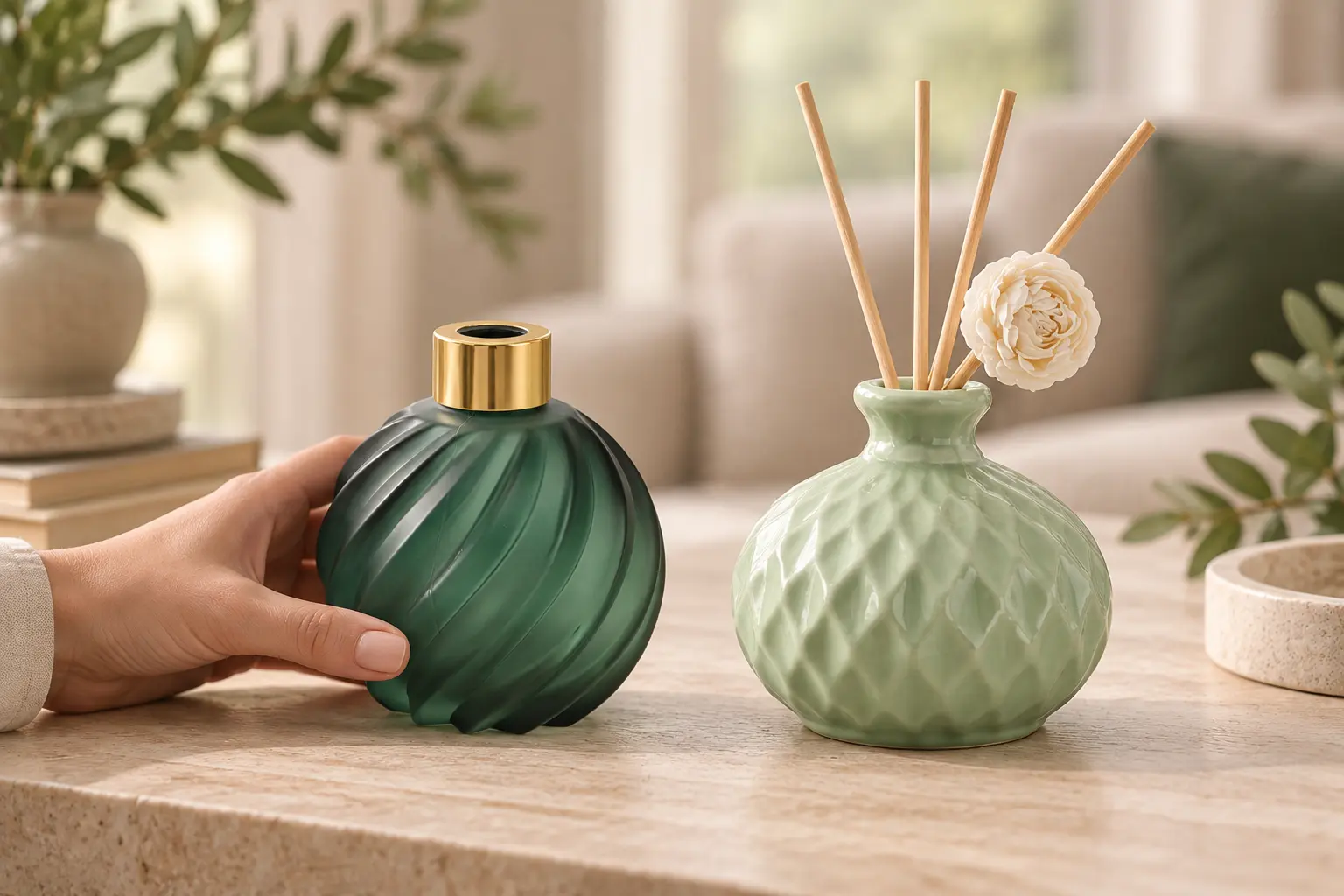
Glass has a non-porous body, so it avoids the liquid absorption concern associated with porous ceramic bodies. Clear glass also lets the consumer see the remaining liquid. Colored or opaque finishes change that visibility and should be considered when planning filling instructions.
In our development experience, creating a new glass shape can involve a substantial mold investment, and some complex decorative forms are harder to achieve through the chosen glass-forming process. This does not mean every glass design is simple or every glass project costs more than ceramic. Compare the actual shape, process and tooling requirements.
The sample still needs inspection. Check for cracks, chips around the opening, base stability and the suitability of any surface decoration where fragrance liquid may touch it.
Ceramic: More Decorative Possibilities, with Body and Glaze Checks
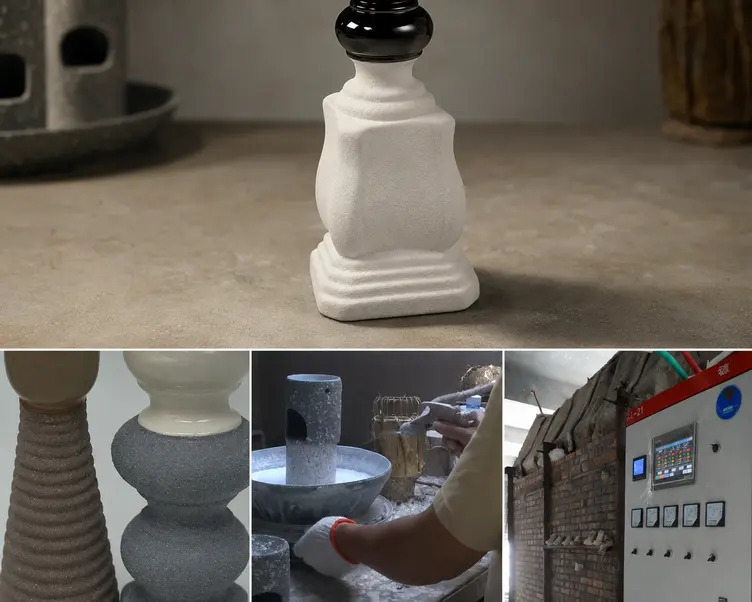
Ceramic offers broad scope for sculptural shapes, textures, colors and coordinated home collections. Alongside decorative ceramic vessels, our Dehua supply network also supports hand-shaped ceramic flowers and other decorative diffusion forms, giving brands more ways to develop a coordinated, craft-led collection. For a smaller launch or a range with several designs, review tooling, order quantity and handwork for each option rather than assuming that material alone determines production flexibility. The inside of the vessel deserves as much attention as the visible finish.
For decorative diffuser vessels, Green-Life recommends high-fired stoneware or white porcelain, preferably fired above 1,250°C, with glaze inside and outside. The internal glaze should cover the liquid-contact surface completely. Our recommended water absorption target is below 0.5%.
Treat firing temperature, water absorption and glaze quality as separate checks. A temperature statement alone does not prove that a particular body meets the absorption target. Ask for the relevant absorption result and test method, and inspect the sample for missing glaze, pinholes or glaze cracks.
Low water absorption also does not establish compatibility with every fragrance formulation. Check the finished vessel with the actual liquid, including any coating or decoration that may be exposed during pouring or use.
Which Bottle Opening Works with Your Diffusion Medium?
Matching the Opening to Reeds
For many decorative vessel projects, Green-Life recommends an internal opening diameter of 20–30mm as a starting point when using reeds around 3–5mm in diameter.
These dimensions are a selection guide, not a universal fit rule. The number, length and material of the reeds also matter. Measure the usable inner opening rather than the outside diameter of a thick or decorative rim.
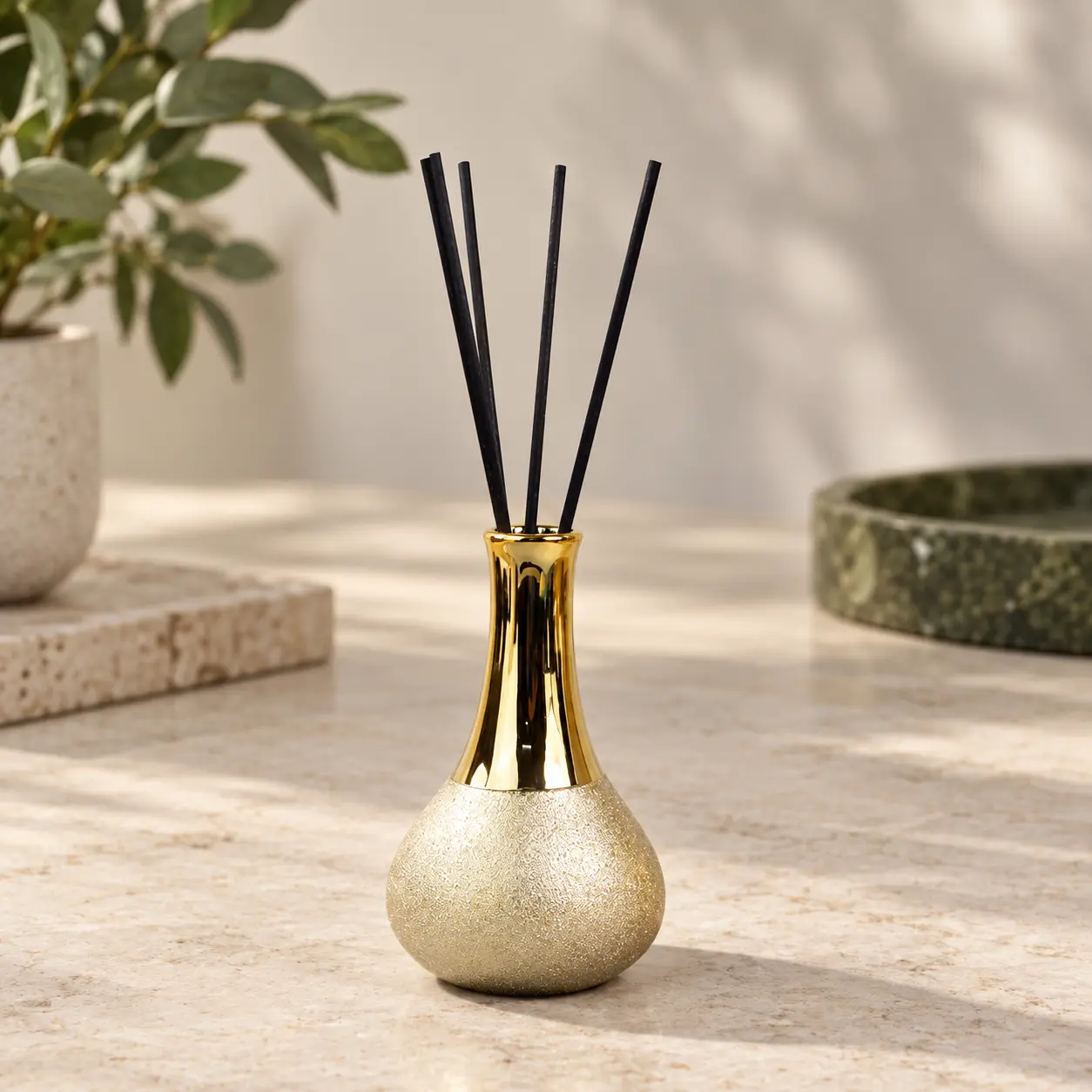
An opening that is too tight for the selected bundle can crowd the reeds and make an even arrangement difficult. An overly open neck may give them too little support, allowing excessive leaning. We aim for enough room to arrange the reeds while keeping the overall display stable. Fragrance consumption should be checked with the complete combination, since the opening alone does not determine evaporation speed.
The inner neck should be smooth, without steps or protrusions that interfere with inserting or arranging the reeds. We also favor a slightly outward-flared rim. In our selection experience, this can help the liquid separate more cleanly from the rim as pouring ends, reducing the tendency to track down the outside. Check this action with the intended refill bottle and liquid, since the rim shape does not guarantee drip-free pouring.
What If the Set Uses a Ceramic Flower?
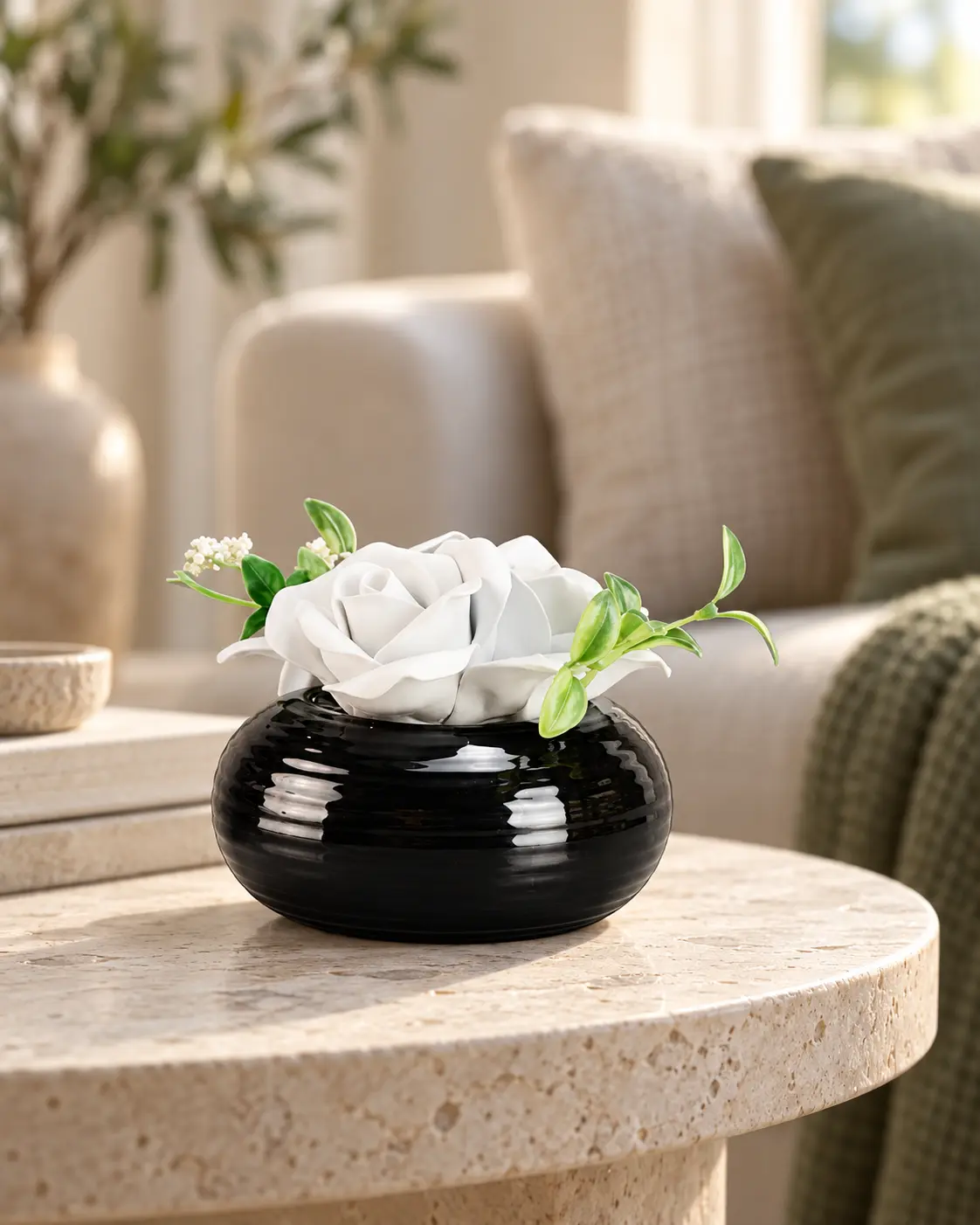
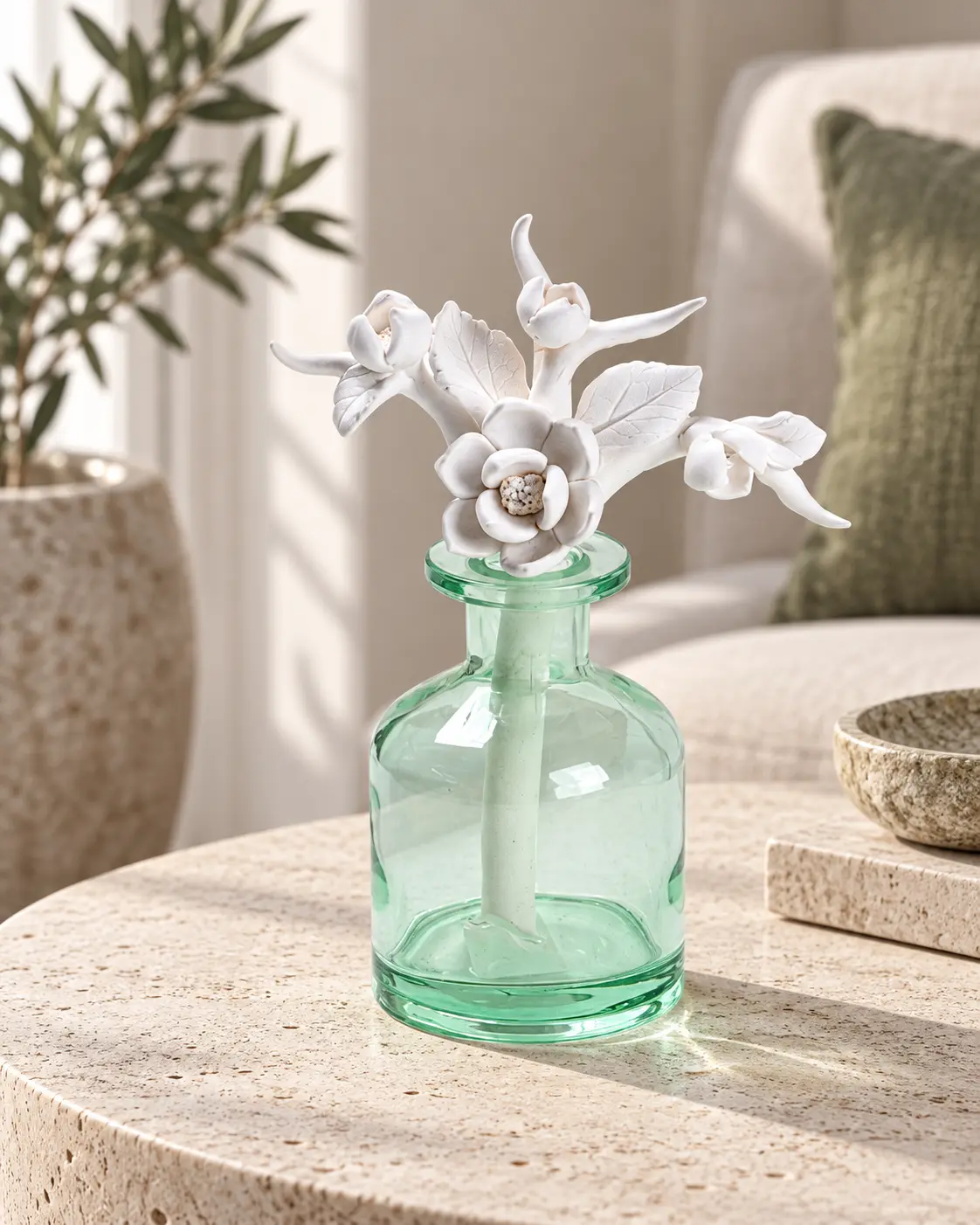
The way the flower draws liquid changes what the vessel needs to support. In one format, an absorbent ceramic stem is topped with a flower or another decorative shape. In another, a hand-shaped ceramic flower has a cotton cord underneath to draw up the fragrance liquid.
For a ceramic-stem design, check the stem diameter, insertion depth and support for the top. For a cotton-cord design, check how the flower rests on the vessel and whether the cord reaches the intended liquid level. In both cases, assess the stability of the complete arrangement and fragrance performance with the actual liquid. The 20–30mm opening recommendation for reeds should not automatically be applied to these designs.
The ceramic vessel and the ceramic diffusion component have different jobs. The vessel needs to contain liquid, while the absorbent ceramic component needs to draw it up. Our low-absorption and complete internal-glaze recommendations apply to the vessel, not to the absorbent flower or stem.
Working Capacity vs. Brimful Capacity: How Much Should You Fill?
A recommended working volume is 60%–80% of the vessel’s brimful capacity. Choose the vessel around the intended amount added at one time. A decorative vessel does not need to hold the entire contents of the larger refill bottle sold beside it.
Brimful capacity is the volume when the vessel is filled to the rim. The recommended 60%–80% working range leaves room for inserting reeds or a ceramic stem and handling the vessel. Confirm the final amount in ml with the selected diffusion component in place.
Check the sample after adding the intended liquid and diffusion medium. Can the consumer pour into it comfortably? Is the filling level easy to judge? Does the vessel remain stable with the selected reeds or ceramic top? For cotton-cord designs, does the cord reach the liquid at the intended filling level? For opaque ceramic vessels, instructions may need to specify an amount rather than rely on a visible liquid level.
Avoid assigning a fixed fragrance life or room coverage from vessel capacity alone. The liquid, diffusion medium and use environment also affect the result.
How Should the Vessel, Diffusion Medium and Fragrance Bottle Be Packed?
Design the pack around the final components and the actual delivery route.
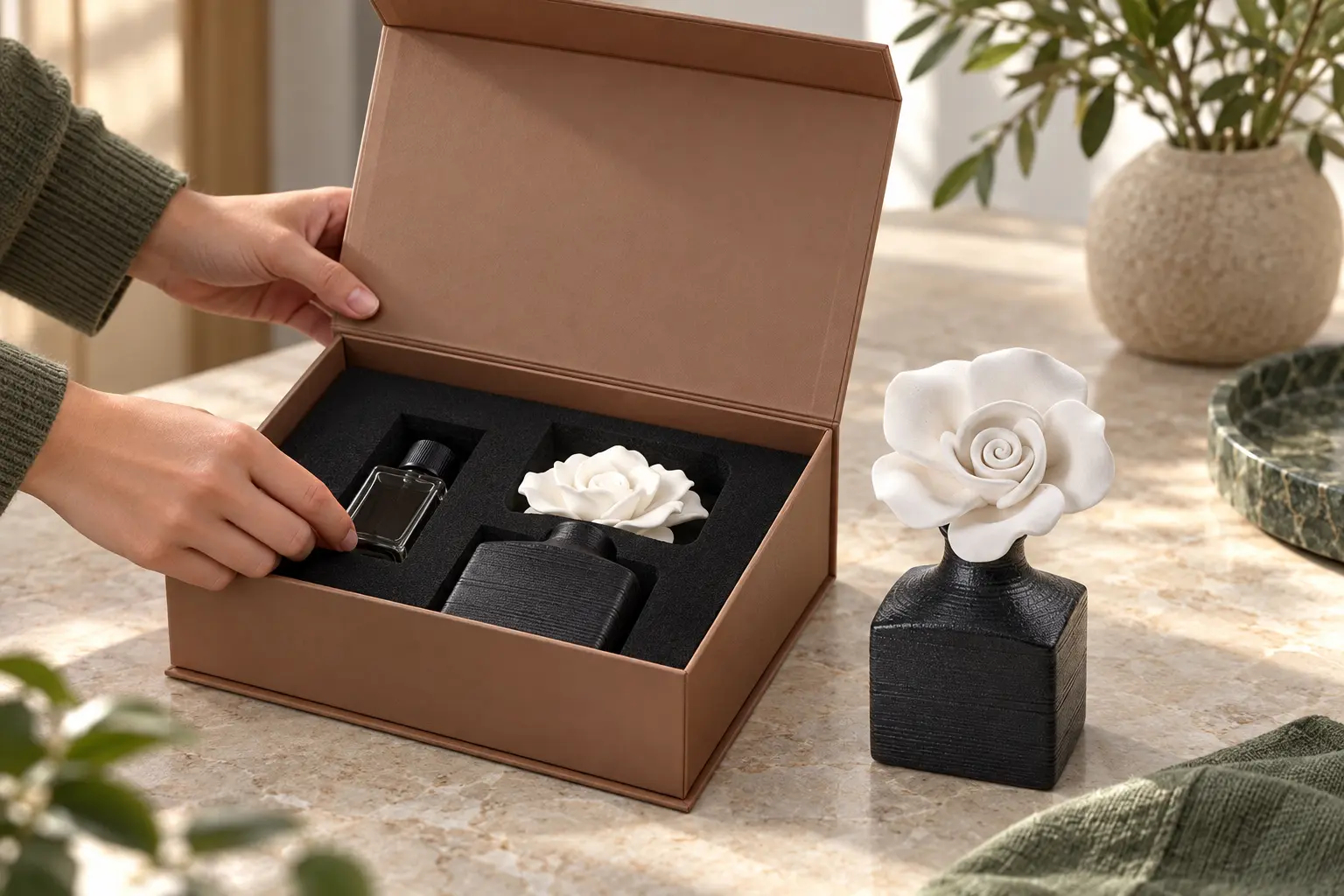
For a gift set containing a separate fragrance bottle, secure that sealed bottle and the empty decorative vessel individually. Give the reeds enough space and support so they do not press against the vessel or become bent by the pack. For ceramic flowers and other shaped ceramic components, support the piece so that petals, projecting details and absorbent stems are not used as pressure points. Check how the cotton cord is contained where applicable. Confirm the layout using the final component sizes, including the fragrance bottle closure.
A retail gift box and a shipping pack have different jobs. The gift box presents the collection. The shipping arrangement needs to protect it through the intended handling and transport. Review the insert, separation between components and outer protection together, then agree on suitable verification for that delivery route.
The instructions should make the setup clear: remove the components, pour the specified amount of fragrance liquid into the decorative vessel, and position the supplied reeds or ceramic diffusion component as designed. Any care or placement advice should match the actual combination.
What Should Buyers Check in the Complete Sample?
Approve the vessel as part of the intended set. A useful sample review covers the following points:
| Check | What to confirm |
|---|---|
| Sales format | Empty vessel with a larger refill, promotional accessory, or gift set with a separate sealed fragrance bottle |
| Material and finish | Glass condition, or ceramic body, absorption evidence and complete internal glaze; suitable decoration |
| Opening and diffusion medium | Actual inner diameter and smooth neck; reed fit, or ceramic stem/flower support and cotton-cord reach as applicable |
| Working capacity | Agree on the amount in ml. Check the resulting level with the selected diffusion component, stable arrangement and manageable pouring. |
| Actual liquid contact | Use the intended fragrance formulation. Record any seepage, staining or surface change under agreed evaluation conditions. |
| Complete packaging | Component fit, protection for the vessel and any ceramic petals or stems, clear setup instructions and verification suited to the delivery route |
Record the sample version, liquid, diffusion component specification and evaluation conditions so that later changes can be assessed against the same combination. These are checks to agree for the project, not a claim that every vessel has already passed a standard test.
When discussing a decorative diffuser project with Green-Life, share the intended sales format, fragrance liquid, preferred material and diffusion media. These details give us a practical starting point for selecting a vessel and developing the complete presentation.