Choosing a diffuser by appearance alone can leave a brand with an unsuitable fragrance formula, an awkward customer routine or avoidable support problems.
For retailers entering home fragrance, Green-Life often recommends evaluating an ultrasonic diffuser first. Fragrance brands developing a device around their own liquids may prefer a glass nebulizer. The right choice depends on liquid compatibility, customer habits, positioning and maintenance support.
Start with comparable home-use products, then test each candidate with its approved liquid. A technology name cannot replace that evaluation.
What is the difference between ultrasonic and glass nebulizing diffusers?
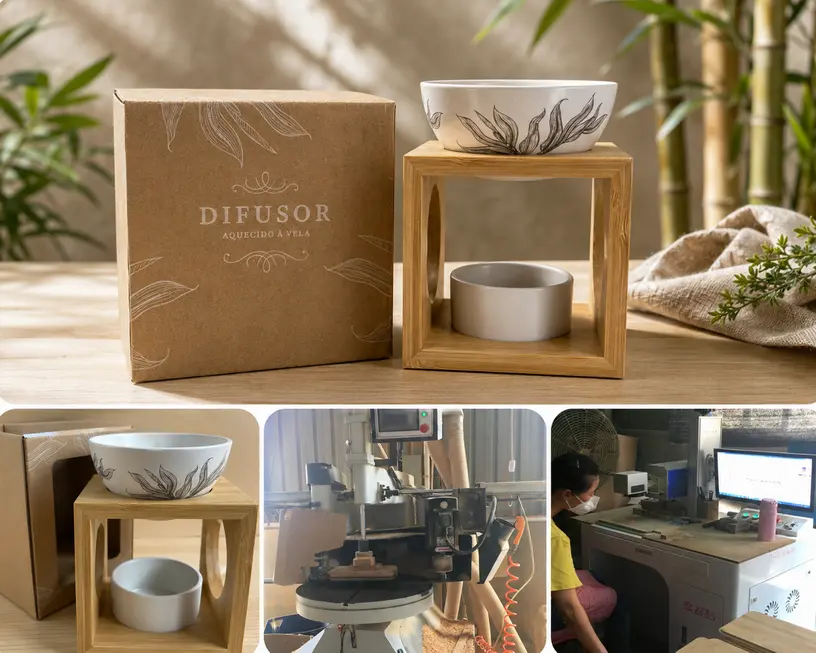
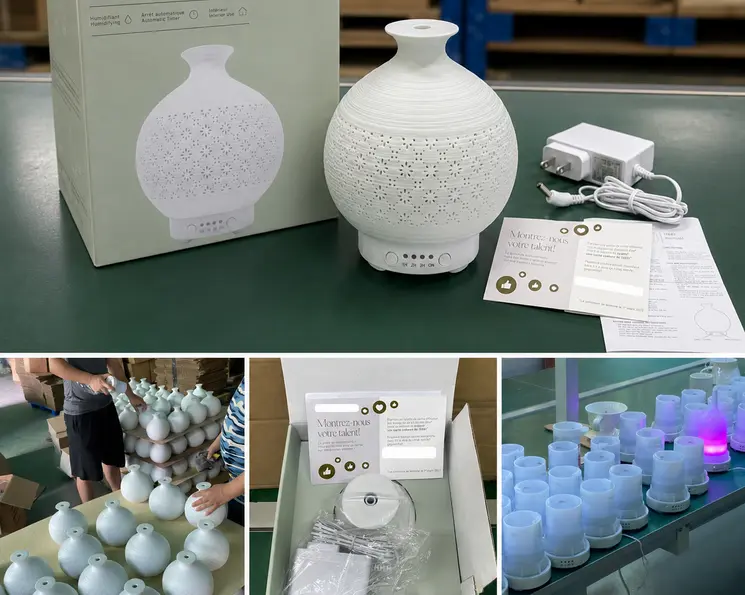
This guide compares water-based ultrasonic diffusers with home-use nebulizing diffusers that use an air pump and a glass fragrance reservoir, often paired with a wooden base.
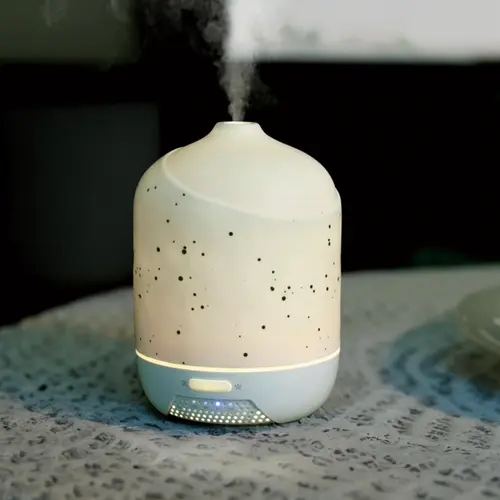
The ultrasonic candidates should have a comparable emphasis on appearance and home décor. Comparing a decorative glass-and-wood nebulizer with a basic, low-cost plastic ultrasonic unit tells a buyer little about which format suits the same retail position.
Small bottle-connected portable diffusers and large commercial scenting systems serve different needs and fall outside this comparison.
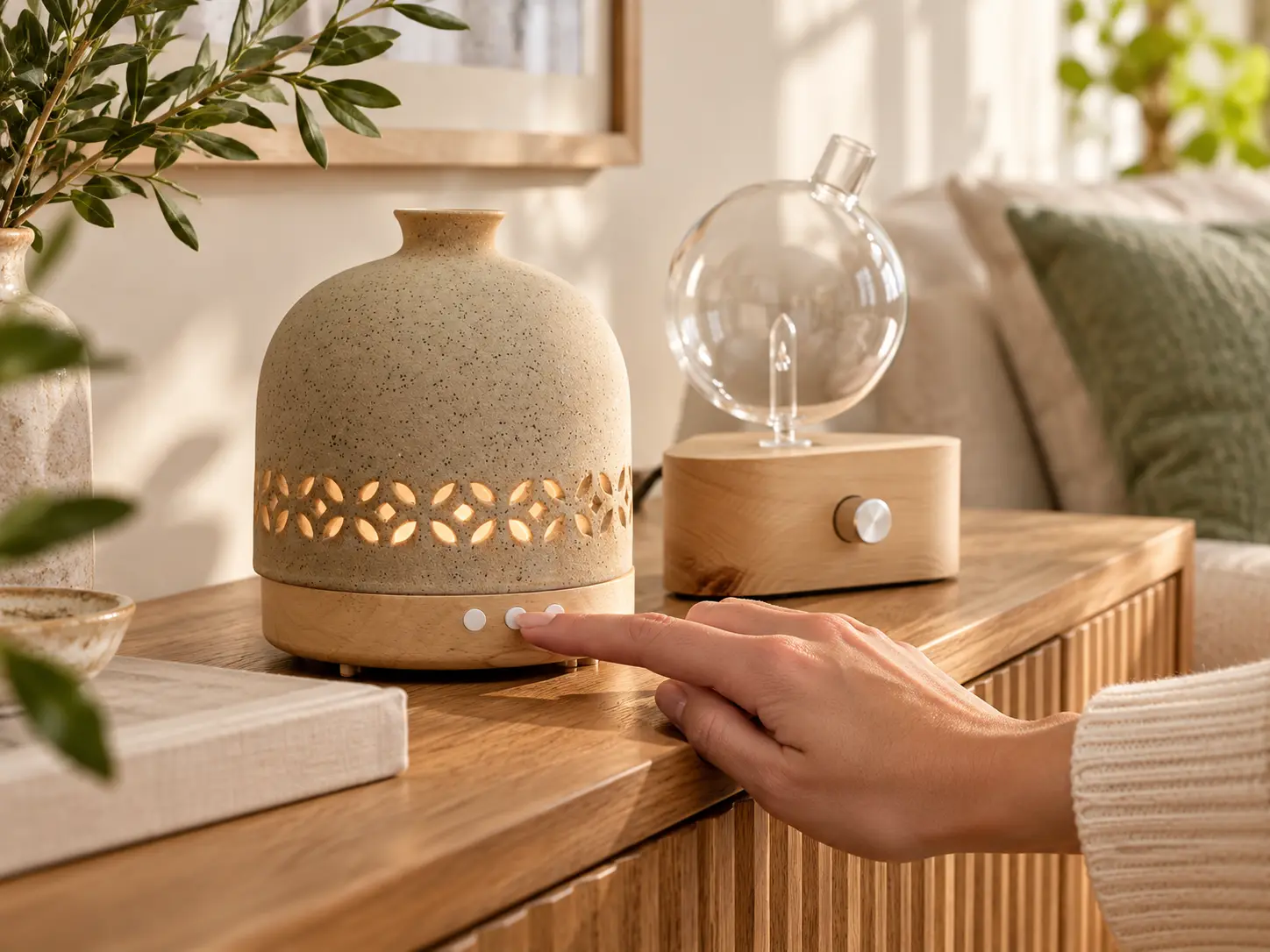
In a water-based ultrasonic diffuser, ultrasonic vibration produces mist from the liquid in the water tank. A glass nebulizing diffuser uses airflow to disperse a compatible oil or fragrance liquid without adding water to the reservoir. Those different operating methods affect liquid selection, refilling and cleaning.
Which diffuser features should brand buyers compare?
| Decision factor | Home-use ultrasonic diffuser | Glass air-pump nebulizing diffuser |
|---|---|---|
| Customer routine | Filling a water tank with clean water and adding a few drops of a specified compatible fragrance product | Adding a compatible oil or fragrance liquid directly to the glass reservoir |
| Fragrance approval | Confirm the formula and dosing instructions for the selected model | Test the actual formula for atomization, residue and sustained performance |
| Buyer priorities observed by Green-Life | Runtime is often a leading concern | Scent intensity in the intended space, liquid consumption and noise receive particular attention |
| Product positioning | Evaluate designs and finishes suited to the intended home décor range | Glass-and-wood designs can suit a premium home fragrance presentation |
| Maintenance concerns | Tank cleaning and placement that avoids wetting nearby surfaces | Residue removal and keeping the fine nozzle passages clear |
| Commercial evaluation | Compare purchase cost, customer instructions and support needs | Include liquid compatibility, cleaning guidance and replacement parts in the offer |
These are evaluation priorities, not measured performance rankings. Noise, scent delivery, runtime and running cost must be assessed on the actual candidate models.
Which diffuser suits your retail or fragrance brand?
Retailers and importers introducing a new category
In Green-Life’s experience, general retailers and importers more often select ultrasonic diffusers. For a newcomer whose core business is not fragrance, Green-Life usually suggests evaluating this format first: procurement costs tend to be lower in its projects, quality issues have generally been fewer, and the consumer routine is relatively straightforward.
That recommendation is a starting point for sampling. A decorative ultrasonic model still needs to meet the buyer’s requirements for finish, runtime, instructions and everyday use. Green-Life’s experience should not be read as a category-wide failure-rate comparison.
Fragrance brands developing a device-and-liquid offer
Among Green-Life’s fragrance brand customers, interest has been shifting toward nebulizing diffusers. One commercial reason is the opportunity to pair a device with the brand’s own oils or fragrance liquids and support ongoing replenishment purchases.
A device alone does not guarantee repeat sales. The scent experience, refill pricing, availability and ease of maintenance all need to support that offer. A glass nebulizer is worth evaluating when the brand is prepared to develop and validate the device and fragrance together.

Which fragrance liquids are compatible with each diffuser?
“Essential oil,” “fragrance liquid” and “water-soluble fragrance” are not interchangeable compatibility specifications.
For the ultrasonic models covered by Green-Life’s guidance here, the user fills the tank with clean water and adds a few drops of a compatible water-based or water-soluble fragrance formulation. Simply adding an unsuitable pure oil or oil-based formulation to the water tank does not satisfy that requirement. Other manufacturers may specify different suitable liquids; follow the requirements for the exact model being sourced.
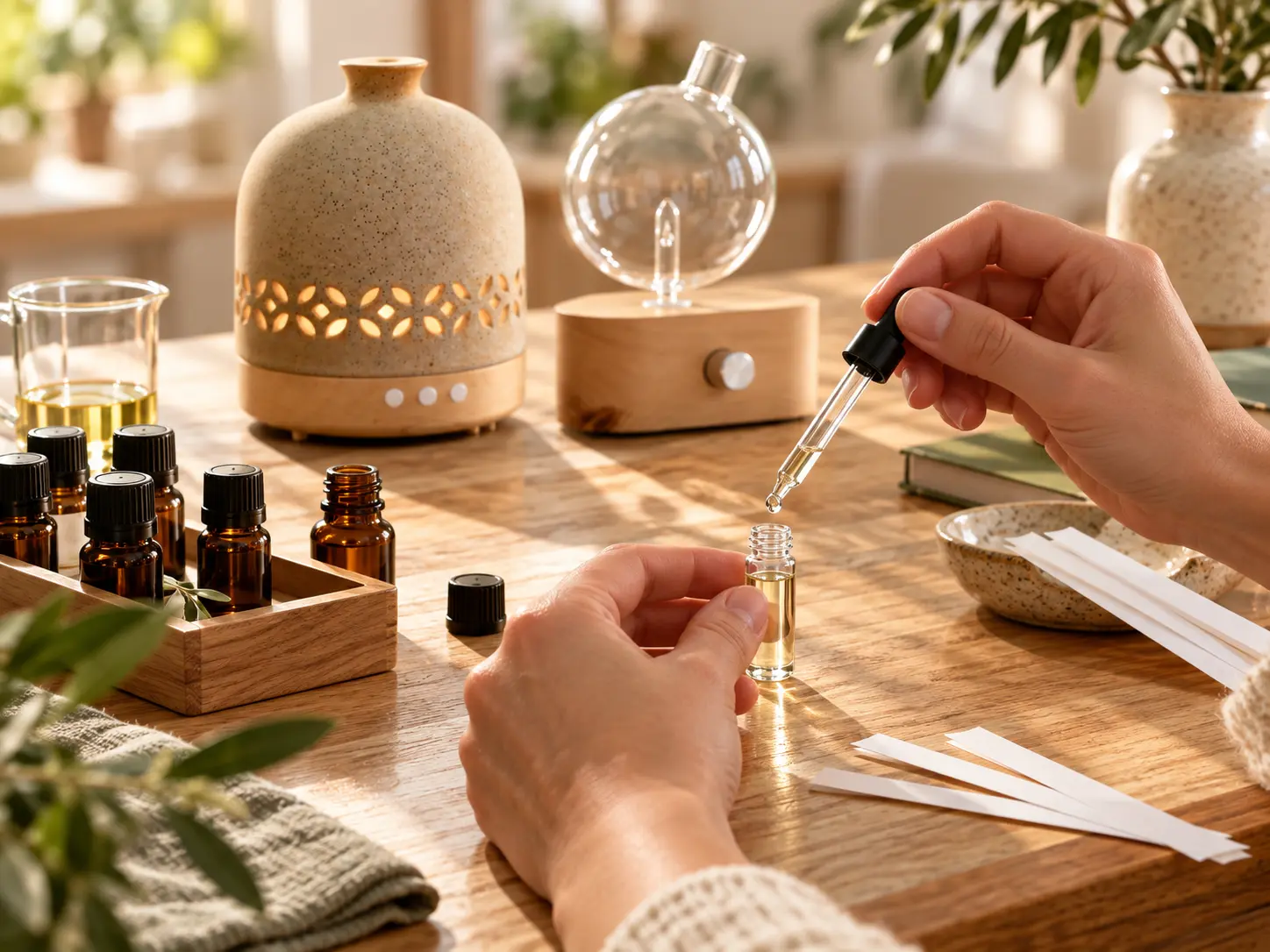
For glass nebulizers, a higher essential-oil percentage is not automatically better. Green-Life has encountered formulations in which a high essential-oil proportion was associated with difficult atomization and noticeable residue on the glass. It has also encountered prolonged blockage of fine nozzle passages that could not be recovered and required replacement.
This does not establish a universal maximum oil percentage. Essential-oil proportion, purity and viscosity describe different properties. Compatibility must be established for the complete formula and the selected device; buyers should not improvise a diluent or assume that all pure oils behave alike.
Green-Life’s fragrance brand customers test their own liquids. Depending on the project, Green-Life sends devices to the customer or the customer sends fragrance samples to Green-Life. This is a useful step before confirming the product-and-fragrance combination.
How should buyers compare scent, consumption, noise and runtime?
Green-Life finds that buyers considering nebulizers pay particular attention to scent intensity over a defined time and area, liquid consumption and noise. Buyers considering ultrasonic models often give runtime more weight.
A useful sample brief should therefore define what each measurement means:
- Scent experience: Specify the room, ventilation, placement, evaluation period and how assessors will judge the result. Perceived scent intensity is not the same as an instrument-measured airborne concentration.
- Liquid consumption: Record the formulation, fill quantity, output setting and operating cycle. Water loss from an ultrasonic tank is not a direct measure of fragrance consumption.
- Noise: Compare candidates at a stated distance, with background noise and operating mode recorded.
- Runtime: Distinguish elapsed time from active diffusion time, especially when intermittent modes are involved.
Keep the space and observation conditions comparable, but use an approved formula and operating method for each device. Do not force the same liquid into both systems if it is unsuitable for one of them. The purpose is to compare usable customer experiences under documented conditions.
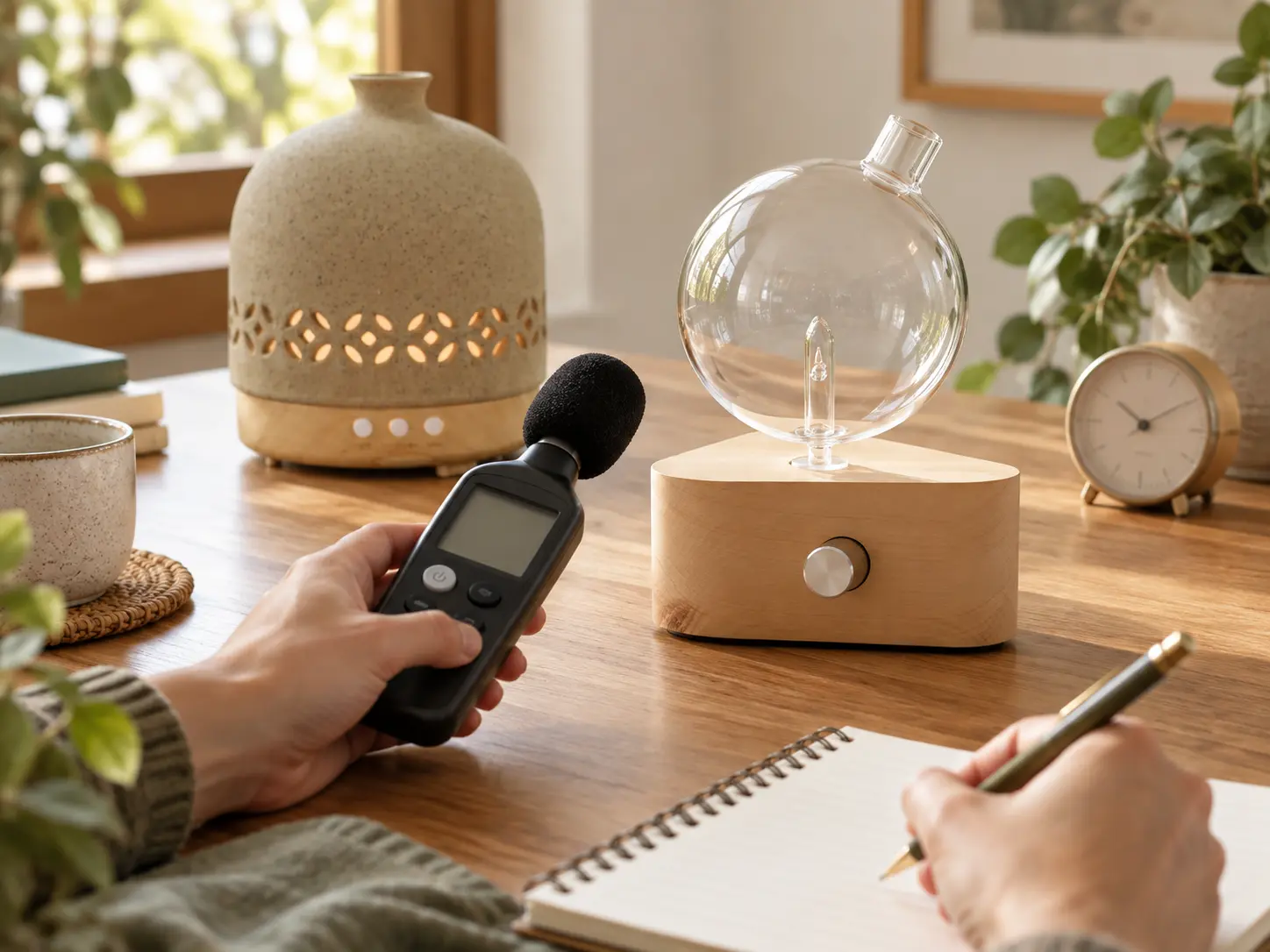
Discuss the required comparative tests for your shortlisted models with Green-Life. This guide does not claim a universal coverage, noise or consumption advantage.
What maintenance and replacement support does each diffuser need?
With ultrasonic diffusers, Green-Life has encountered wet surfaces around the device. Placement instructions should explain the clearance needed above the mist outlet and the appropriate operating conditions for the selected model. Check the intended display or bedside arrangement during sampling, rather than assuming a product photograph demonstrates suitable placement.
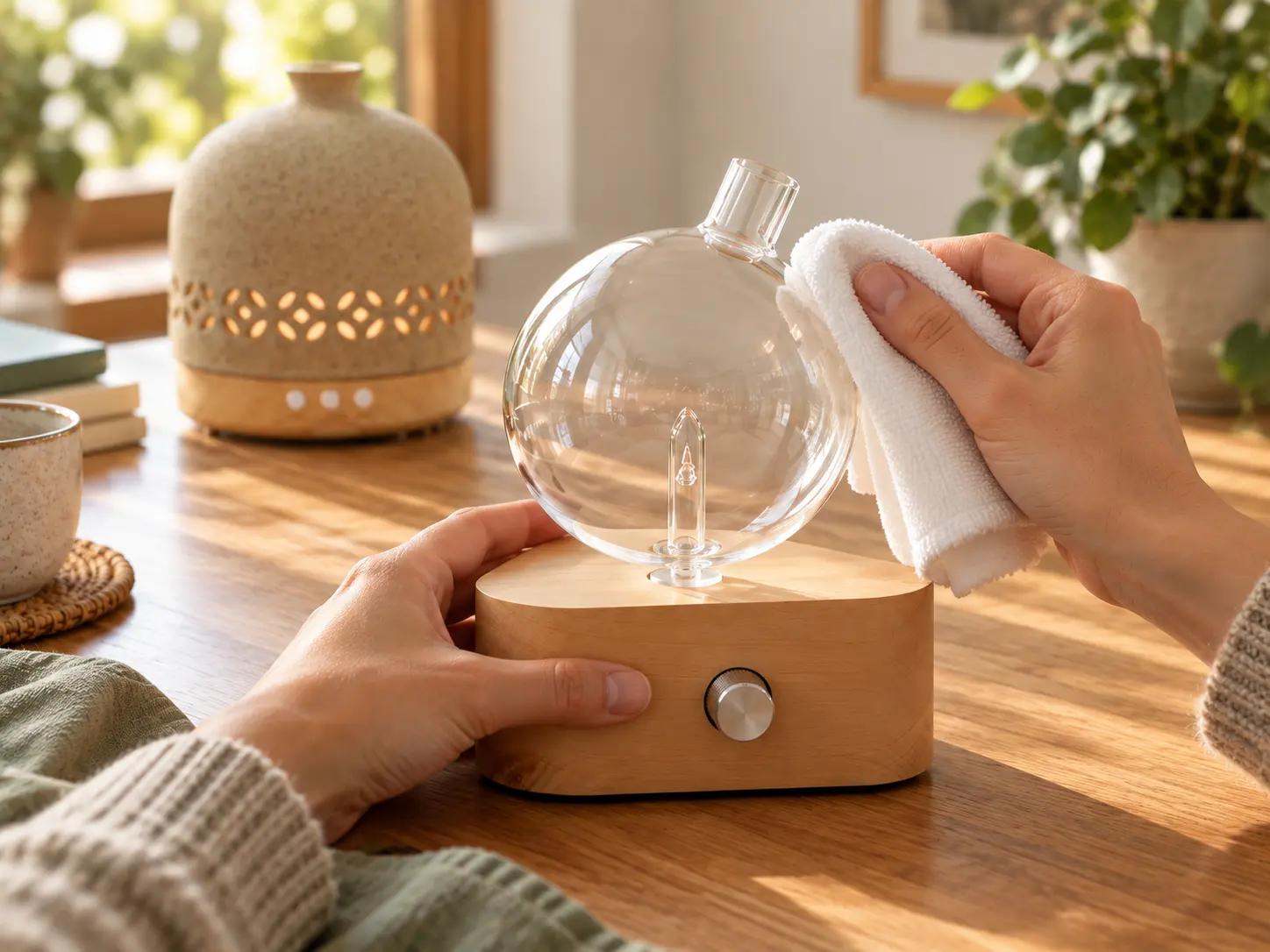
With glass nebulizers, a key concern is blockage and loss of output. If blockage occurs, stop normal use and follow the model’s approved cleaning procedure before refilling. That procedure should identify the permitted cleaning agent, how the reservoir and nozzle are cleaned, and the drying requirements. Drying alone should not be presented as a substitute for removing residue.
Before placing an order, ask for clear consumer instructions and confirm which glass or nozzle components can be replaced. Cleaning-agent selection and any powered cleaning cycle must follow the specific manufacturer’s instructions; one model’s procedure should not be copied across an entire product range.
Should you sample an ultrasonic or a glass nebulizing diffuser first?
Start by evaluating an ultrasonic diffuser if you are introducing home fragrance to a general retail range, prioritize accessible procurement costs and runtime, and can provide a compatible fragrance product with clear instructions.
Start by evaluating a glass nebulizing diffuser if your brand’s own fragrance is central to the offer, the glass-and-wood presentation suits your positioning, and you can support formula testing, cleaning guidance and replacement parts.
If both fit the brief, sample both. Agree on the desired customer experience and acceptance criteria before comparing results, then select the combination of device, liquid and support requirements that your business can deliver consistently.
Discuss your diffuser project with Green-Life
Share your target customer, home-use setting, preferred design direction, operating expectations and fragrance sample with Green-Life. These details help frame the model shortlist and the testing discussion before you commit to a device-and-fragrance combination.


 English
 Français
 Deutsch
 Español
 Português do Brasil